
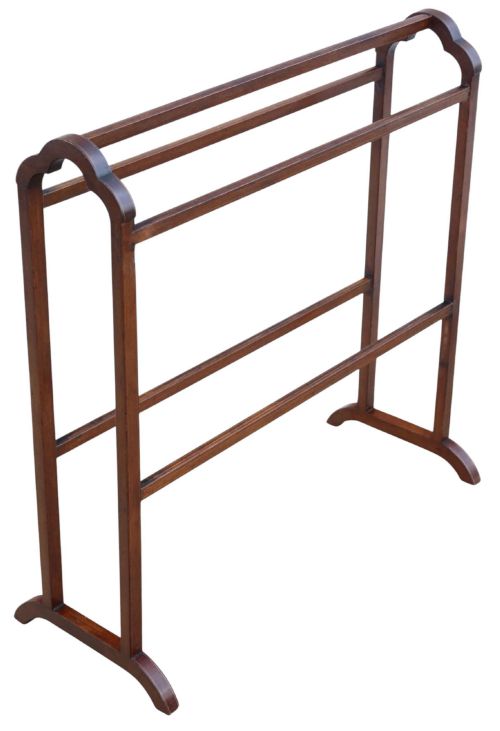
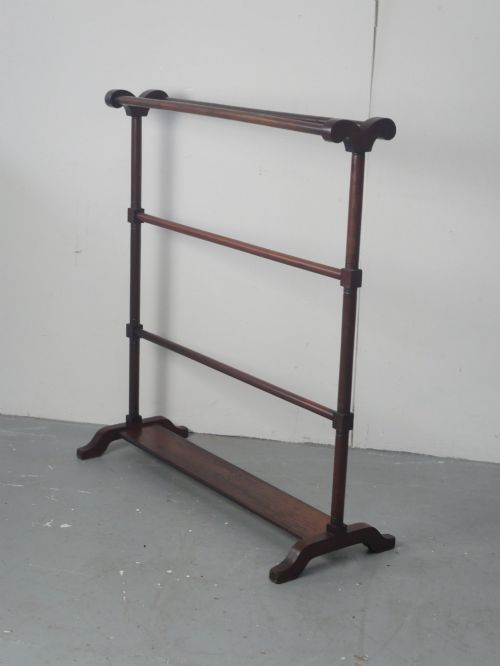


Vintage Wooden Drying Stand
A vintage wooden drying stand brings practical utility and honest craftsmanship into a home, offering sturdy rails for textiles and laundry.
Vintage Wooden Drying Stand
Buyers will most frequently encounter nineteenth-century and early twentieth-century wooden towel rails, often fashioned with multiple folding leaves or simple upright frames. These practical items range from rustic country pine pieces to refined mahogany designs.
Alongside standard towel rails, the listings also encompass specialised forms such as apple racks, washstands, and robe stands. Each variation serves the fundamental purpose of hanging and drying textiles within domestic spaces.
How they were made
Makers utilised a variety of timbers including mahogany, oak, pine, and hardwood to construct these frames. Selected pieces feature decorative details such as satinwood inlay or brass fittings to enhance their appearance.
Construction techniques focused on stability and durability, utilising framed panels and hinged joints for folding variants like three-fold towel rails. Carpenters shaped solid woods to withstand regular domestic use and the weight of damp textiles.
What varies in quality
The choice of timber significantly influences the character of a piece, moving from utilitarian rustic pine to finely grained mahogany or burr walnut. Finer examples incorporate thoughtful details such as inlaid satinwood or carefully turned wooden spindles.
Proportion and scale distinguish standard utility items from grand country house pieces. Sturdiness of construction and the smooth operation of hinged folding sections demonstrate the underlying standard of manufacture.
The Vintage Wooden Drying Stand Glossary
- Towel rail stand
- A freestanding wooden frame featuring one or more horizontal bars designed for hanging towels and garments to dry. These pieces often fold flat or feature multiple hinged sections.
- Apple rack
- A slatted wooden storage frame traditionally utilised for laying out fruit to air or store. This utilitarian form shares similar slatted construction principles with drying stands.
- Satinwood inlay
- A decorative technique where contrasting light-toned satinwood is set flush into the primary dark timber surface. This detail appears on finer Edwardian and Victorian examples.
- Three-fold
- A construction format comprising three distinct panels joined by hinges, allowing the frame to expand in a zig-zag or fold away compactly. It maximises hanging space while remaining practical to store.
Vintage Wooden Drying Stand: Frequently Asked Questions
Where should I place a wooden drying stand?
These stands suit utility rooms, bathrooms, or bedrooms where natural airflow aids the drying of garments and linens.
Their decorative wooden frames also allow them to sit comfortably in living spaces as freestanding towel or blanket rails.
How do I clean and maintain the wood?
Dust the frame regularly with a dry cloth and occasionally nourish the timber with a suitable beeswax to preserve the finish.
Avoid placing damp items directly against untreated pine or vulnerable veneers for extended periods to prevent water marking.
Are these stands suitable for heavy laundry?
Most pieces are built with sturdy hardwood or pine frames designed to support the weight of household textiles and wet towels.
Folding designs rely on stable hinges, so ensure the frame is fully extended and balanced when loading heavier garments.
How can I tell the period of a stand?
The choice of timber and decorative touches offer clues to the era, such as satinwood inlay on Edwardian mahogany or rustic construction in nineteenth-century pine.
Form and joinery techniques further help distinguish early Victorian utility pieces from later twentieth-century interpretations.