


Vintage Wooden Double Bedstead
A vintage wooden double bedstead offers solid timber construction and period character, bringing traditional craftsmanship to a modern bedroom.
Vintage Wooden Double Bedstead
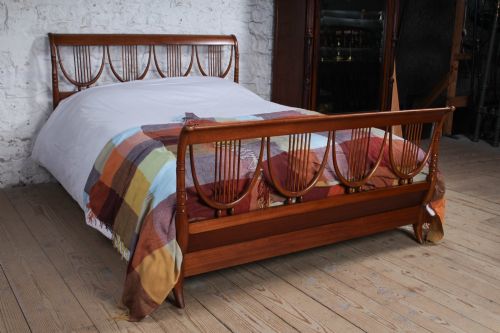
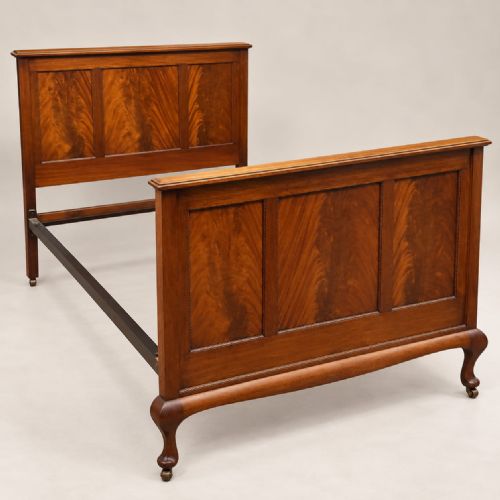
A vintage wooden double bedstead is a sleeping frame designed for two occupants, constructed from timbers such as mahogany, walnut, and oak. These pieces span from the late nineteenth century through the Edwardian era and into the Art Deco period.
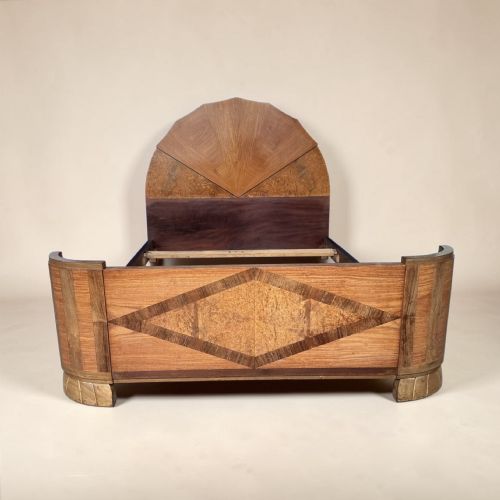
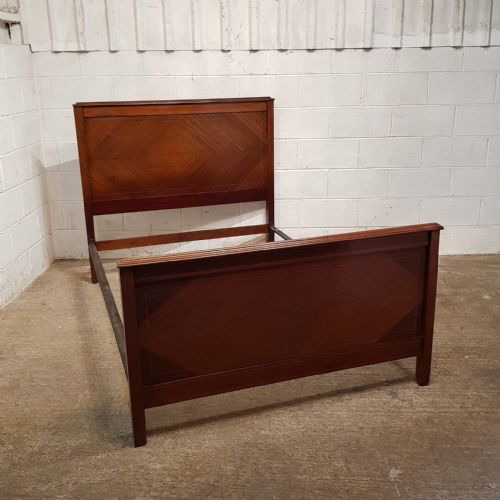
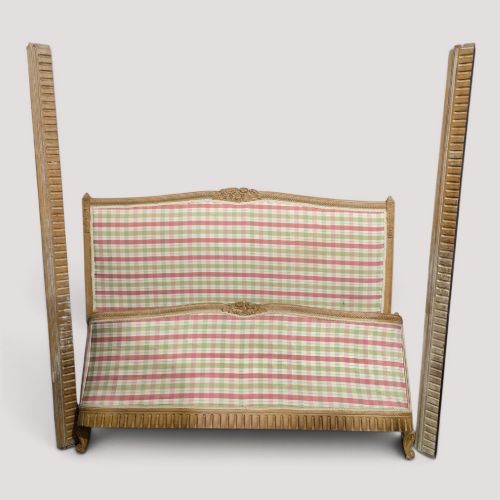
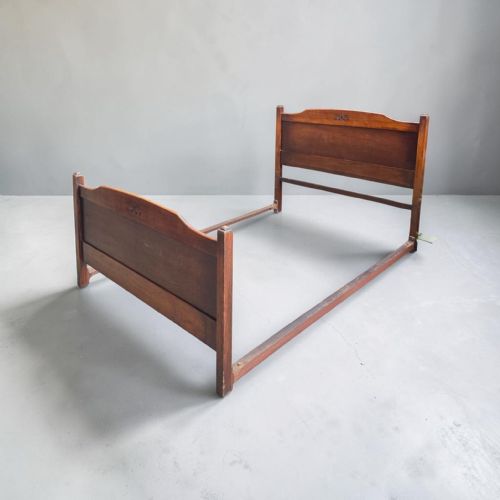
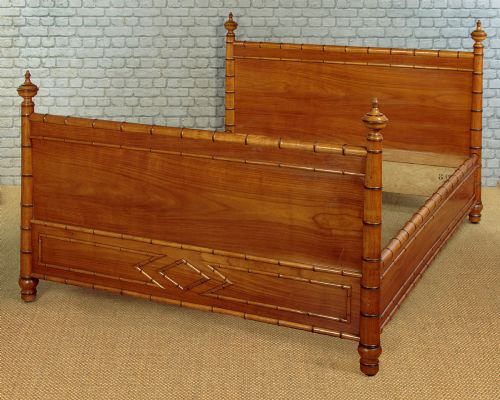
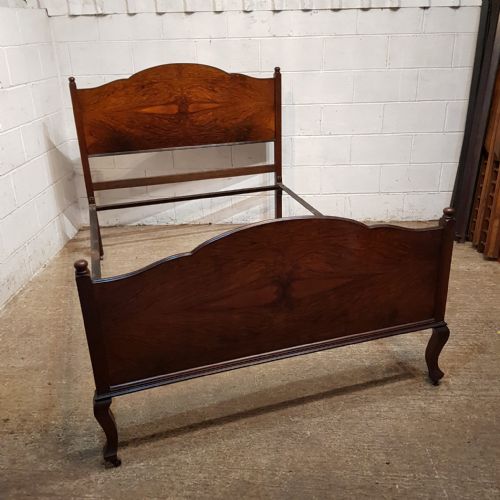
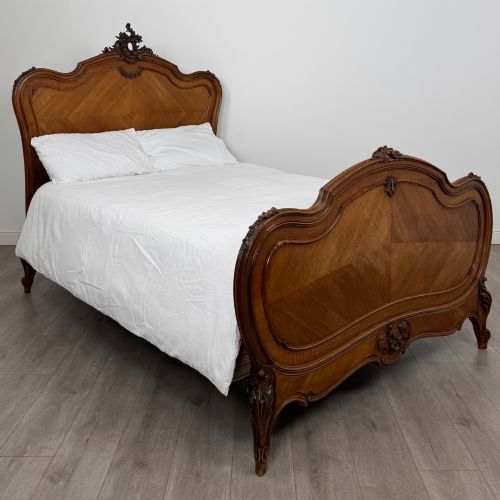
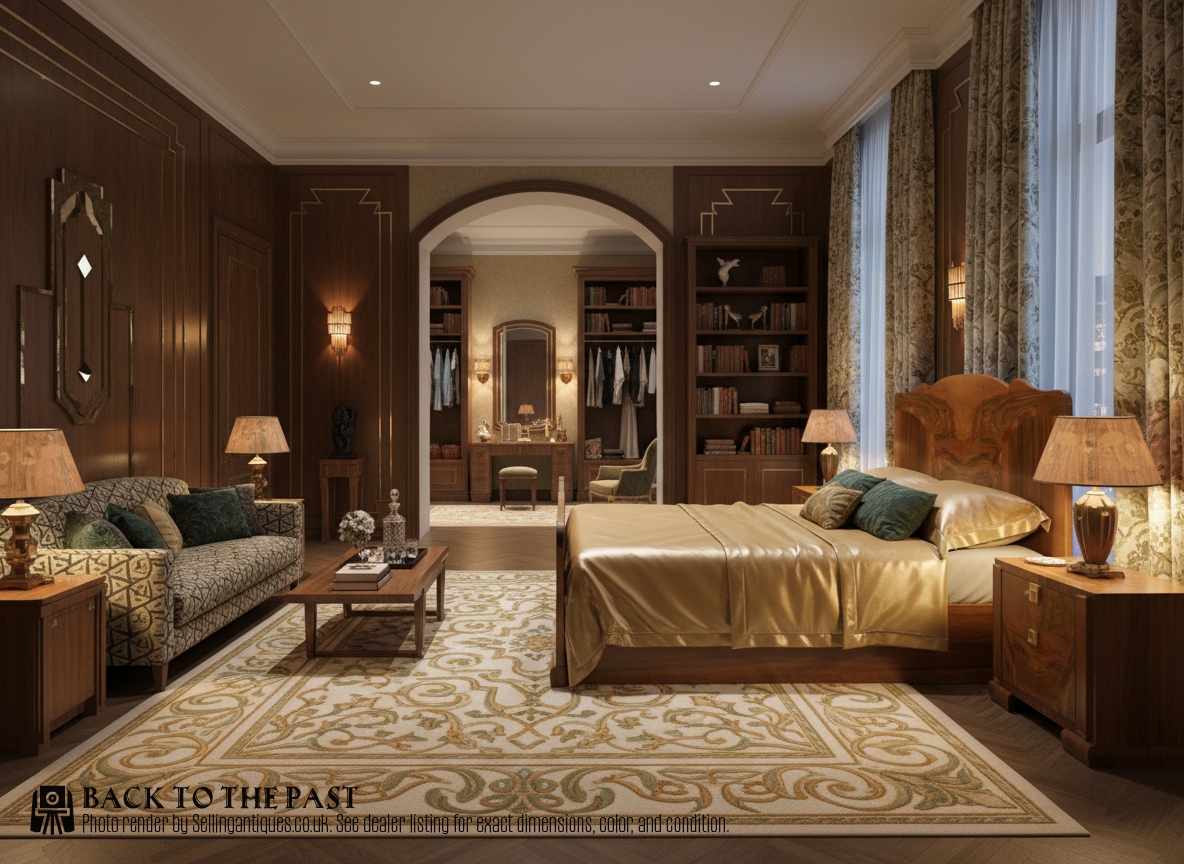
The most frequent examples on this page date from the Edwardian period and the 1930s, reflecting both traditional British cabinetmaking and continental European styles. Buyers encounter forms ranging from simple panelled headboards to elaborate carved French designs and geometric Art Deco veneered frames.
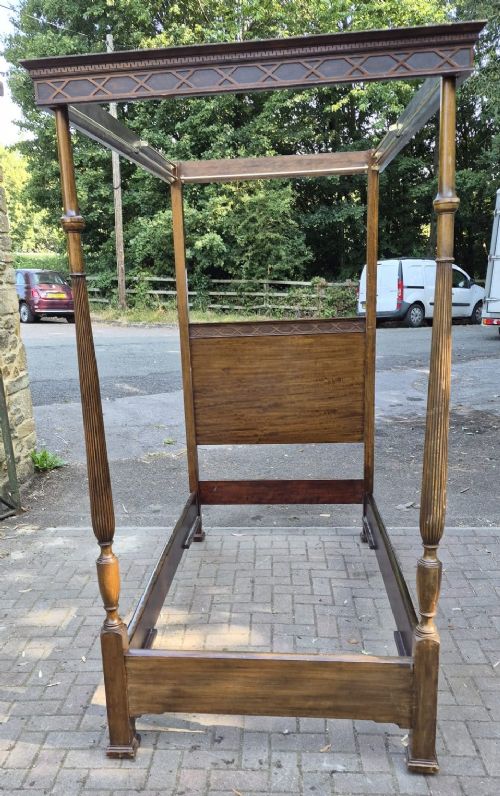
Makers utilised various woods and constructed headboards, footboards, and side rails to support standard double mattress sizes. The forms vary from straightforward rectangular frames to four poster structures and curved walnut designs.
How they were made
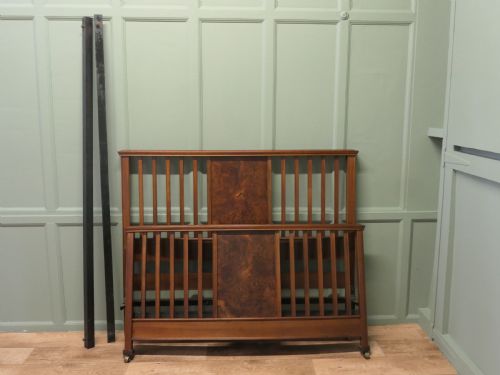
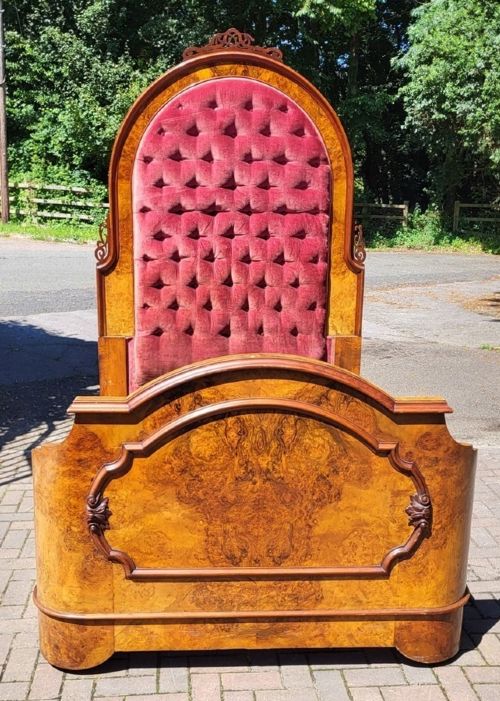
Cabinetmakers built these bedsteads using solid hardwoods including mahogany, oak, and walnut, frequently applying decorative veneers such as burr walnut, satinwood, and birds eye maple over secondary timbers. Joinery methods relied on traditional tenon and mortise joints alongside sturdy iron or brass hardware to secure the side rails.
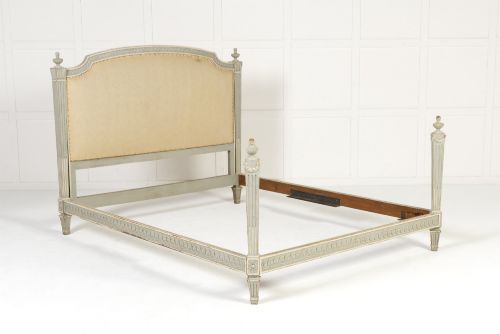
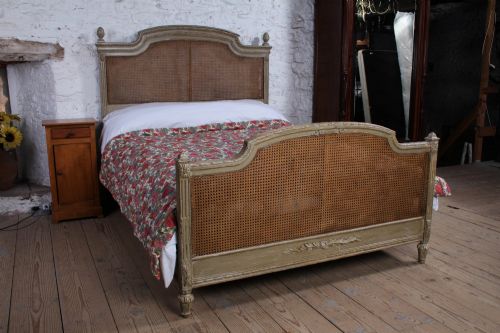
Surface decoration involved carving, inlay, and French polishing to highlight the natural grain of the wood. Upholstered elements appeared on high button back headboards, while other frames incorporated caning or painted finishes.
What varies in quality
Quality in these bedsteads rests upon the selection of timber and the ambition of the design. Heavily figured veneers, intricate hand carving, and balanced proportions distinguish the finer examples from simpler utilitarian frames.
The integrity of the original construction and the preservation of surface finishes determine the standing of each piece. Superior items display careful matching of wood grains across wide panels and robust structural joinery that withstands daily use.
Stanley Webb Davies·Harrods
The Vintage Wooden Double Bedstead Glossary
- Bedstead
- A framework of a bed consisting of headboard, footboard, and rails designed to support a mattress and base.
- Burr Walnut
- Timber taken from a tree growth that produces intricate swirling patterns in the grain, highly prized for decorative veneer work.
- Art Deco
- A design style popular in the 1920s and 1930s characterised by streamlined geometric forms and exotic wood veneers.
- Edwardian
- Pertaining to the reign of King Edward VII, marked by lighter furniture designs often drawing inspiration from eighteenth-century styles.
- Louis XVI Style
- A neoclassical French furniture style featuring straight tapered legs, carved fluting, and symmetrical classical ornamentation.
Vintage Wooden Double Bedstead: Frequently Asked Questions
Will a standard modern mattress fit these antique bedsteads?
Many vintage double bedsteads accommodate standard mattress dimensions, though historical sizing can vary slightly from contemporary measurements.
Buyers should verify the internal length and width between the side rails before purchasing a modern mattress.
How do I assemble a wooden bedstead?
Most bedsteads utilise metal bed bolts or interlocking brackets that connect the side rails to the headboard and footboard.
Assembly typically requires basic hand tools and two people to align the heavy wooden components securely.
How do I distinguish Edwardian from Art Deco beds?
Edwardian frames frequently feature inlaid mahogany, curved woodwork, and classical revival motifs reflecting earlier Georgian aesthetics.
Art Deco bedsteads display symmetrical geometric lines, blonde maples, satinwood, and highly figured walnut veneers from the 1930s.
How should I care for antique wood finishes?
Maintain wooden surfaces by dusting with a soft dry cloth and avoiding placement near direct heat sources or strong sunlight.
Apply occasional professional wax polish to nourish traditional polished timber surfaces without causing moisture damage.