
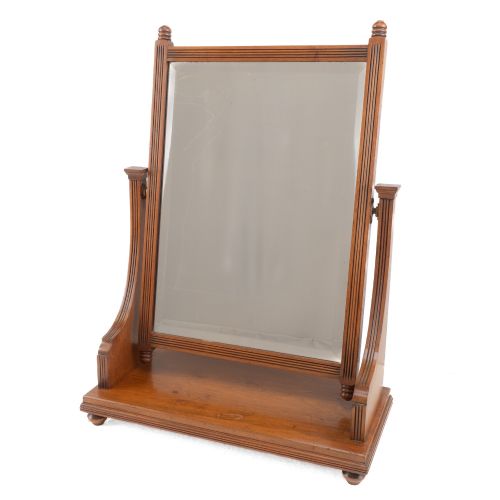


Vintage Wooden Cheval Mirror
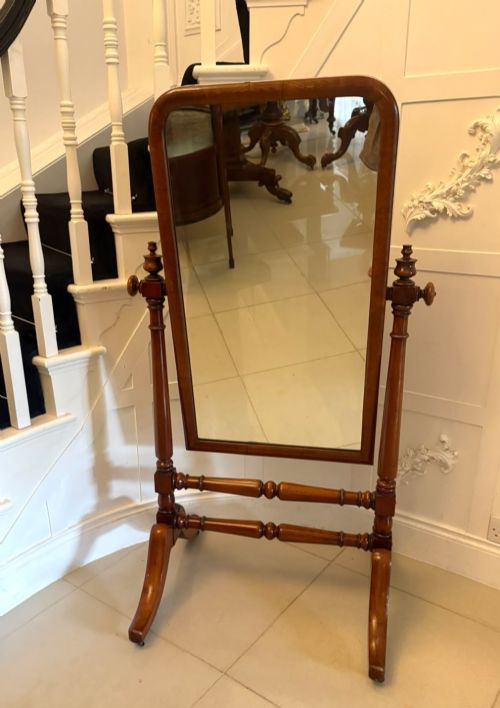
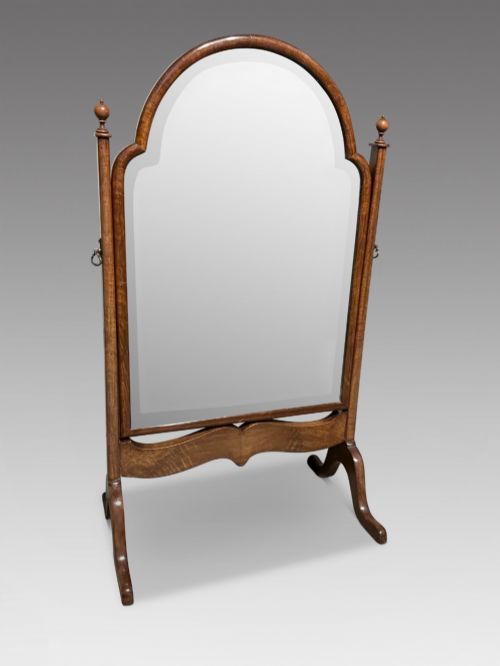
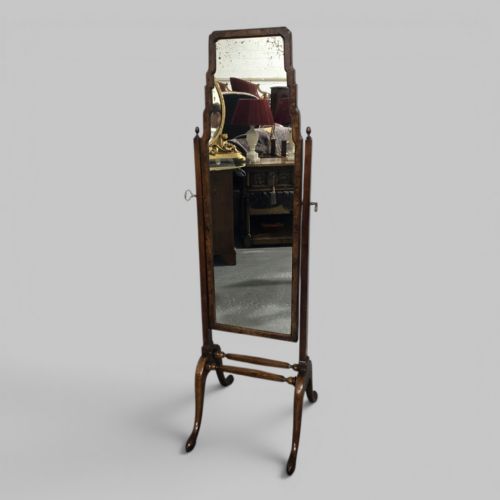
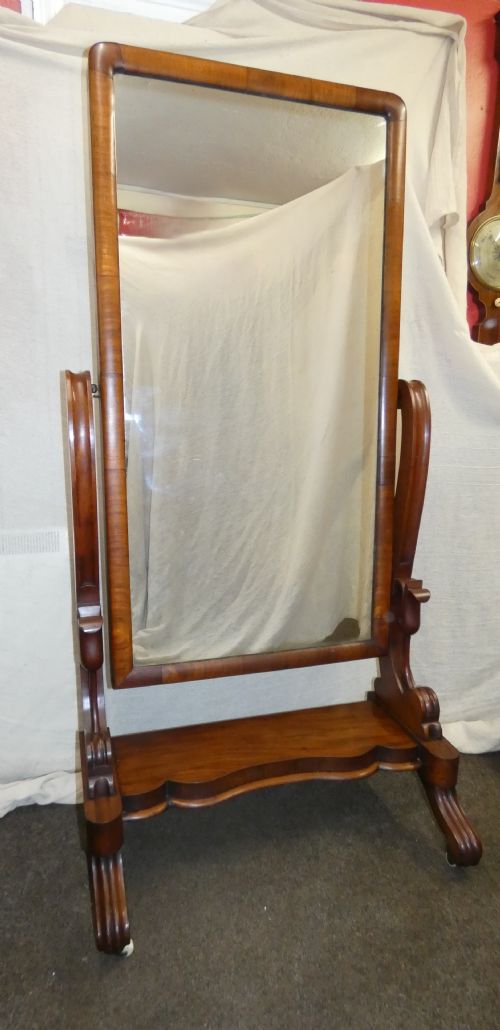
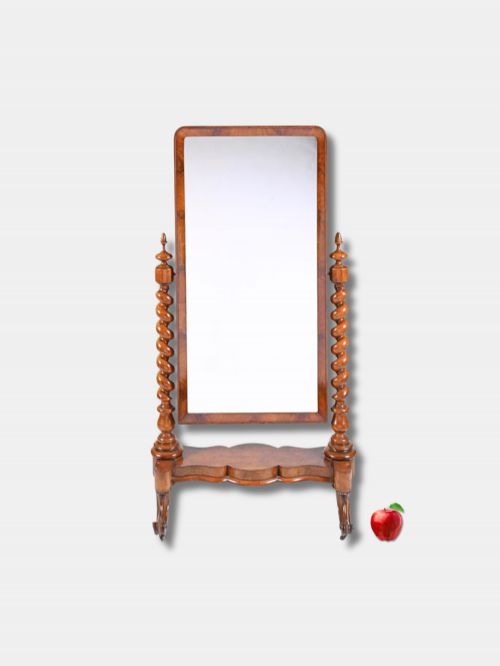
A vintage wooden cheval mirror brings height and movement to a room, offering a full-length reflection through pivoting frames set upon sturdy floor supports.
Vintage Wooden Cheval Mirror
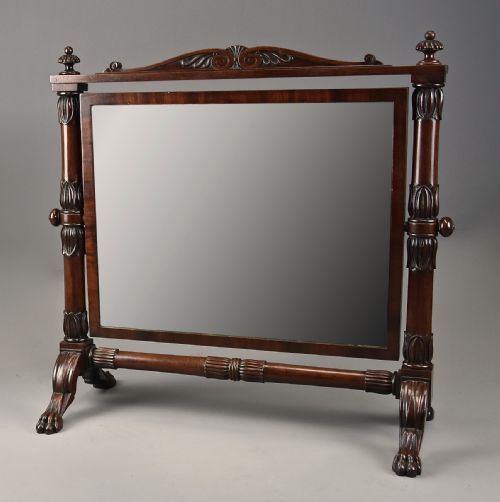
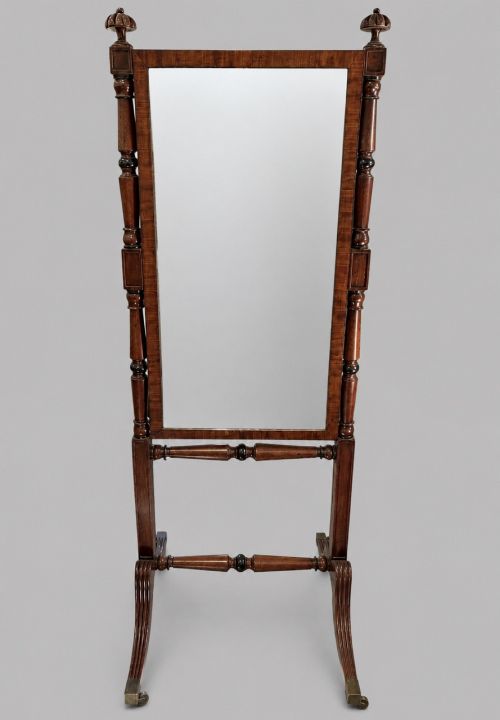
When you search for a vintage wooden cheval mirror, you encounter tall freestanding floor glasses and smaller dressing table versions designed to sit on surfaces. The pieces span periods from the Georgian and Regency eras through the Victorian, Edwardian, and Art Deco years.
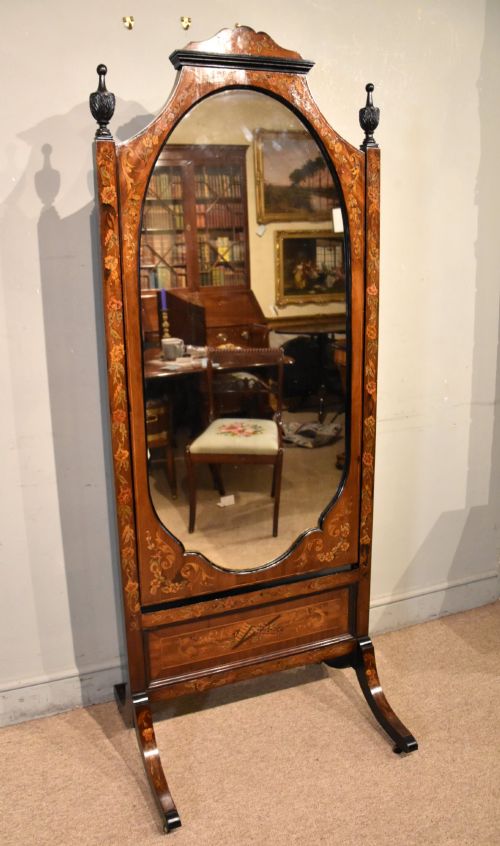
Mahogany and walnut dominate the selection, appearing in plain timbers, rich burr veneers, and inlaid designs. Frames range from simple rectangular shapes to elaborate carved and barley twist supports.
Floor-standing cheval mirrors share space with smaller toilet mirrors and table-top dressing glasses. Many examples show stylistic revivals, including Queen Anne and Louis XV influences applied to traditional wooden frames.
Materials and construction
Cabinetmakers constructed these frames using dense timbers like mahogany and walnut, frequently selecting figured burr walnut for decorative impact. Brass fittings secured the pivoting mechanisms that allowed the mirror glass to tilt.
Glass panels were set into wooden rebates behind beads, while floor mirrors relied on substantial upright posts attached to stable feet or trestle bases. Inlays of lighter contrasting woods and delicate carved details finished the primary timber structures.
One unusual survivor in the records is a boot maker's mirror, once used in a traditional tradesman's shop.
The standard of craftsmanship
Quality rests in the selection of the timber and the weight of the frame, where dense Cuban mahogany or figured burr walnut distinguishes finer examples from plain alternatives. The execution of hand-carved details and inlaid woodwork reveals the skill of the original maker.
The mechanical action of the brass pivot screws dictates how well the frame holds its angle over time. Heavier, well-balanced floor stands prevent the mirror from wobbling or sagging when adjusted.
P & MA Nicholson
The Vintage Wooden Cheval Mirror Glossary
- Cheval mirror
- A freestanding full-length mirror suspended on a pivoting frame between two upright posts. The word derives from the French term for horse.
- Toilet mirror
- A smaller dressing mirror designed to sit upon a chest of drawers or a dressing table. These often incorporate small drawers in the base plinth.
- Burr walnut
- A prized wood veneer harvested from tree growths, creating intricate swirling grain patterns. It appears frequently on high-status Victorian and Edwardian frames.
- Inlay
- The technique of embedding pieces of contrasting wood into the primary surface to form decorative patterns. Edwardian and Victorian makers utilised this for linear borders.
Vintage Wooden Cheval Mirror: Frequently Asked Questions
What is a cheval mirror?
A cheval mirror is a full-length looking glass mounted on a freestanding frame with pivots, allowing the user to tilt the glass to various angles.
These pieces were designed for bedrooms and dressing rooms to provide a complete view of attire.
How do I date a wooden mirror?
Dating relies on identifying the primary timber, the style of the frame, and the construction methods used in the woodwork. Georgian and Regency pieces show different carving styles and veneer choices compared to later Victorian or Edwardian examples.
Hardware such as brass pivot screws and the clarity or foxing of the mirror glass also offer clues to the period of manufacture.
Where should I place a floor mirror?
Floor mirrors require a stable surface and enough clearance around the frame to allow the glass to tilt fully without striking walls or furniture. Placing them opposite a window helps bounce natural light into darker corners of a room.
Ensure the floor supports rest evenly on the ground to prevent strain on the pivot pins.
Can I adjust the mirror angle?
Most cheval mirrors feature side thumbscrews or pivot pins that loosen to let you tilt the glass and tighten to hold it in place. Older brass fittings should be turned gently to avoid damaging the threaded receiver within the wooden uprights.