


Vintage Wooden Bear Carving
These vintage wooden bear carvings bring character and historical craftsmanship into a room, offering both sculptural presence and functional utility.
Vintage Wooden Bear Carving
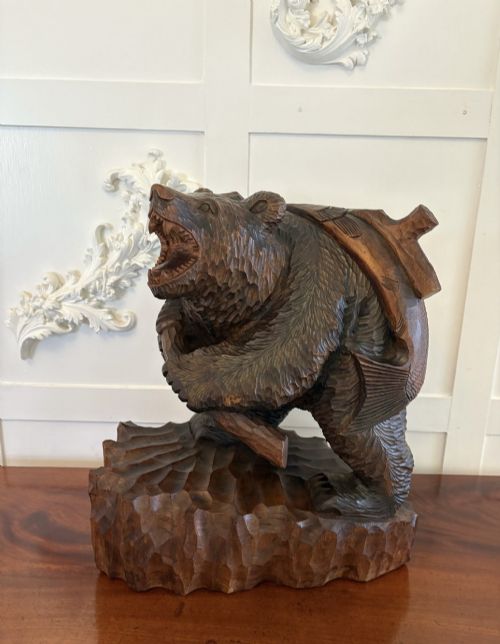
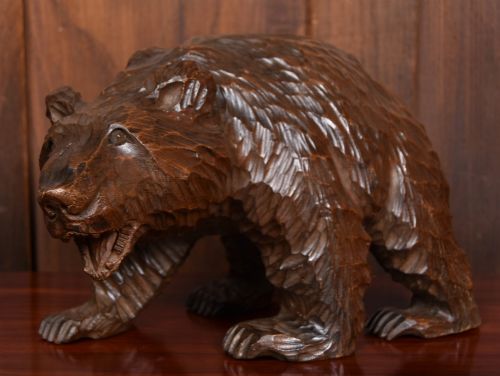
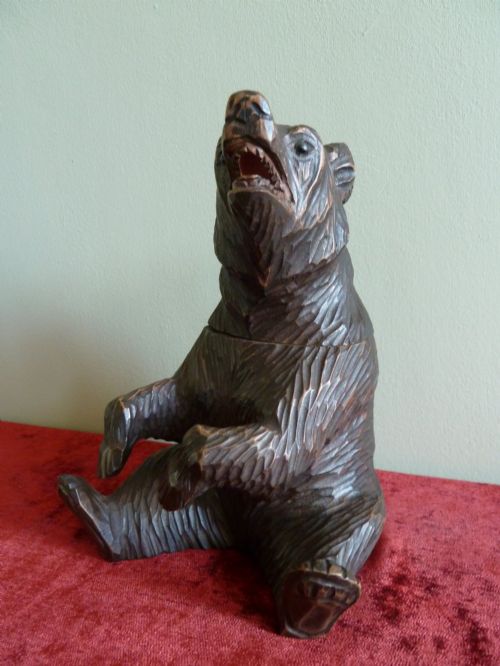
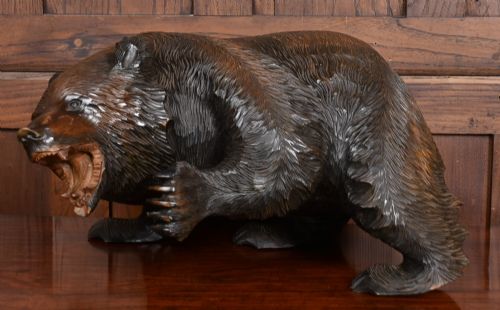
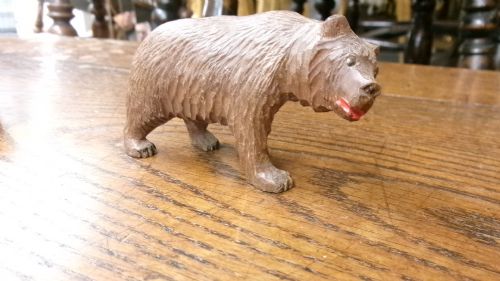
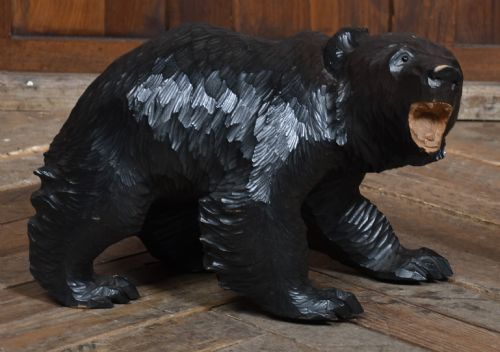
A vintage wooden bear carving represents a tradition of animal sculpture spanning the nineteenth and early twentieth centuries. These pieces emerge primarily from European Black Forest workshops and Japanese folk art traditions, capturing bears in various poses from standing figures to functional items. You will frequently encounter examples shaped as tobacco boxes, humidors, bookends, table lamps, and larger hall stands or stick stands.
The objects on this page range from diminutive nineteenth-century miniatures to large Edwardian sculptures. Many feature detailed renderings of brown bears, sometimes depicted carrying fish or standing with glass stud eyes. The forms combine decorative appeal with practical nineteenth and early twentieth-century domestic uses, such as holding tobacco or illuminating a desk.
What varies in quality
Quality rests upon the depth of anatomical observation and the crispness of the hand-carved fur and facial detailing. Superior examples demonstrate a lifelike posture and proportional balance, whereas simpler pieces show more stylised or rigid execution. The integration of functional elements, such as hinged tobacco jars or carved bookends, also distinguishes standard decorative figures from more ambitious sculptural works.
Recorded periods span from the mid-nineteenth century through the 1920s, encompassing Black Forest and Japanese folk art styles.
The Vintage Wooden Bear Carving Glossary
- Black Forest
- A style of wood carving originating from the mountain region of central Europe, famous for naturalistic animal sculptures and rustic furniture. These works often portray bears and other wildlife with dark stained finishes.
- Kibori Kuma
- A traditional style of Japanese wood-carved bear originating from Hokkaido. These carvings are recognised for their distinctive folk art execution and textured surface work.
- Linden wood
- A pale, fine-grained timber favoured by carvers for its soft texture and lack of prominent grain. This material allows artisans to execute intricate fur details and deep undercuts without splitting.
- Humidor
- A specialised box or jar designed to keep tobacco moist and fresh. In carved bear pieces, the animal's body or head often forms the hinged lid of the container.
Vintage Wooden Bear Carving: Frequently Asked Questions
How do I date a wooden bear carving?
Dating relies on stylistic markers and recorded periods spanning from the mid-nineteenth century through the early twentieth century. Pieces correspond to distinct regional traditions including European Black Forest workshops and Japanese folk art.
Examinations of the wood patination, hardware on boxes, and construction methods help place an object within the eras represented.
What functional types of bear carvings exist?
Carvers applied the bear motif to numerous household objects during the nineteenth and twentieth centuries. Common functional forms include table lamps, bookends, humidors, tobacco boxes, hall stands, and stick stands.
Other items range from standalone sculptures and figurines to sets of miniature bears and decorative objects.
Where did these bear carvings originate?
The evidence points to two primary geographical traditions for these sculptures. European Black Forest pieces share stylistic roots with Swiss and German woodcarving centres.
Japanese folk art traditions are represented by Kibori Kuma carvings, reflecting distinct regional woodcarving practices from Hokkaido.