
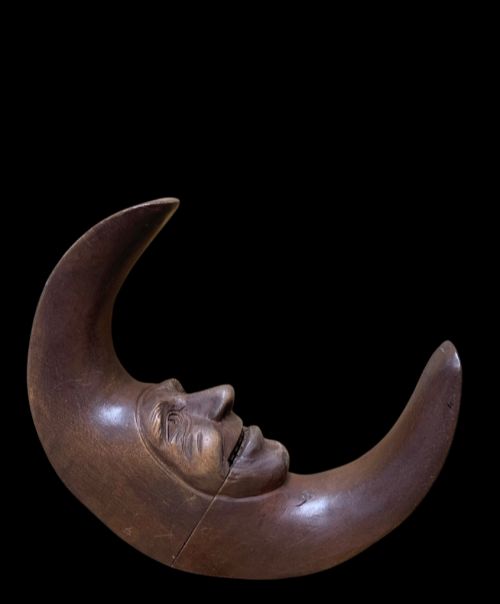


Vintage Wood Nut Cracker
These vintage wood nut crackers are tactile carved pieces of folk art that bring instant character to a fireside table.
Vintage Wood Nut Cracker
When you search for a vintage wood nut cracker, you find items that range from simple treen utility pieces to expressive figural carvings. The selection on this page leans heavily towards Black Forest and rustic folk art traditions from the nineteenth and early twentieth centuries.
Many examples take familiar natural or human shapes such as acorns, clenched fists, and a man in the moon. These are solid everyday objects that combine practical leverage with sculptural form, originating mostly from the 1800s, the Edwardian era, and around 1900.
The dominant forms are sturdy handheld or screw mechanisms carved from rich timbers like walnut and linden wood. They reflect a period when domestic items were individually shaped by hand rather than mass-produced in metal.
How they were made
The technique relies on the natural grain of the wood to give strength to lever arms and hinged jaws. Artisans finished the surfaces with simple oils or waxes that deepened the natural colour of the wood over decades of handling.
What varies in quality
The expression and anatomical detail of figural pieces, such as a clenched fist or a man in the moon, set the finer examples apart. The choice of timber also matters, with richly grained walnut commanding attention over plain utility woods.
The Vintage Wood Nut Cracker Glossary
- Treen
- Small, useful wooden household objects made before the dominance of plastics and mass manufacturing. These items were turned on a lathe or carved by hand for daily domestic service.
- Black Forest
- A style of wood carving originating from the mountainous region of central Europe during the nineteenth century. It is known for realistic animal and human figures rendered in dark woods.
- Folk art
- Utilitarian objects made by self-taught or traditional craftsmen rather than professional academic sculptors. They prioritise functional charm and regional character over formal academic rules.
- Hardwood
- Dense timber from broad-leaved deciduous trees, chosen for tool handles and kitchen implements because it resists denting and splitting under heavy pressure.
- Linden wood
- A pale, fine-grained timber favoured by carvers because it cuts smoothly in any direction without splintering. It allows for intricate facial details on small objects.
Vintage Wood Nut Cracker: Frequently Asked Questions
How do you use a vintage wood nut cracker?
Most of these pieces operate on a simple lever principle where the handles are squeezed together to force the jaw against the nut. Users should apply gentle, steady pressure rather than sudden force to protect the old wood and hinges.
Display them on a sideboard or keep them in a bowl near the hearth so they remain accessible for use during cooler months.
How do I date a wooden nutcracker?
Dating relies on stylistic clues, such as the deep relief carving typical of nineteenth-century Black Forest pieces or the simpler turned shapes of Georgian treen. Examining the wear patterns on the high points of the wood also helps indicate age.
Comparing the fastener types and the finish to known period examples narrows down whether the piece originates from the Victorian era or around 1900.
How should I clean my wooden nutcracker?
Clean the surface gently with a dry, soft cloth to remove dust from the recesses of the carving. Avoid using water, harsh detergents, or soaking the wood, as moisture damages old finishes and can cause the timber to crack.
An occasional application of a natural beeswax polish will nourish the dry wood and maintain its soft sheen without altering the patina.