


Vintage Wood Card Table
A vintage wood card table is a practical folding surface built for play, most often discovered in mahogany or rosewood across this selection.
Vintage Wood Card Table
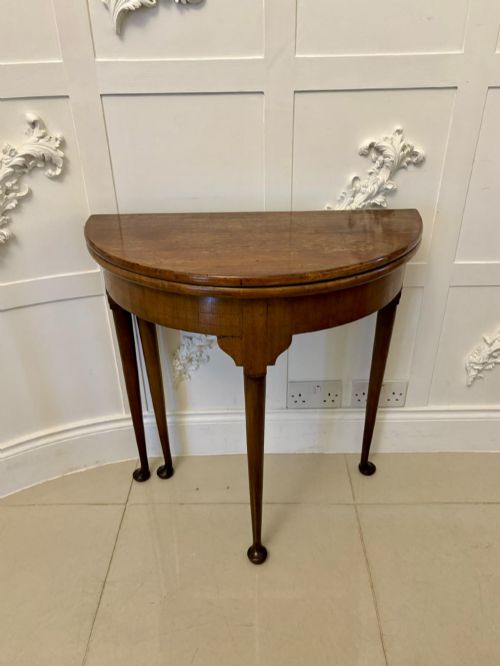
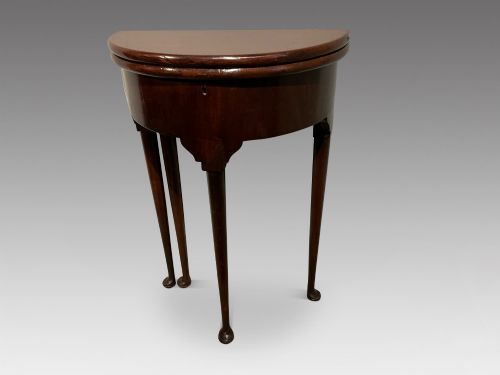
A vintage wood card table provides a folding or swivel top designed primarily for parlour games and social evenings. These pieces bridge the gap between functional furniture and decorative woodwork, appearing in forms such as envelope tops, demi-lune folding leaves, and Pembroke or tilt-top designs.
The selection here draws heavily from the 19th century, Edwardian era, and 1920s traditional styles. Mahogany remains the most common timber, accompanied by walnut, rosewood, and satinwood depending on the period of manufacture.
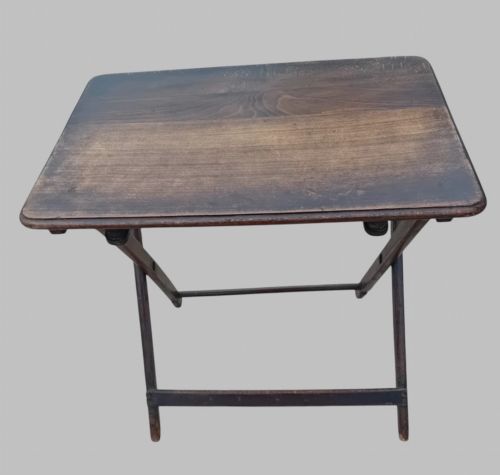
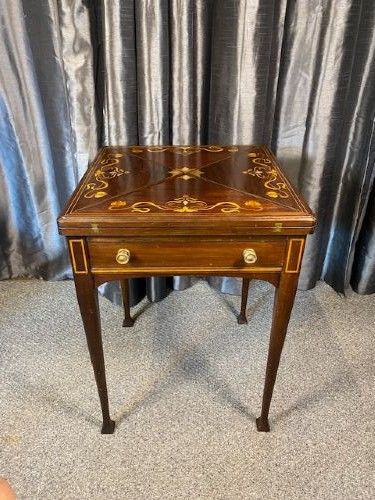
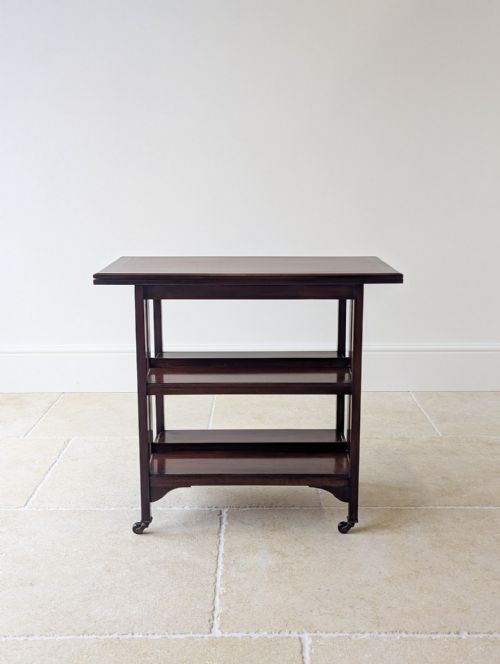
Buyers encounter everything from simple beech campaign folding tables to elaborate rosewood and brass-inlaid Edwardian pieces. Each serves as a compact centre or side table when closed, expanding to reveal a baize-lined playing surface when opened.
Materials and construction methods
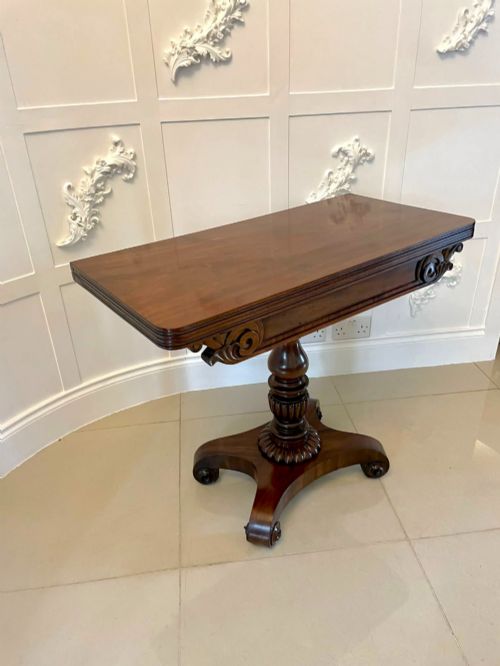
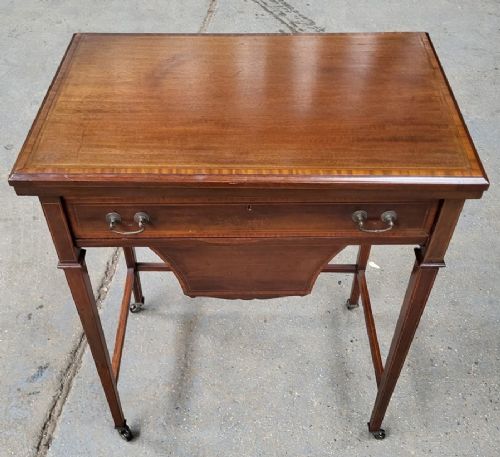
Cabinetmakers utilised solid timbers and veneers such as mahogany, walnut, burr walnut, and satinwood, often applying cross-banding or brass inlay to enhance the primary wood surfaces. Beech and rosewood also appear frequently, providing sturdy structural frames and rich contrasting grains.
Surfaces intended for play were lined with baize, a traditional woollen fabric that protected both the timber and the counters during card games. Hinges, swivelling mechanisms, and folding leaf supports allowed the top sections to move smoothly without compromising the stability of the pedestal or leg frame.
An adventurous Thonet bentwood card table from around 1900 offers a delightfully unexpected triangular twist on traditional parlour furniture.
Distinctions in craftsmanship
Quality rests in the selection of figured timbers and the precision of the joinery where folding leaves meet the main frame. Pieces featuring crisp satinwood inlay, brass stringing, or burr walnut show a higher degree of cabinet-making skill than plain utilitarian versions.
The smoothness of the folding or rotating mechanism dictates daily usability, separating standard production pieces from finer examples. Solid structural integrity in the legs and hinges ensures the table remains level when opened for play.
Thonet
The Vintage Wood Card Table Glossary
- Baize
- A coarse woollen fabric used to line the playing surface of card and games tables. It provides a soft, non-slip mat for handling cards.
- Envelope top
- A clever folding tabletop design featuring four triangular flaps that swivel open to reveal the square playing surface. This form gained popularity during the Edwardian period.
- Demi-lune
- A half-moon shape used for console and fold-over tea or card tables that sit flush against a wall when closed. Opening the top reveals a full circular or square surface supported by a swing leg.
- Cross-banding
- A decorative border of veneer laid around the perimeter of a tabletop so that the grain runs perpendicular to the centre panel. It frames the primary wood with a contrasting stripe.
- Tilt-top
- A hinged tabletop mechanism that allows the surface to pivot vertically into a locked position when not in use. This saved valuable floor space in period drawing rooms.
Vintage Wood Card Table: Frequently Asked Questions
How do I open a fold-over card table?
Most folding tables rely on a pivoting or rotating top that swings parallel to the base before opening out. A hinged rear leg or swing bracket then moves outward to support the extended leaf.
Take care not to force stiff hinges, as aged timber and historical pivot pins require gentle handling during operation.
What were these tables originally used for?
These tables served households during evening gatherings for card games, chess, and social conversation. When closed, they functioned as ordinary side tables, console tables, or tea tables against a drawing room wall.
The dual-action capability made them essential furniture for entertaining guests in homes with limited floor space.
How do I tell an Edwardian table from a Victorian one?
Victorian tables often feature heavier proportions, dark mahogany or burr walnut veneers, and robust pedestal or pillar bases. Edwardian examples tend to look lighter and more refined, frequently incorporating satinwood inlay and delicate tapering legs.
Construction details and secondary woods inside the framing help confirm the manufacturing era.
How do I care for the baize lining?
Keep the baize clean by gently brushing it with a soft fabric brush to remove dust and debris. Avoid using liquid cleaners or water directly on the woollen surface to prevent shrinkage or staining.
Direct sunlight can fade the vibrant green or red tones of historical baize over time, so position the table away from bright windows.