



Vintage Wood Cake Display
These vintage wood cake display pieces bring tiered elegance to tea time, combining period craftsmanship with practical charm.
Vintage Wood Cake Display
When you search for vintage wood cake display, you encounter practical serving furniture designed for entertaining and afternoon tea. These pieces range from compact circular stands to multi-tiered configurations intended to present baked goods effectively.
The selections available here span several distinct eras, drawing heavily from Edwardian and Victorian workshops. You will frequently find folding designs alongside fixed stands, reflecting the versatile needs of historical households.
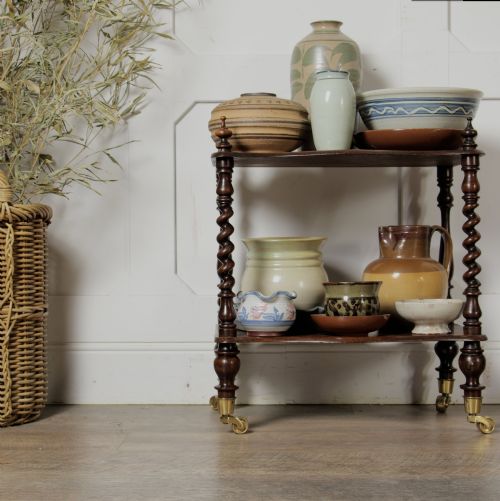
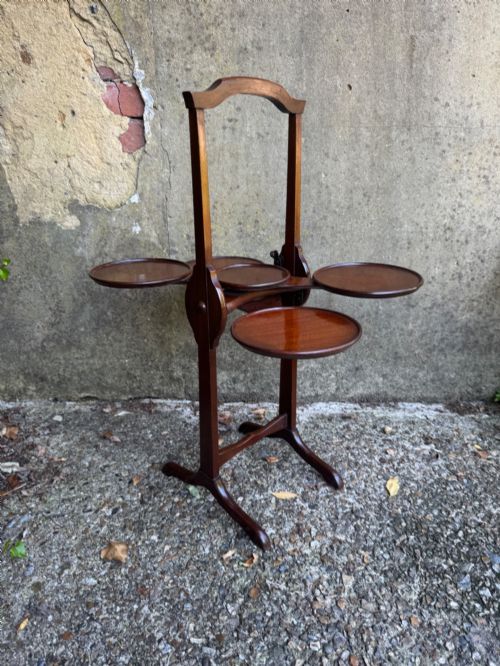
Forms include tiered stands, folding tea tables, and occasional tables that double as display surfaces. The overarching aesthetic relies on warm timber tones and functional tiers that make efficient use of space.
How they were made
Cabinetmakers utilised sturdy hardwoods such as mahogany and oak to build the foundational frames of these stands. These timbers provided the necessary strength to support multiple tiers without compromising stability.
Decorative touches often included boxwood and satinwood inlay to add contrast and visual interest to the surfaces. Brass fittings and hinges appeared on folding models to ensure smooth mechanical movement during assembly and storage.
Vintage Wood Cake Display Retail Price Guide 2026
Typical asking prices for vintage wood cake display among the pieces listed under this phrase on Sellingantiques today, from the lower quarter to the upper quarter. They describe what is for sale here now, not the wider market.
Some folding tea tables doubled as ingenious space-saving devices, ready to whisk away the scones before anyone noticed.
What varies in quality
The refinement of the timber selection largely determines the grade of a piece, with figured grain and careful matching marking out superior examples. Plain utility stands contrast sharply with those featuring delicate Sheraton Revival motifs or intricate inlay work.
Joinery execution dictates the longevity and physical stability of each stand, particularly on folding mechanisms which demand precise engineering. Finer workshops invested greater time in ensuring tiers remained level and hinges operated without resistance.
The Vintage Wood Cake Display Glossary
- Sheraton Revival
- A late nineteenth-century design movement inspired by the neoclassical furniture of George Sheraton. It frequently incorporates satinwood inlay and light mahogany frames.
- Tiered Stand
- A piece of furniture featuring multiple horizontal surfaces arranged vertically. This configuration maximises display capacity while retaining a small footprint.
- Barley Twist
- A type of turned wooden column resembling a twisted rope. This decorative carving style appears frequently on nineteenth-century supports.
- Dumb Waiter
- A freestanding multi-tiered piece designed to hold food and tableware. Earlier iterations often served formal dining rooms before smaller cake stands became popular.
Vintage Wood Cake Display: Frequently Asked Questions
How do I fold these stands?
Most folding cake stands rely on hinged vertical axes or scissor-action pivots that allow the tiers to collapse inward for storage. Operating them simply requires gently lifting or guiding the central frame until the joints lock or rest flat.
Take care not to force stiff brass hinges which may have settled over decades. A light application of appropriate lubricant can help restore smooth movement.
Can I use these for modern afternoon tea?
These pieces function wonderfully for serving cakes, pastries, and sandwiches during gatherings. Their original purpose aligns directly with contemporary entertaining needs.
Consider placing a protective cloth or doily on the wooden tiers if serving moist items. This preserves the historical polish while allowing practical use.
How do I date a wooden cake stand?
Dating relies on examining construction methods, wood types, and stylistic indicators such as inlay patterns or turning styles. Edwardian examples often feature lighter mahogany and simpler folding frames, whereas Victorian pieces frequently display heavier turnings or barley twist columns.
Georgian iterations, such as dumb waiters, showcase earlier cabinetmaking techniques and heavier structural timber. Comparing hardware and joinery helps confirm the era of manufacture.
Where should I place a tiered stand?
These stands suit corners or side areas in a living room, dining space, or kitchen where they can remain accessible yet out of major traffic paths. Their vertical design makes them ideal for filling empty wall space without crowding a room.
Keep wooden items away from direct heat sources and strong sunlight to prevent the timber from drying out or fading. Stable indoor environments preserve the polished finish.