

Vintage Wingback
These vintage wingback armchairs offer deep-seated comfort and draught-excluding sides, spanning Victorian, Edwardian, and later revival styles.
Vintage Wingback
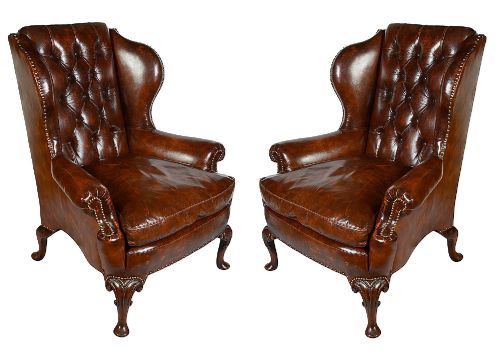
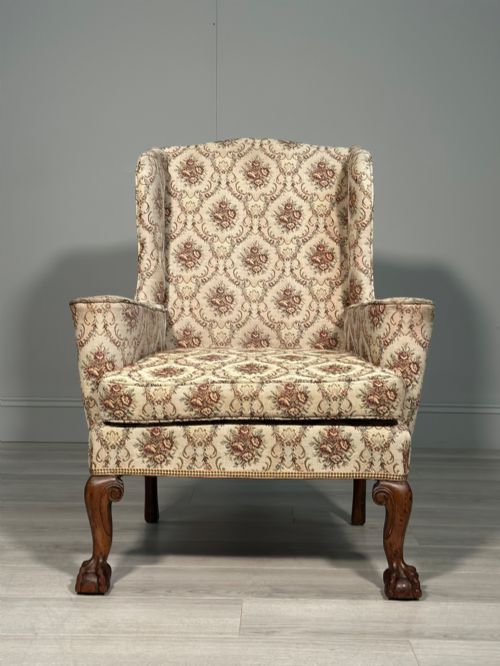
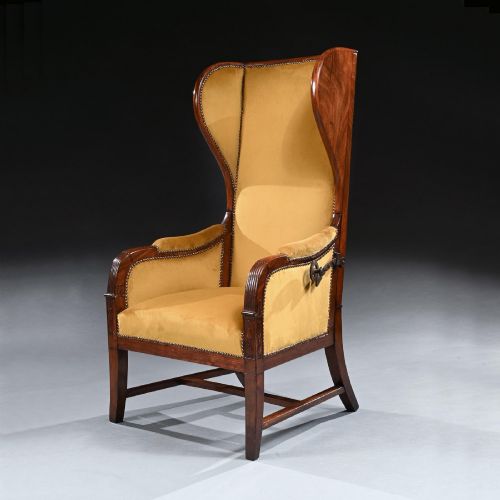
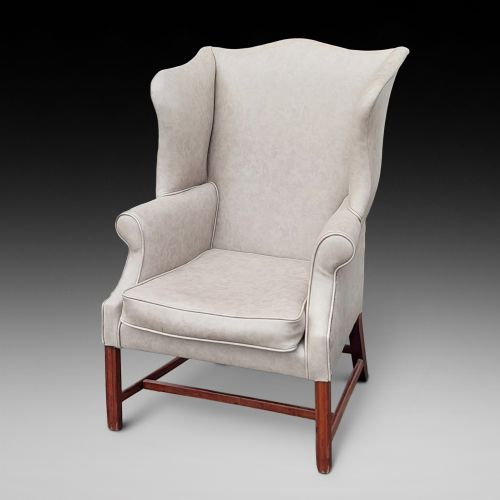
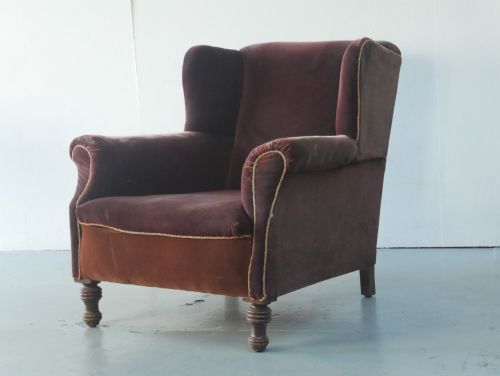
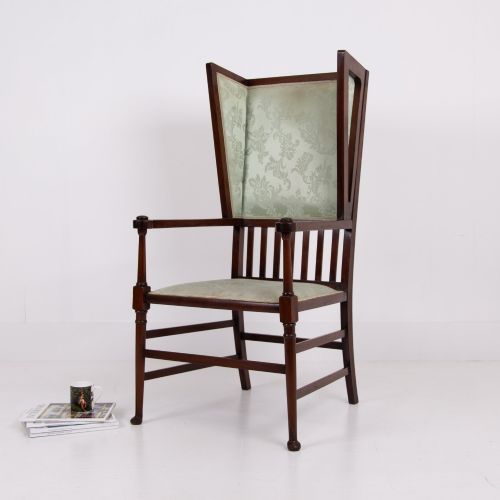
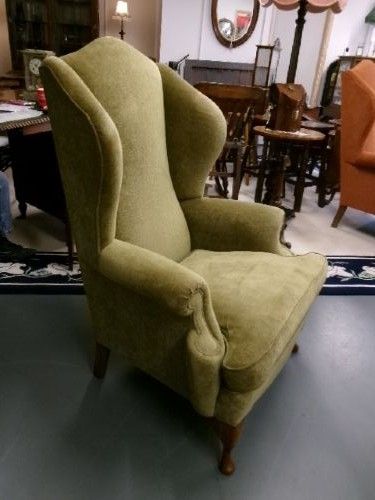
A vintage wingback is an upholstered armchair featuring characteristic side panels designed originally to shield the sitter from draughts near a fireplace. The selection here spans the Victorian and Edwardian eras, alongside later pieces stretching through the 1920s and 1930s.
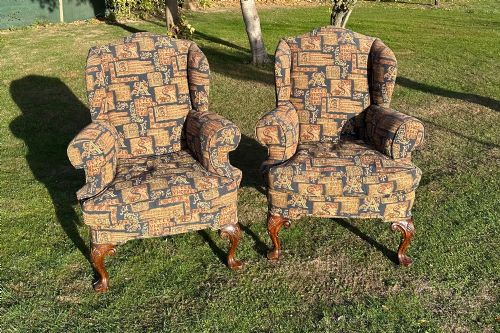
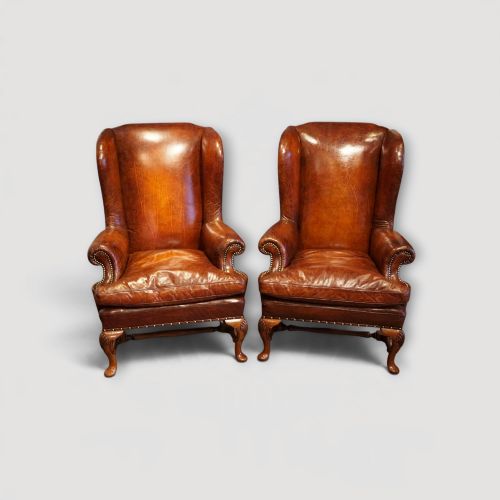
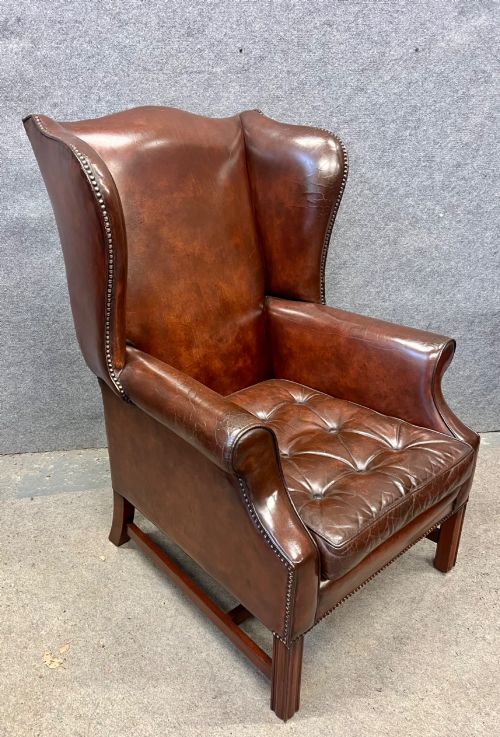
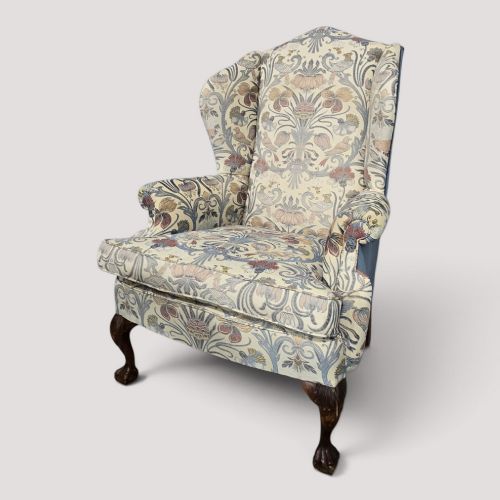
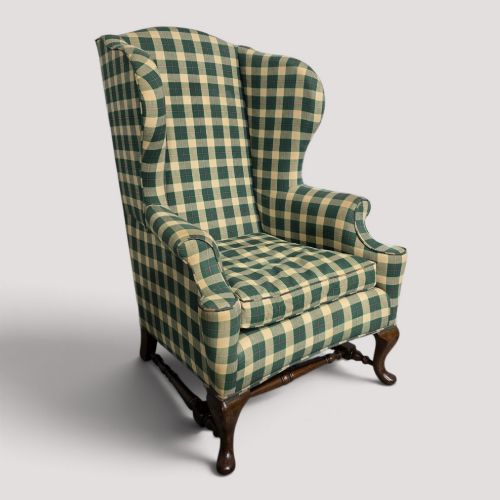
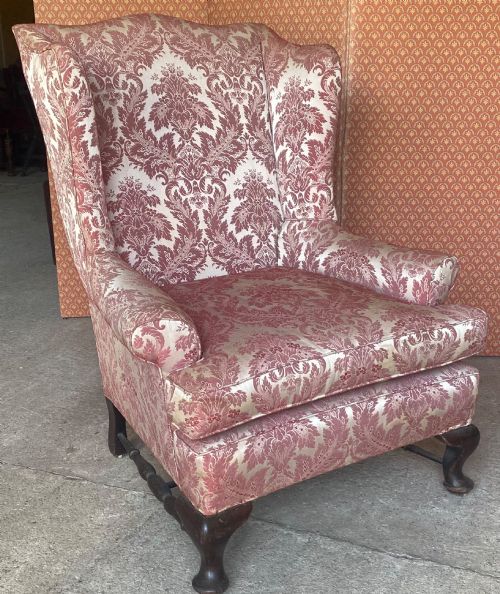
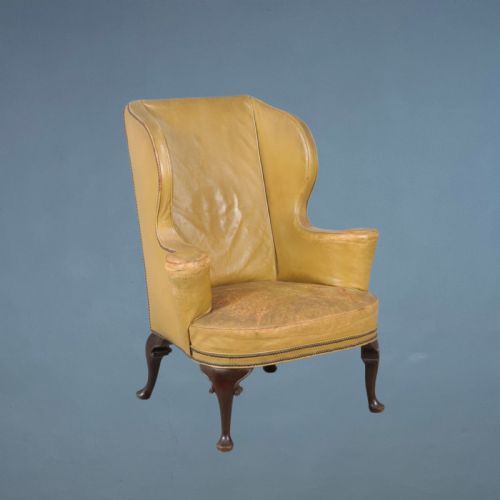
The dominant forms on this page include sturdy armchairs and pairs upholstered in leather, velvet, and various woven fabrics. Alongside traditional upright models, one encounters Georgian and Queen Anne style revivals built from mahogany, walnut, and oak.
Makers and workshops constructed these seating pieces to serve practical domestic roles in libraries, drawing rooms, and country houses. They range from standard domestic seating to larger button-backed library chairs and occasional child-sized variants.
Materials and construction methods
Frames rely on sturdy timbers such as mahogany, walnut, oak, and general hardwood or timber supports. Joinery techniques from the nineteenth and early twentieth centuries ensure structural resilience across these heavy frames.
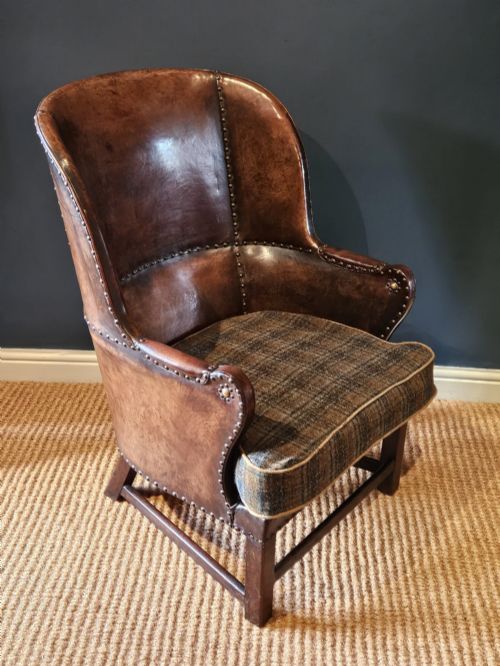
Upholstery materials encompass traditional brown, tan, and oxblood leather, alongside fabric options like velvet, chenille twill, and patterned wool plaids. Interior stuffing often utilises materials such as feathers and traditional padding methods.
Decorative detailing includes button backs, brass tacks, carved wooden elements, and inlaid mahogany woodwork seen in Edwardian examples.
Vintage Wingback Retail Price Guide 2026
Typical asking prices for vintage wingback among the pieces listed under this phrase on Sellingantiques today, from the lower quarter to the upper quarter. They describe what is for sale here now, not the wider market.
Listings feature frames built from mahogany, walnut, oak, and general hardwood, spanning the Victorian, Edwardian, and 1930s periods.
Understanding quality in vintage wingbacks
Quality rests significantly on the integrity of the wooden frame and the historical accuracy of any revival style, such as faithful proportions in Queen Anne or Georgian interpretations. Heavier hardwood frames generally indicate sturdier underlying construction.
The condition and authenticity of the upholstery materials, whether aged leather with natural patina or traditional fabric texturing, determine the character of each piece. Original stuffing methods and interior feather fillings also contribute to the integrity of the chair.
Howard And Sons
The Vintage Wingback Glossary
- Wingback
- An armchair featuring protective side panels attached to the arms to deflect draughts. This form dates back centuries and remains popular for fireside seating.
- Button back
- An upholstery technique where buttons are pulled deep into the padding to create a padded, diamond-patterned surface. This method provides both structural tension and formal decoration.
- Queen Anne style
- A design movement characterised by curving lines, cabriole legs, and understated elegance. Revival pieces from later periods emulate these eighteenth-century domestic aesthetics.
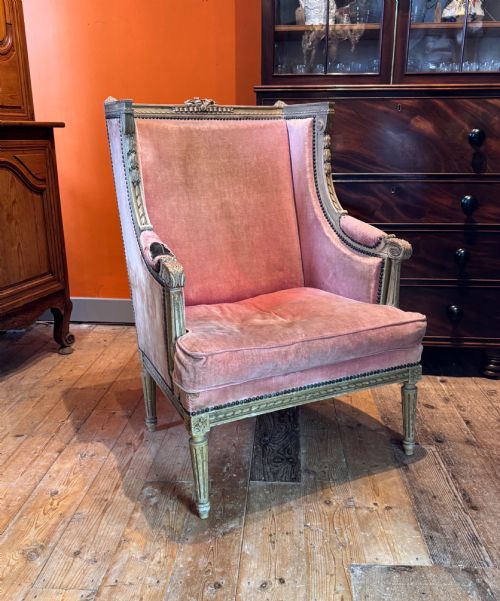
- Bergere
- An enclosed upholstered armchair with wooden framing exposed around the sides and back. These French-inspired seats frequently utilise cane or upholstered panels.
- Chesterfield
- A traditional style of couch or armchair typically featuring deep buttoning and rolled arms of equal height. Versions frequently appear in oxblood or brown leather.
Vintage Wingback: Frequently Asked Questions
How do I identify a Victorian wingback?
Victorian models often feature darker wood frames, heavier upholstery like button-backed leather, and robust proportions suited to nineteenth-century parlours.
They frequently display substantial padding and traditional studwork along the arm faces and wings.
Where should I place a wingback chair?
These armchairs suit studies, living rooms, and bedrooms where their high backs create a distinct seating zone.
Their original purpose near fireplaces makes them a natural choice for reading corners and fireside settings.
What is the difference between Georgian and revival styles?
Period Georgian pieces originate from the eighteenth century and exhibit authentic period construction methods and wear. Revival pieces were manufactured later in the nineteenth or twentieth centuries using historical design templates.
Both categories share the classic silhouette but differ in age and manufacturing context.
Are leather wingbacks difficult to maintain?
Aged leather requires simple conditioning to keep the material supple and prevent cracking over time. Regular dusting and occasional treatment preserve the natural patina developed across decades of use.
Fabric-upholstered variants require standard textile care depending on the specific weave.