
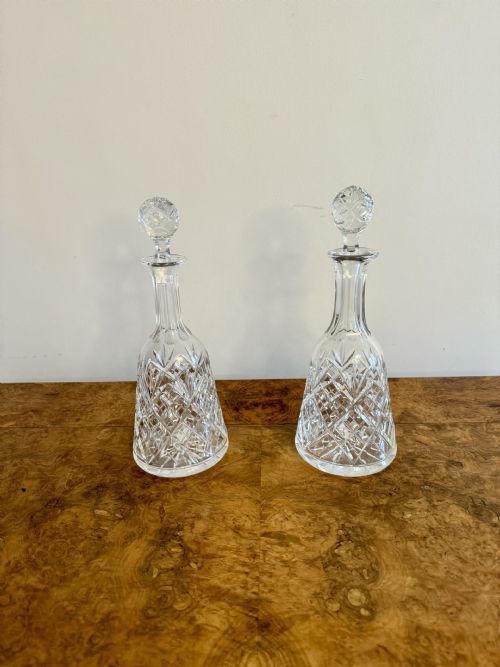


Vintage Wine Carafe Pair
A vintage wine carafe pair brings matched elegance to a table, offering coordinated pouring vessels shaped by decades of glassmaking.
Vintage Wine Carafe Pair
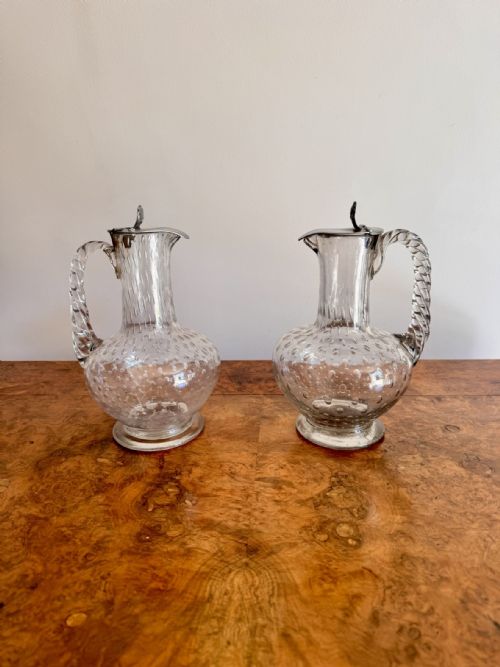
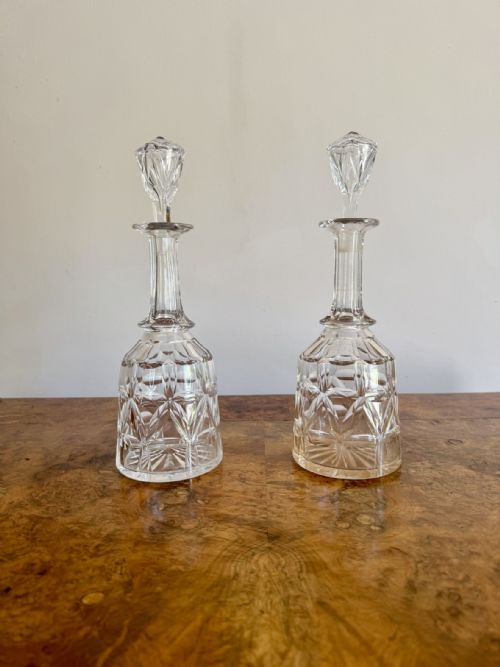
A vintage wine carafe pair comprises matching vessels designed for serving wine, encompassing forms from bell shaped bodies to shaft and globe profiles. Buyers exploring this category encounter coordinated sets intended to sit symmetrically on a dining table or sideboard.
The pieces appearing here span distinct eras, with Edwardian and Victorian examples forming the bulk of the selection alongside earlier eighteenth century designs and later Art Nouveau creations. These items take the shape of traditional decanters, claret jugs, and specialised carafes equipped with matching stoppers.
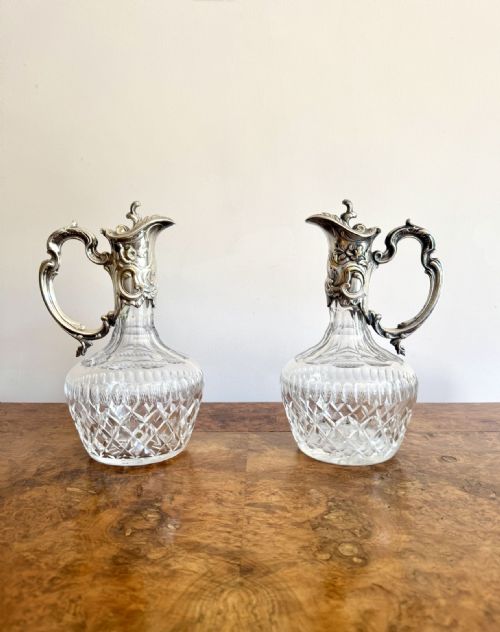
Origins range across English, French, and Austrian workshops, utilising styles such as Art Deco alongside classic Victorian and Edwardian aesthetics. Buyers will find both plain glass bodies and elaborately decorated vessels featuring metal mounts.
Markers of standard and execution
Quality rests upon the precision of the glass cutting and the clarity of the material, where finer pieces display crisp facets and heavy, balanced proportions. The integration of metal mounts, such as silver plate or pewter frames, separates standard productions from more elaborate workshop outputs.
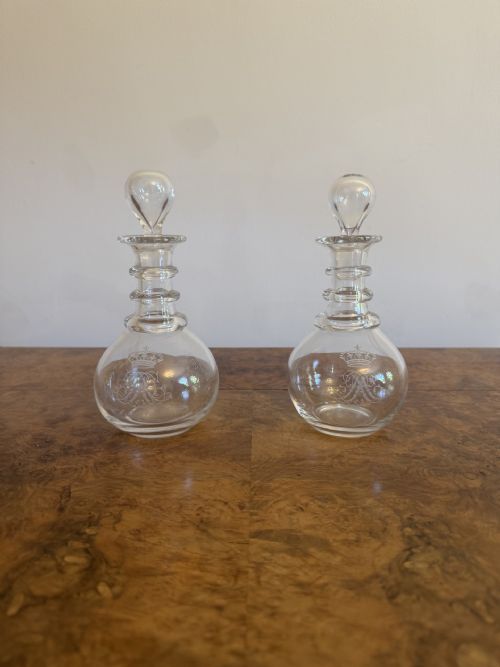
The presence of matching original stoppers and sophisticated decorative elements like engraved motifs or unusual spouts elevates a pair. Conversely, simpler forms without embellishment represent the more utilitarian end of the surviving range.
Listings feature glass, crystal, lead crystal, and silver plate across periods spanning the eighteenth century to the 1920s.
Rene Lalique
The Vintage Wine Carafe Pair Glossary
- Claret Jug
- A pouring vessel specifically intended for red wine, typically fitted with a handle and a hinged metal lid or spout. These often combine glass bodies with silver plated mounts.
- Shaft and Globe
- A decanter profile characterised by a long, slender neck rising above a rounded, spherical body. This design lowers the centre of gravity for stability.
- Lead Crystal
- Glass containing metal oxides that increases refractive index and weight, allowing for deeper and sharper facet cutting. It produces a distinct ring when struck gently.
- Ships Decanter
- A vessel featuring a wide, heavy base that tapers outward toward the bottom to prevent tipping on a rolling surface. They were originally utilised aboard marine vessels.
- Stopper
- The glass or fitted plug designed to seal the neck of a decanter and preserve the contents. Original matching stoppers are a key component of a complete pair.
Vintage Wine Carafe Pair: Frequently Asked Questions
How do I clean antique decanters?
Wash the interior with warm water and specialised cleaning beads rather than harsh detergents to protect the old glass. Avoid sudden temperature changes to prevent cracking the heavy material.
Dry the pieces thoroughly upside down on a soft mat before storing them with their stoppers slightly ajar to maintain freshness.
Are these pairs safe for modern wine?
Most glass and crystal vessels function safely for serving wine provided they are thoroughly cleaned of any residue from previous storage. Inspect the interior carefully to ensure the surface remains smooth.
Avoid leaving wine inside lead crystal vessels for extended periods if the glass has aged significantly. Use them for immediate decanting and serving during meals.
How can I tell Victorian decanters apart from Edwardian ones?
Victorian examples frequently display heavier cut glass patterns and deeper ruby or cranberry hues, reflecting mid to late nineteenth century tastes. The glass weight is often substantial with robust proportions.
Edwardian pieces tend toward lighter, brighter crystal and silver plated mounts with refined Edwardian elegance. Forms from this later period also embrace bell shapes and slender profiles.
What is the difference between a carafe and a decanter?
Decanters generally feature a fitted stopper designed to seal the contents tightly for storage and presentation. They often incorporate heavy glass bases and decorative cutting.
Carafes typically remain open at the top without a stopper, functioning primarily for immediate table service. They lean toward simpler silhouettes compared to heavily mounted claret jugs.