



Vintage Whiskey Decanter Box
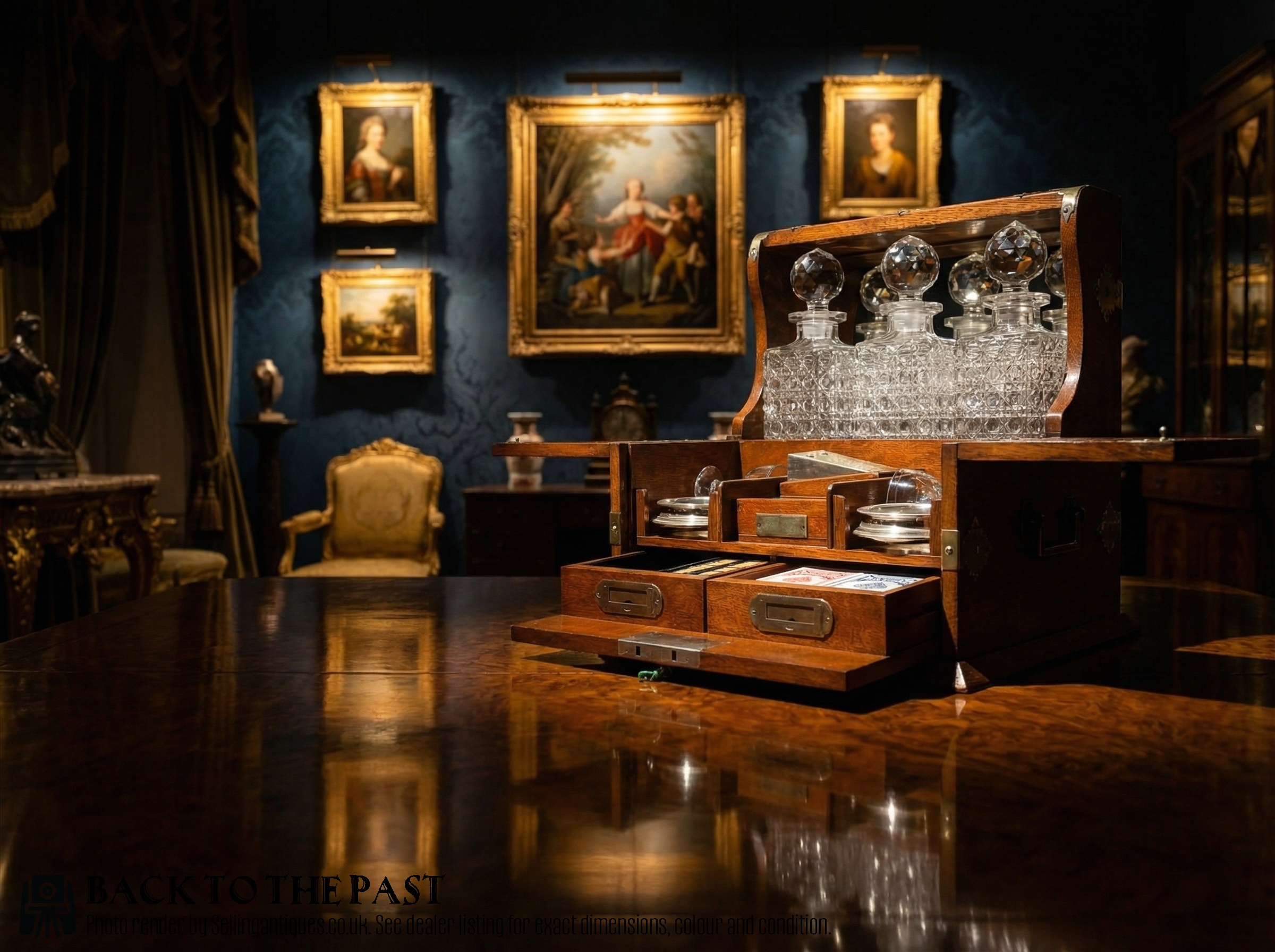
A vintage whiskey decanter box secures fine spirits behind lock and key, offering heavy crystal and rich timber built for late nineteenth-century entertaining.
Vintage Whiskey Decanter Box
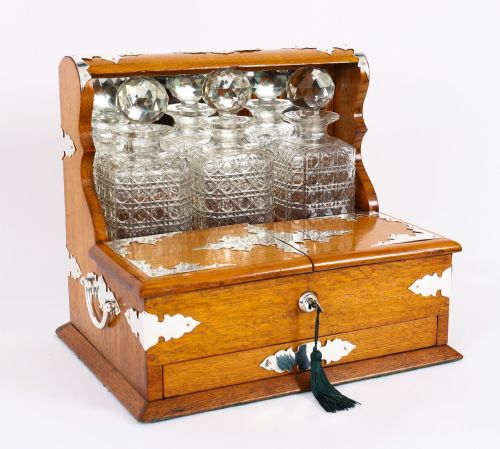
A vintage whiskey decanter box groups heavy cut crystal bottles within a secure timber housing designed for late nineteenth-century entertaining. These sophisticated pieces range from straightforward two-bottle enclosures to elaborate dry bar games compendiums equipped with brass mounts and mirrored backs.
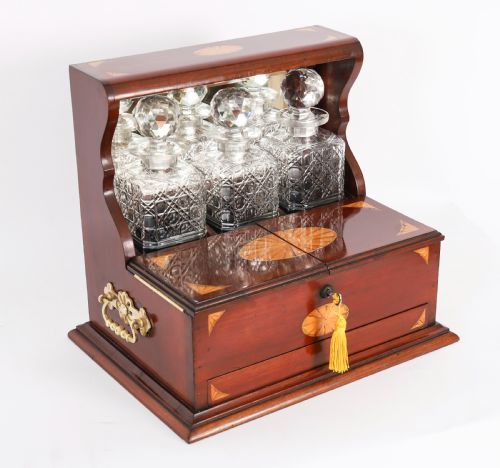
Buyers browsing this selection will most frequently encounter sturdy oak tantalus forms originating from the Victorian and Edwardian periods. Satin wood and walnut variations occasionally appear alongside brass-bound models that reflect the robust utility of the era.
The primary appeal lies in the combination of functional security and social display, housing decanters safely while presenting a handsome furniture piece for a study or drawing room. Each example demonstrates the distinct craftsmanship of late nineteenth-century British cabinet makers.
Materials and construction
Makers built these enclosures primarily from solid oak, walnut, and satin wood, often incorporating intricate inlay work to elevate the visual appeal. Brass mounts, handles, and lock mechanisms provided both structural reinforcement and decorative contrast against the dark timber.
Interior storage relied on precision woodwork to cradle heavy cut glass and cut crystal decanters securely during transport or handling. Mirror glass panels frequently lined the back of the compartments to reflect light through the glass bottles and their contents.
Vintage Whiskey Decanter Box Retail Price Guide 2026
Typical asking prices for vintage whiskey decanter box among the pieces listed under this phrase on Sellingantiques today, from the lower quarter to the upper quarter. They describe what is for sale here now, not the wider market.
Some nineteenth-century hosts cleverly hid the key to the tantalus inside a secret compartment just to test their guests' patience.
Judging quality and craftsmanship
Superior examples distinguish themselves through heavier timber selection, finer grain patterns, and more complex joinery that withstands decades of opening and closing. The inclusion of integrated games compendiums and multiple matching cut crystal decanters elevates a piece above standard single-bottle housings.
Hardware execution plays a major role in overall merit, where substantial cast brass mounts and fully functioning locking mechanisms demonstrate superior original investment. The clarity and depth of the cut glass decanters, alongside intact internal mirror glass, mark the boundary between ordinary barware and exceptional specimens.
The Vintage Whiskey Decanter Box Glossary
- Tantalus
- A locking drink container that restrains the stoppers of the decanters until the wooden or metal bar is released by a key. This clever mechanism prevented unauthorized sampling of expensive spirits by domestic staff.
- Games compendium
- A multi-purpose cabinet housing equipment for pastimes such as cards, dominoes, or boards alongside the liquor storage. These dual-purpose units catered to Victorian and Edwardian social gatherings.
- Cut crystal
- High-clarity glass featuring deep geometric patterns cut into the surface to catch and refract light. It forms the heavy vessels housed within these boxes.
- Silver plate
- A thin layer of silver applied over a base metal foundation to create bright decorative mounts and handles. It provides the appearance of solid silver without the extreme weight.
- Brass bound
- Furniture strengthened at the corners and edges with fitted metal plates secured by small screws. This technique protected vulnerable wooden joints from heavy usage.
Vintage Whiskey Decanter Box: Frequently Asked Questions
What is a tantalus?
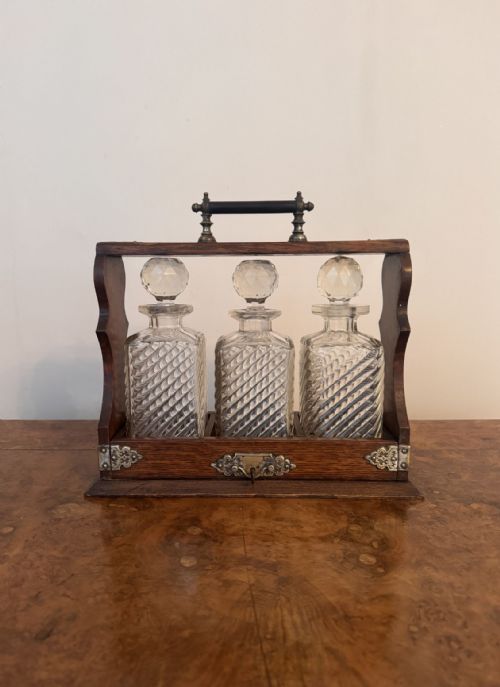
A tantalus is a locking barware frame that holds decanter stoppers firmly in place so the bottles cannot be removed without a key. This allowed hosts to secure expensive whiskey from household staff while keeping the bottles proudly on display.
Most versions found on this page secure either two or three heavy crystal decanters within a fitted oak or walnut base.
How do I date a decanter box?
Dating relies on timber choices, brass mount styles, and overall construction markers recorded in nineteenth-century and early twentieth-century cabinet making. Victorian pieces often feature heavy oak and robust brass mounts, while Edwardian examples can display lighter satin wood or walnut.
Examining the locks and interior mirror glass panels also helps narrow the production window between the eighteen-eighties and nineteen-hundreds.
Were these used for games too?
Many larger examples combine liquor storage with compartments for playing cards, boards, and counters as integrated games compendiums. These versatile pieces served as complete entertainment centres for Victorian and Edwardian drawing rooms.
The hinged compartments folded out or lifted to reveal dedicated slots for various social pastimes alongside the cut glass decanters.
How should I clean the wood and brass?
Maintain the timber using appropriate wax polish applied sparingly with a soft cloth to preserve the historic patina and grain depth. Avoid harsh chemical cleaners that might strip the original finish or damage adjacent mirror glass.
Brass mounts respond well to gentle dusting, though leaving a natural aged tone is generally preferred by collectors over aggressive polishing.