
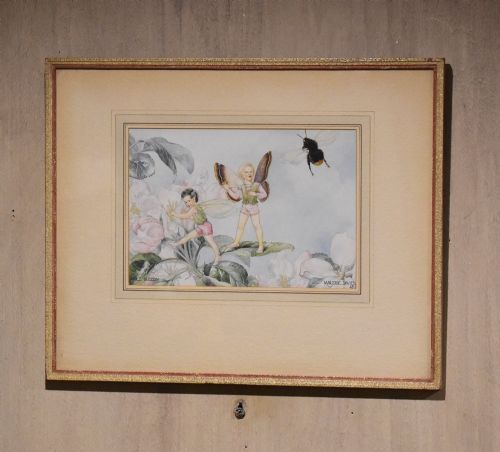
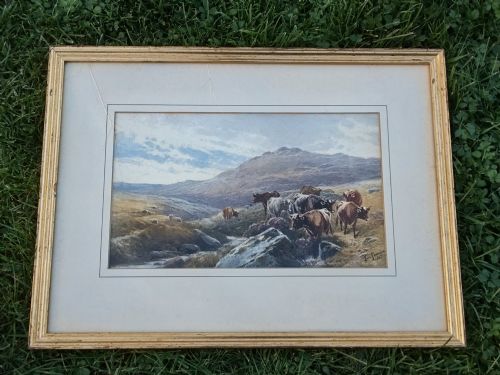
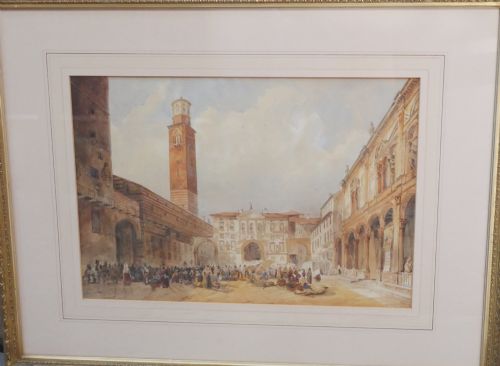
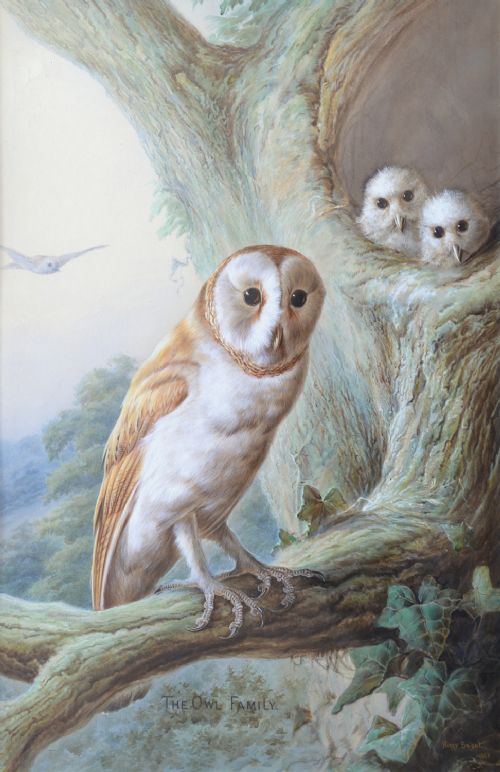


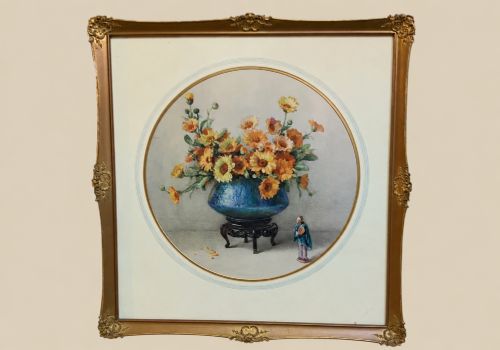
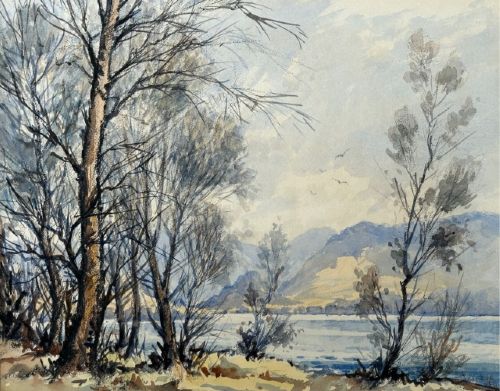
Vintage Watercolour Picture
A vintage watercolour picture brings the direct hand of an artist into a room, offering intimate views of landscapes, portraits and botanical studies.
Vintage Watercolour Picture
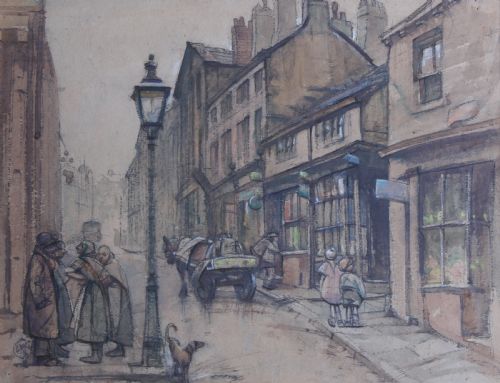
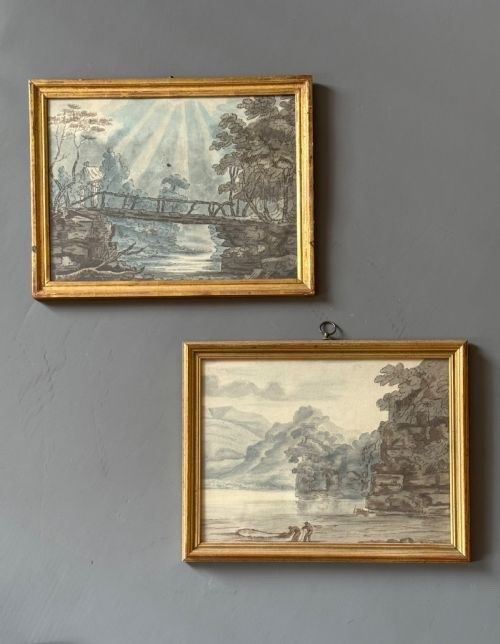
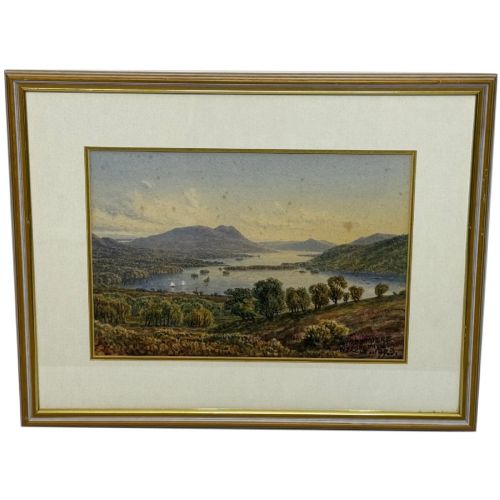
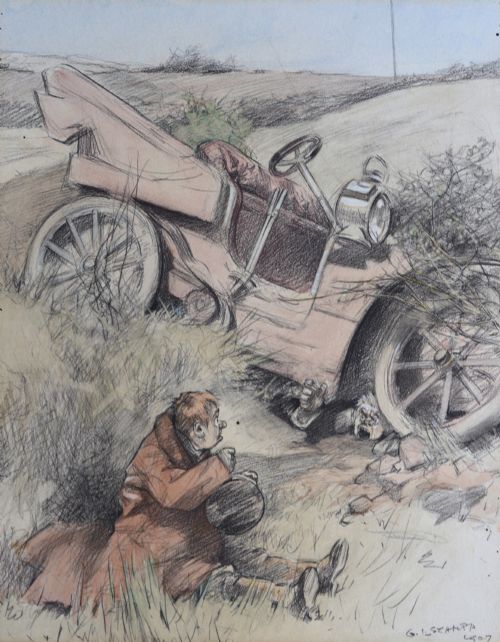
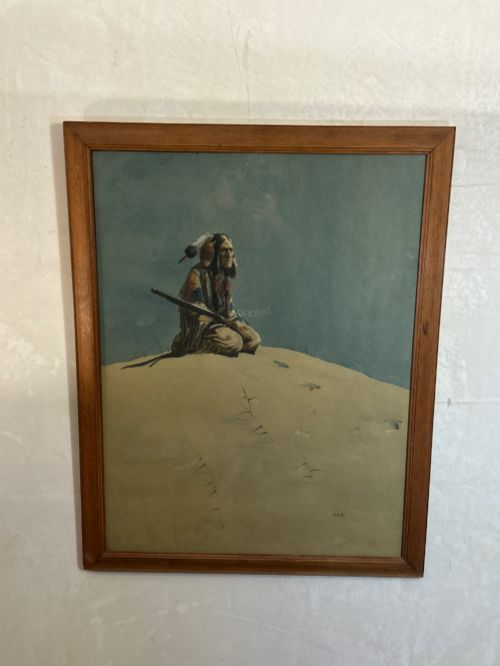
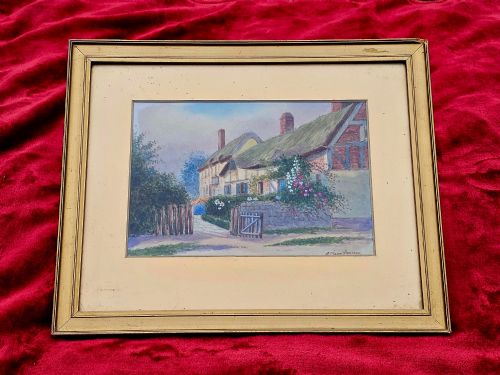
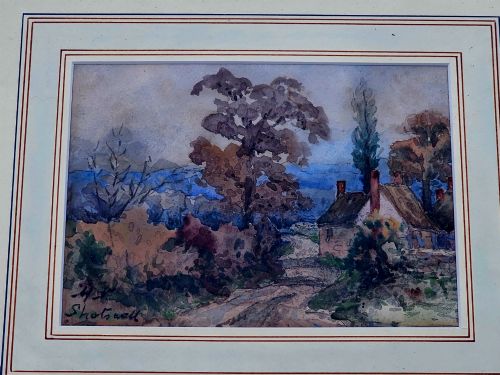
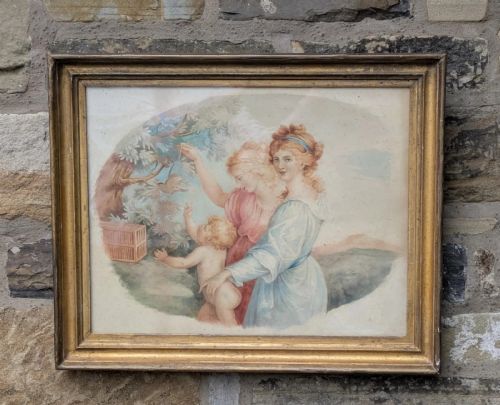
When you search for a vintage watercolour picture, you encounter works spanning from the nineteenth century through the mid-twentieth century, including Edwardian and Victorian examples. These pieces take the form of framed wall art, ranging from marine scenes and river landscapes to botanical studies and portraiture.
The selections on this page lean heavily towards works created on paper, preserved behind glass within wooden or giltwood frames. You will find both signed compositions by named artists and anonymous works capturing classical scenes, military portraits and game birds.
How they were made
Artists painted these works using watercolour pigment and ink applied directly to paper, often combining washes with fine linework or pastel details. Many examples incorporate gouache or bodycolour to build opacity in highlights and central subjects.
Framing forms an integral part of the survival of these works, utilising glass to protect the delicate pigment from atmospheric moisture and dust. Original wooden frames, rosewood surrounds and giltwood mouldings frequently house the paintings.
Listings feature works from the Victorian, Edwardian and Regency periods, alongside mid-century pieces executed on paper.
What varies in quality
The distinction in quality rests upon the surety of the brushwork and the precision with which the artist handles light and atmosphere. Stronger works display confident pigment manipulation and a balanced composition that commands the surface of the paper.
Condition and preservation heavily influence the standing of a piece, particularly the absence of foxing and heavy fading to the pigments. The harmony between the original mount, the glass protection and the enclosing frame contributes significantly to the integrity of the object.
George Lorain Stampa·Alfred Young Nutt·John Hassall·A. Marie Parsons·Robert Leslie Howey·William Joseph Boyes·Frank Watson Wood·Robert Thorne Waite·Richard Henry Wright·Thomas Maidment·Frederick James Kerr·George Rankin·Percy Lancaster·George Stanfield Walters·Warwick Goble
The Vintage Watercolour Picture Glossary
- Watercolour
- A painting method in which the pigments are suspended in a water-soluble vehicle. It relies on the white of the paper to provide luminosity through translucent washes.
- Giltwood
- Wood that has been coated with a thin layer of gold leaf or metallic paint. This finish frequently appears on period frames surrounding fine art.
- Foxing
- The brown spots and patches that develop on older paper due to chemical reactions over time. It is a common occurrence in antique works on paper.
- Gouache
- An opaque watercolour paint consisting of pigment mixed with water and a binding agent such as gum. It creates heavier, solid areas of colour distinct from transparent washes.
- Wash
- A thin, fluid layer of diluted watercolour pigment spread evenly across the paper. It is often employed to establish skies or background expanses.
Vintage Watercolour Picture: Frequently Asked Questions
How should I hang a watercolour picture?
Keep watercolours away from direct sunlight to prevent the pigments from fading over time. Indirect natural light in a dry room suits them best.
Ensure the frame hangs securely on picture hooks rather than relying on old string that may have weakened with age.
Are these paintings original works?
The selection includes original hand-painted works created directly by the artist on paper. Each piece bears the unique brushstrokes and pigment variations inherent to individual painting.
Occasional items may include period prints or reproductions, which are identified in their specific descriptions.
Why are watercolours framed under glass?
Glass protects the porous paper and water-soluble pigments from airborne dust, grease and moisture. Without this physical barrier, the surface remains vulnerable to permanent staining and atmospheric damage.
Original glass should be preserved where possible, as it often shares the age and character of the frame.
How can I tell the age of a painting?
Dating relies on the costume, architectural details and artistic style present in the composition. Signatures, dates inscribed by the artist and framing materials also offer reliable clues.
Backboards, paper types and old gallery labels provide further historical evidence for the period of creation.