


Vintage Water Jug Set
These vintage water jug set pieces bring practical service and period charm to a table or washstand, combining utility with distinct craftsmanship.
Vintage Water Jug Set
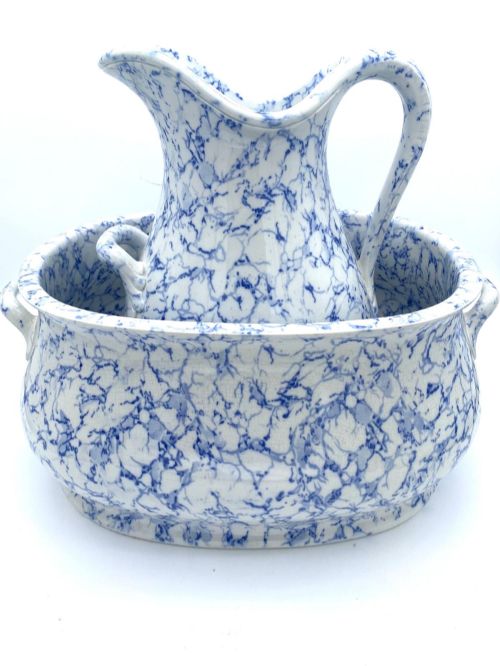
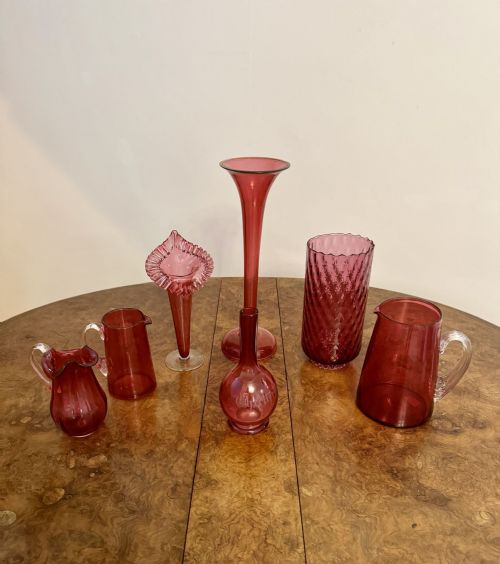
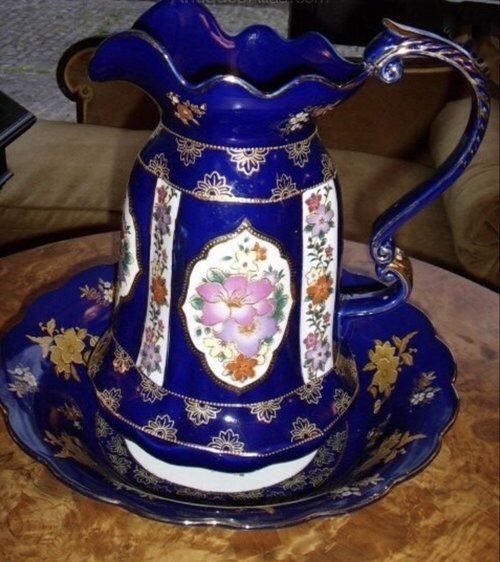
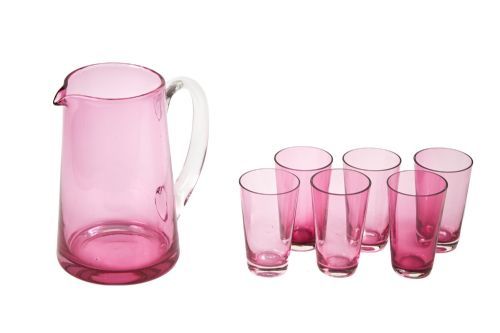
A vintage water jug set brings together coordinating vessels designed for liquid service or washstand use, appearing across periods from the nineteenth century into the twentieth century. These groupings range from substantial ironstone basin combinations to delicate cranberry glass pitchers matched with tumblers.
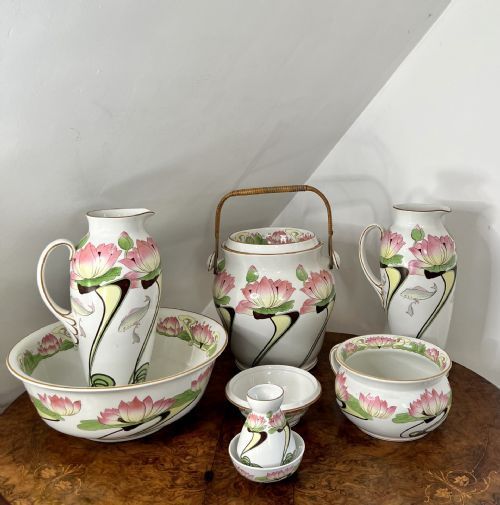
Buyers encountering this phrase most frequently discover Edwardian ceramic washstand sets, alongside Art Deco glass drinkware services and Victorian ironstone groupings. The assortment spans large multi-piece bathroom arrangements and compact matching sets intended for dining and tea service.
Originating across different decades, these sets reflect the changing domestic requirements of their eras, shifting from elaborate bedroom hygiene arrangements to stylish entertaining glassware.
Materials and construction methods
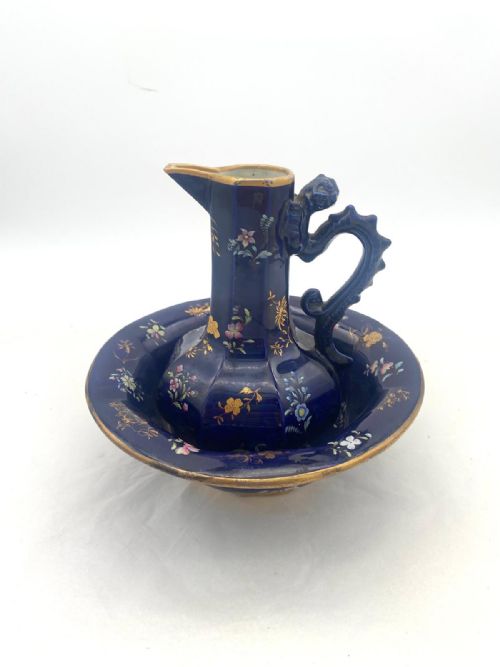
Earthenware and ironstone form the structural core of many ceramic sets, shaped into robust octagonal or rounded profiles and finished with applied glazes. Manufacturers utilised transfer printing and hand-painted floral designs to enrich surfaces before high-temperature firing.
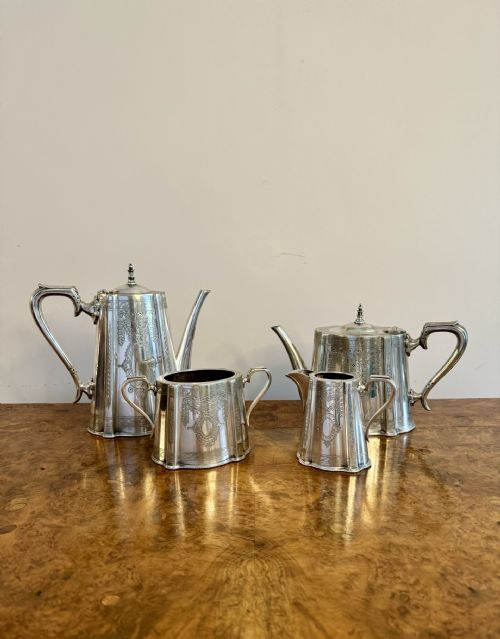
Glassware sets demonstrate intaglio cutting and mould-blowing techniques, producing clear vessels or rich cranberry-tinted glass services. Metal components rely on silver plating over base metals, alongside gold leaf accents applied to ceramic bodies.
Makers integrated handles, spouts, and matching bowls through careful hand-assembly before glazing or plating, ensuring cohesive service sets.
The listings span earthenware, ironstone, and glass, alongside silver-plate and gold leaf finishes.
Distinctions in quality and execution
Quality reveals itself in the crispness of moulded details, such as the sharp facets of ironstone jugs and the precision of intaglio cutting on glass services. Finer pieces maintain balanced proportions between the central pitcher and its matching vessels.
Glaze application and enamel stability separate standard production from superior examples, with top-tier ceramics showing smooth, even coverage and well-preserved hand-painted motifs. Silver-plated sets demonstrate durability through the even retention of the metal layer across complex handles and spouts.
Completeness within multi-piece groupings dictates standing, as matched sets retaining all original matching tumblers or basins display greater integrity.
Minton·Masons Ironstone·Walker and Hall·Webb Corbett·Harrison Brothers and Howson·Copeland Spode·Davenport
The Vintage Water Jug Set Glossary
- Ironstone
- A dense, durable type of earthenware patented in the nineteenth century to rival porcelain. It provides a sturdy body suited for heavy-use jugs and basins.
- Cranberry glass
- A rich red-pink transparent glass created by adding gold chloride to the molten batch. It gained popularity during the Victorian era for decorative tableware.
- Wash set
- A coordinated collection comprising a large jug and a matching basin, historically used for personal washing before plumbed bathrooms. These sets often included soap dishes and chamber pots.
- Intaglio
- A decorative technique where a design is incised beneath the surface of glass rather than carved in relief. It requires skilled hand-cutting with small wheels.
- Flow blue
- A nineteenth-century transfer-printing method where lime or chloride was introduced into the kiln to deliberately blur the cobalt blue design. This created a soft, hazy effect on the ceramic surface.
Vintage Water Jug Set: Frequently Asked Questions
How were water jug sets used?
These sets served domestic routines, functioning either on bedroom washstands for morning ablutions or on dining tables for serving drinks.
Larger earthenware groupings held water for washing, while glass and silver-plated services managed beverages during meals or social gatherings.
How do I care for antique glass and ceramics?
Gentle hand washing in lukewarm water with mild detergent preserves both the glaze and any delicate gold leaf or silver plating.
Avoid extreme temperature changes and harsh scrubbing brushes to protect the historic surfaces from scratching or crazing.
How do I distinguish Victorian from Edwardian sets?
Victorian examples often feature heavier ironstone bodies, elaborate floral transfers, and rich colours like cobalt blue or cranberry.
Edwardian sets frequently lean towards lighter aesthetics, cleaner lines, and silver-plated components that reflect changing domestic styles.
Can these sets still be used daily?
Ceramic wash sets and glass drinkware remain functional, though many collectors prefer to display them to preserve their condition.
Silver-plated and glass items handle occasional beverage service well when treated with proper care.