
Vintage Watch Chain T Bar
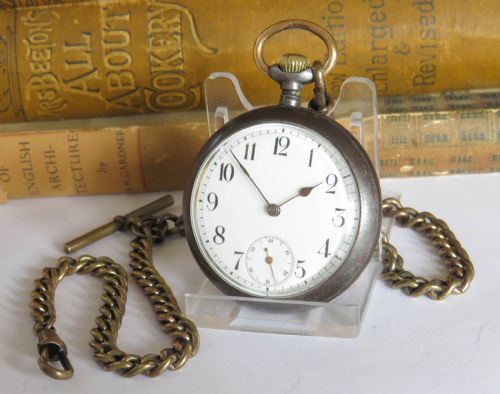
These vintage watch chain t bar pieces are practical lengths of precious metal designed to secure pocket timepieces, now worn as necklaces or bracelets.
Vintage Watch Chain T Bar
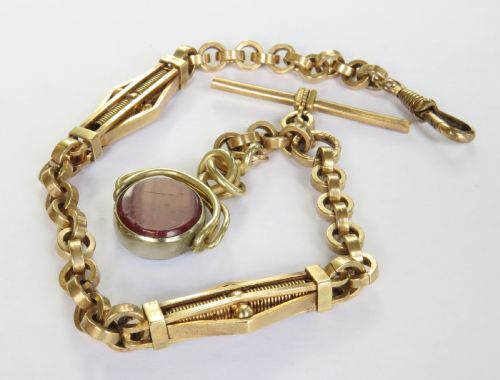
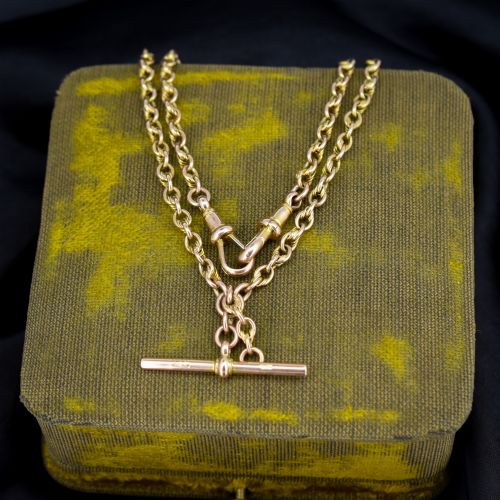
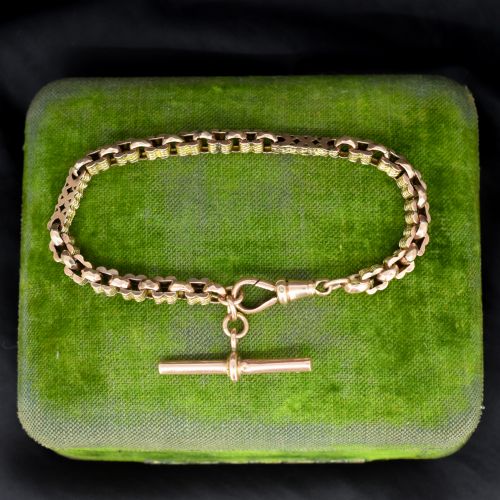
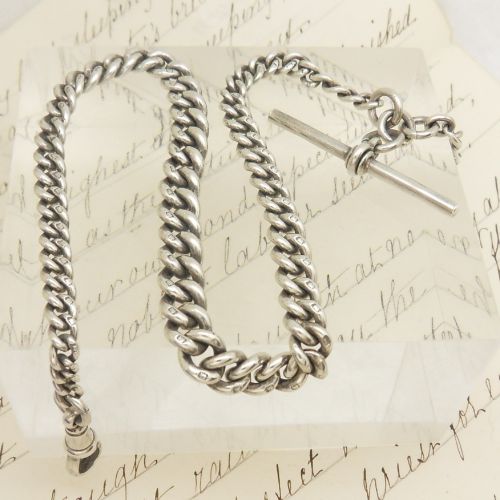
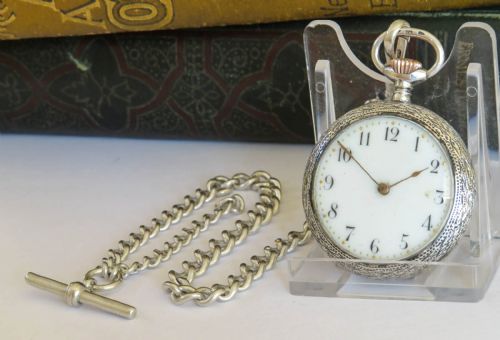
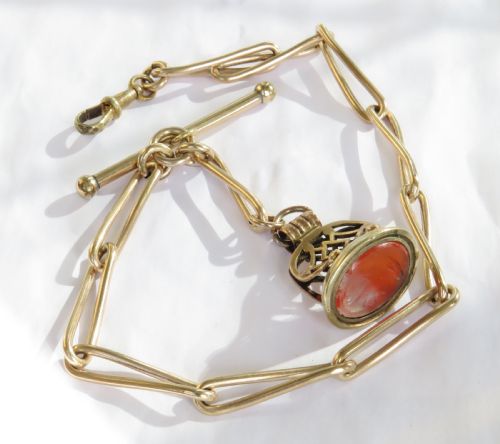
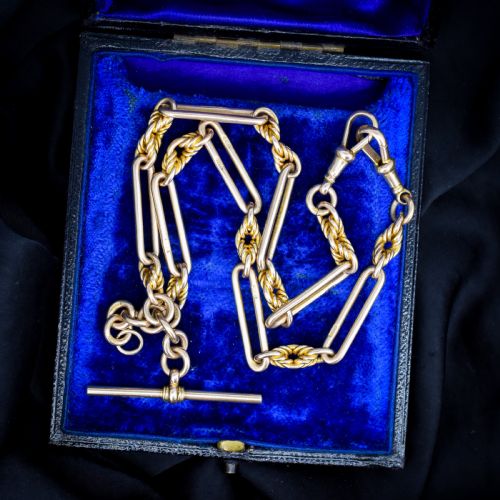
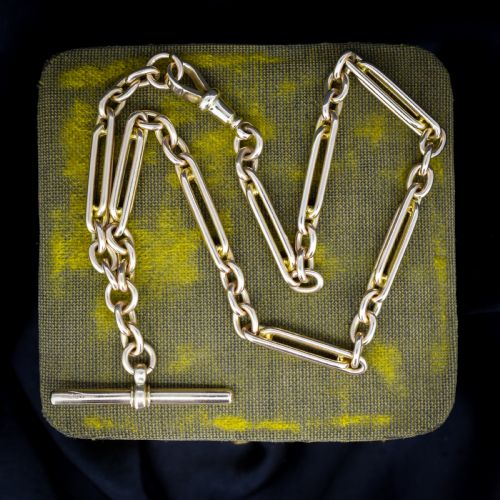
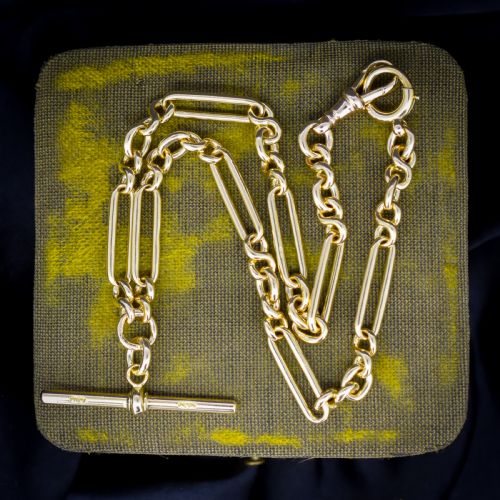
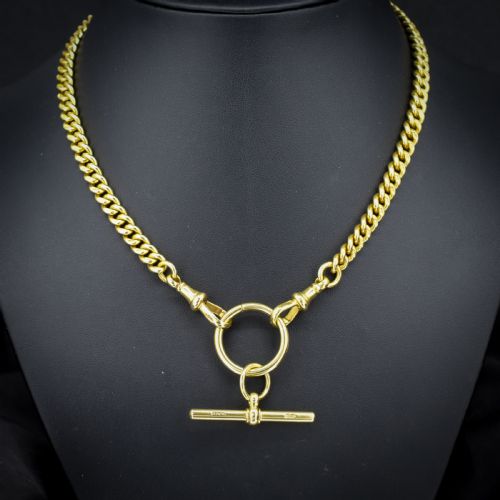
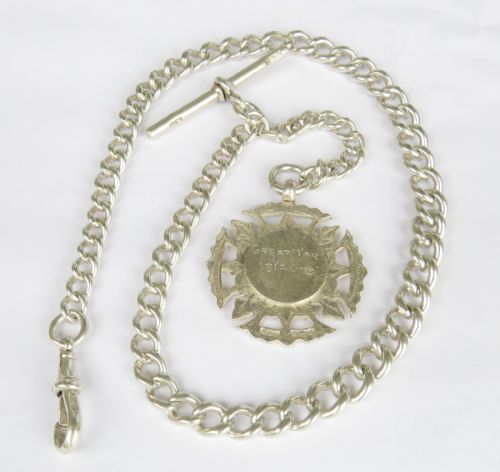
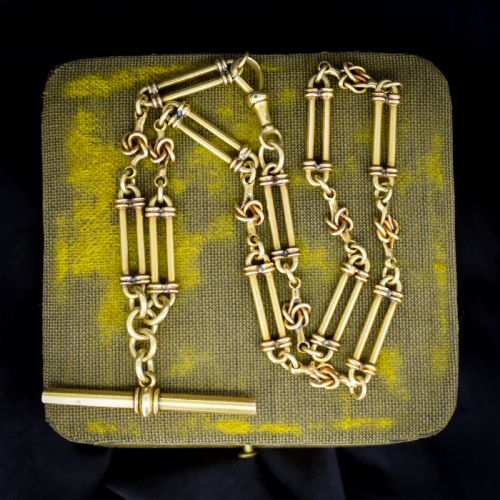
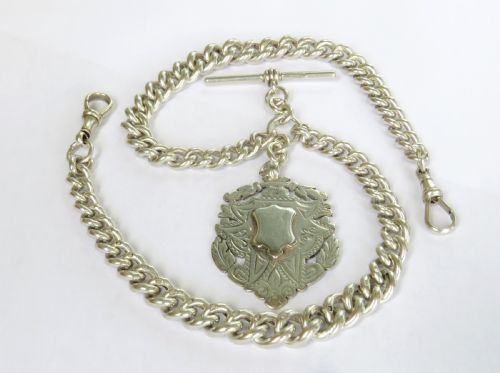
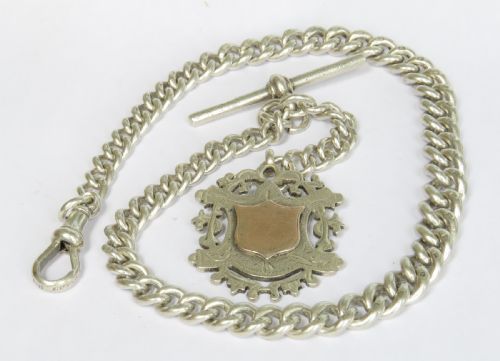
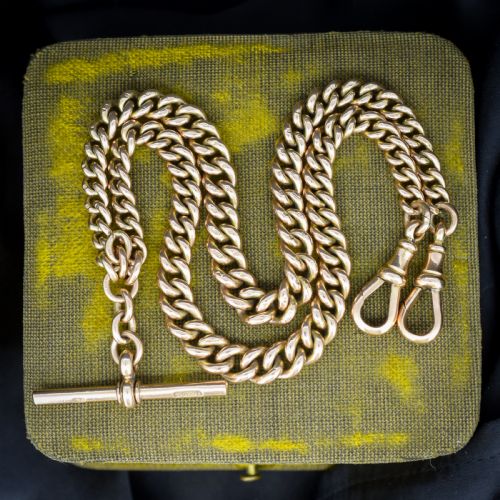
A vintage watch chain t bar assembly bridges the gap between traditional pocket horology and modern neckwear, taking forms from the Victorian era into the Art Deco period. Most pieces on this page appear as substantial sterling silver or 9ct gold lengths, often configured as curb or trombone links.
The defining horizontal crossbar, known as the t-bar, drops from a short length of chain to anchor inside a waistcoat buttonhole. Alongside this crossbar, these items frequently incorporate dog clips and decorative fob elements originating from the late nineteenth and early twentieth centuries.
Materials and construction methods
Metals span solid sterling silver, 9ct rose and yellow gold, alongside rolled gold variations formed through heat-bonding. Individual links were manually shaped, soldered, and assembled by silversmiths and goldsmiths working in British assay towns.
Functional components like swivel dog clips and spring rings rely on concealed internal steel springs to maintain tension during daily wear. The crossbars were often cast or wire-drawn, then hallmarked with date letters and assay office marks to certify metal purity.
Some of these pocket watch attachments spent a century hidden in drawers before finding a second life dangling around someone's neck.
Factors determining quality
Graduation of links sets certain pieces apart, where links systematically diminish in size toward the centre or remain entirely uniform in gauge. Heavier gram weights and fully articulated link connections indicate superior original manufacture and enduring resilience.
Clarity of hallmarks stamped upon individual links, dog clips, and t-bars provides a definitive measure of origin and standard. The survival of crisp chasing, distinct rope twists, and secure swivel mechanisms separates everyday utility from finer examples.
Omega·Horos·Tellus
The Vintage Watch Chain T Bar Glossary
- T-bar
- A short metal crossbar attached to a watch chain by a small drop ring, designed to pass through a garment buttonhole to secure the timepiece.
- Albert chain
- A type of watch chain named after Prince Albert, worn across the front of a waistcoat or adapted today as a necklace.
- Dog clip
- A spring-loaded swivel fastening used to attach a pocket watch or pocket watch fob securely to the chain link.
- Trombone link
- An elongated rectangular metal link with rounded ends, resembling the slide of a musical instrument, frequently seen in Edwardian gold chains.
- Curb link
- A chain formed of interlocking uniform links that lie flat against the skin or fabric when worn.
Vintage Watch Chain T Bar: Frequently Asked Questions
How do I wear a watch chain as a necklace?
These chains fasten comfortably around the neck by securing the dog clip directly onto any link or onto the opposite end ring. The pendant t-bar naturally drops downwards against the collarbone.
Adjustment of length is straightforward because you can attach the clasp at various points along the chain. This flexibility allows both choker lengths and slightly longer drops depending on the link configuration.
Are these chains made of solid gold or silver?
The materials recorded here include solid sterling silver, 9ct yellow gold, 9ct rose gold, and 15ct gold alongside rolled gold alternatives. Hallmarks stamped directly onto the metal components confirm the specific standard.
Rolled gold versions consist of a thin layer of gold mechanically bonded to a base metal core. Solid metal pieces display full British assay office hallmarks indicating the precise fineness.
How can I date my watch chain?
Dating relies heavily upon the small stamped hallmarks found on individual links, dog clips, and t-bars. These official marks correspond to specific assay offices and active registration years.
Stylistic indicators such as trombone links or love knot motifs also point toward specific periods like the Edwardian era or the 1920s. Comparing the link geometry and fastening types provides a reliable chronological frame.