
Gold Watch Chain Necklace
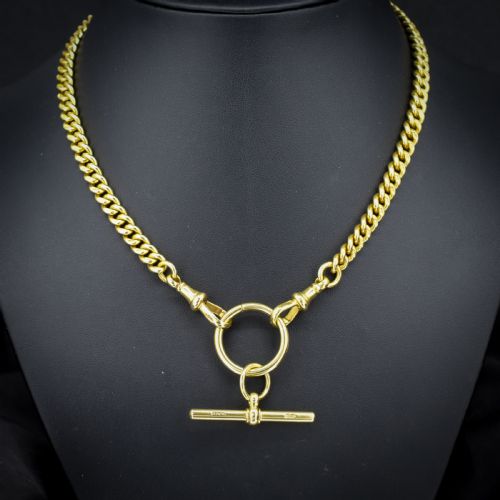
A gold watch chain necklace adapts utility into jewellery, giving antique linkwork new life as a substantial necklace.
Gold Watch Chain Necklace
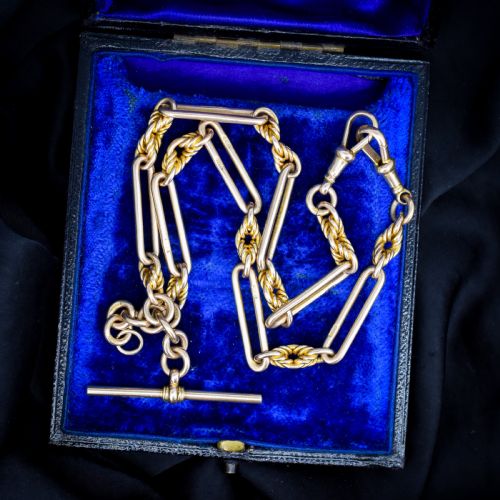
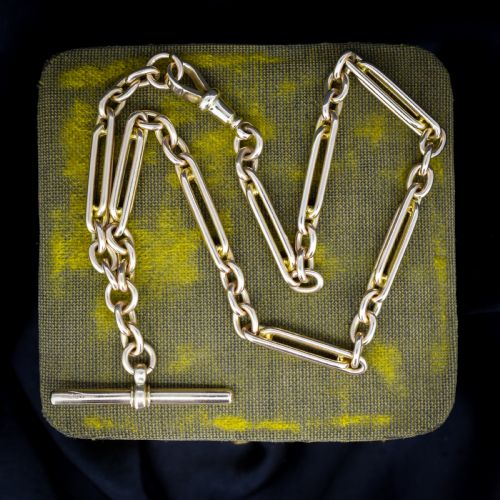
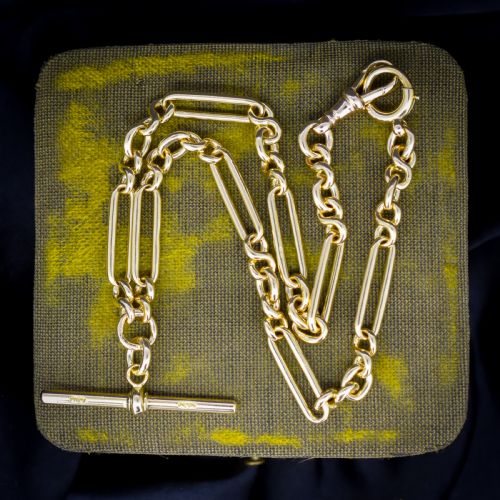
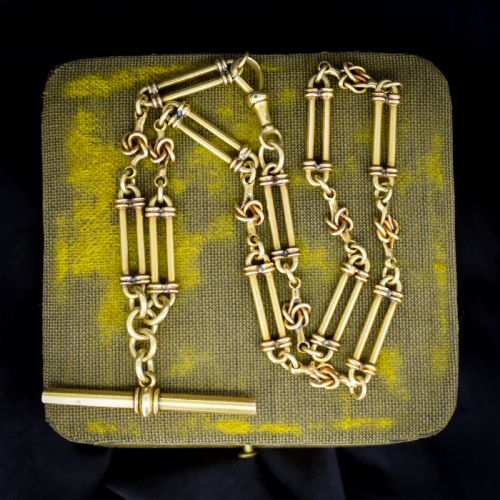
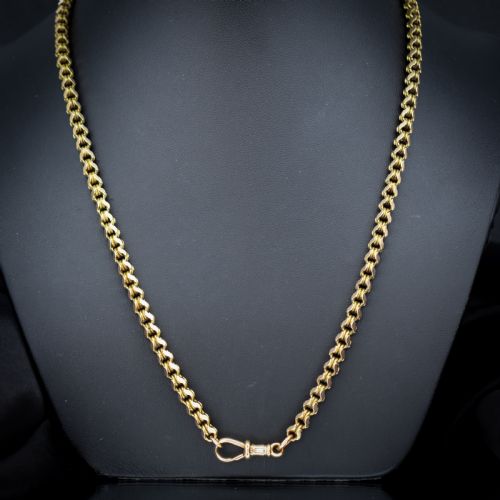
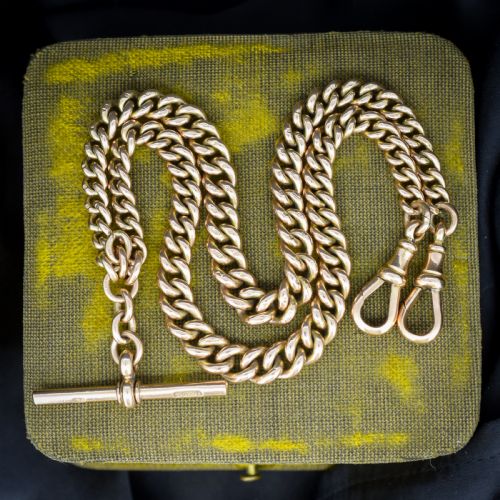
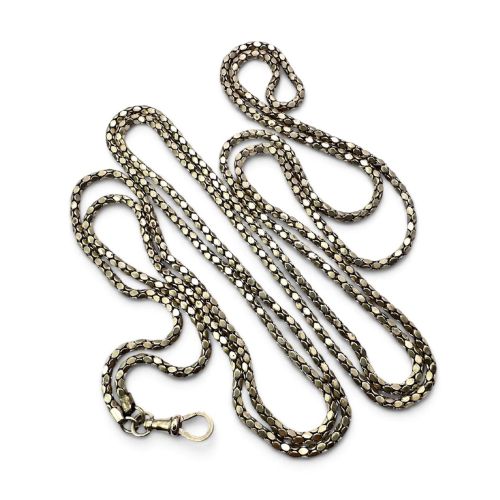
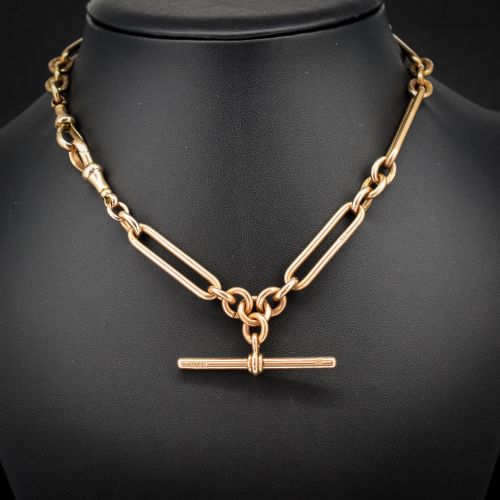
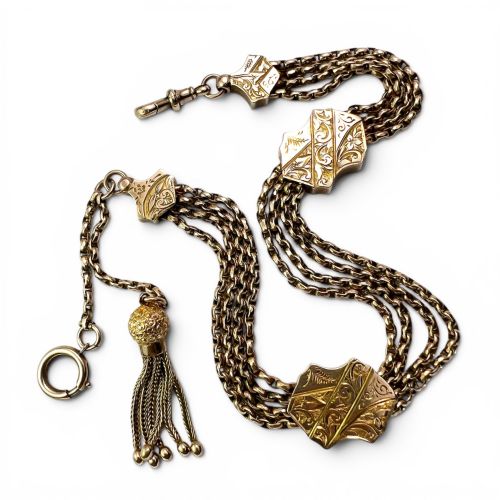
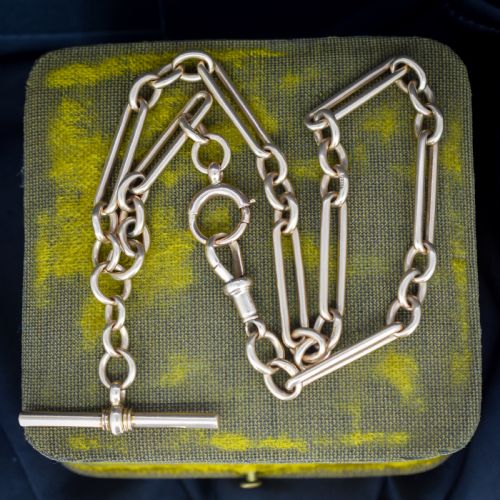
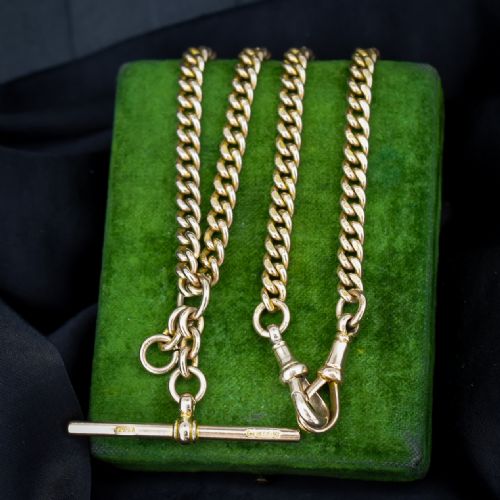
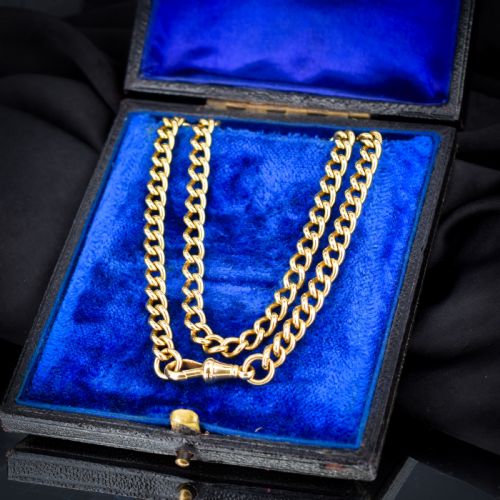
A gold watch chain necklace originates from the functional chains worn in pockets or across waistcoats during the Victorian, Edwardian, and Art Deco periods. These pieces include Albert chains, longuards, and muff chains originally designed to secure pocket watches or eyeglasses. Converted pieces retain their original swivel dog clips, T-bars, and varying link patterns.
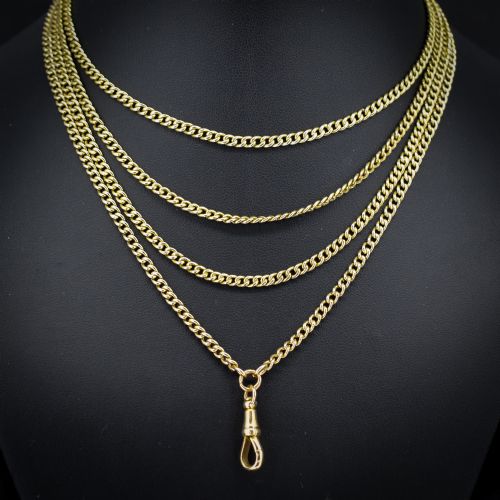
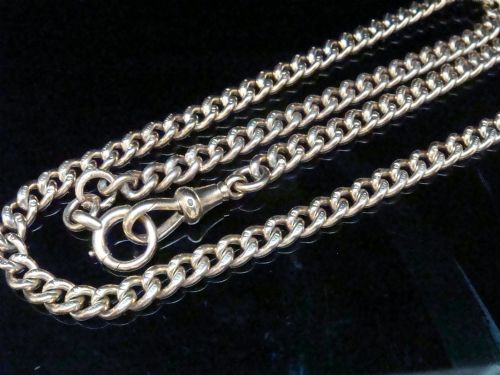
The inventory on this page draws heavily from the late nineteenth and early twentieth centuries, spanning Victorian, Edwardian, and 1920s eras. Buyers encounter diverse link formations such as curb, trombone, paper, and fancy twist designs. Lengths vary widely, from shorter choker-style arrangements to continuous long guard chains meant to be doubled around the neck.
Materials and Construction Methods
Goldsmiths of the nineteenth and early twentieth centuries worked predominantly in 9ct, 15ct, and 18ct gold, appearing in yellow, rose, and occasionally white tones. Many pieces display distinct regional British hallmarks from assay offices such as Birmingham and Chester, confirming local purity standards. Rolled gold variants also occur alongside solid metal constructions.
Individual links were stamped, drawn, or hand-assembled before being joined by solid rings, with many surviving examples exhibiting hallmarks stamped on every single link. Functional components like dog clips and spring rings utilise internal steel springs to maintain tension during daily wear. T-bars and decorative fobs were often permanently integrated or attached via jump rings to anchor the original timepieces.
Evaluating the Build and Wear
Quality rests upon the structural integrity of the link joints and the retention of original components like dog clips and T-bars. Substantial weight and consistent gauge grading along the length distinguish premier examples from lighter, uniform utility pieces. Minimal wear at the pivot points of individual links indicates careful historical use and preserves the intended drape.
The presence of crisp, legible hallmarks on individual links or clasps adds verifiable provenance and confirms high manufacturing standards. Superior craftsmanship shows in the smooth articulation of fancy linkwork, such as trombone and love knot configurations, without binding or pinching during movement.
The Gold Watch Chain Necklace Glossary
- Albert chain
- A pocket watch chain designed to pass through a waistcoat buttonhole, featuring a T-bar at one end and a swivel dog clip at the other. Converted versions are frequently worn as necklaces.
- Dog clip
- A spring-loaded swivel clasp originally used to attach a pocket watch or fob to a chain. It remains the primary fastening mechanism on many antique neck chains.
- T-bar
- A short transverse bar attached to a watch chain designed to anchor the chain through a garment buttonhole. In necklace form, it functions as a decorative toggle drop.
- Trombone link
- An elongated rectangular link alternating with smaller round or oval links, typical of nineteenth and early twentieth-century watch chains. This pattern provides a distinct geometric rhythm along the neckline.
- Longuard
- An extra-long watch chain intended to be doubled or tripled around the neck or worn suspended with a locket or watch pendant. These pieces often measure fifty inches or more in length.
- Graduated
- A chain design where links increase in physical size progressively from the ends toward the absolute centre. This technique creates a balanced visual taper when suspended.
Gold Watch Chain Necklace: Frequently Asked Questions
How do I wear a watch chain as a necklace?
These chains fasten easily around the neck by securing the original dog clip to any point along the linkwork or to an integrated jump ring. The attached T-bar typically hangs down as a decorative pendant drop in the centre.
For longer guard chains, you can double the strand around your neck to achieve a layered choker effect. This preserves the historical configuration while adapting the piece for modern wear.
What is the difference between an Albert and a longuard chain?
An Albert chain is a shorter, often graduated piece designed originally to span a waistcoat pocket with a T-bar at one end. They generally measure between fourteen and twenty inches.
Longuard chains measure considerably longer, often exceeding fifty inches, and lack the central grading of an Albert. They were made to loop multiple times around the neck and accommodate heavier pocket watches or decorative lockets.
Are all links hallmarked on antique chains?
Not every link bears a hallmark, though many fine Edwardian and Victorian pieces feature miniature stamps on individual links. Assay marks typically appear on the primary dog clips, T-bars, and surrounding jump rings rather than the entire chain length.
The absence of marks on smaller links is standard practice for the period, as only the completed assembly or primary components required official testing for gold purity.
Can I attach pendants to the dog clip?
The swivel dog clip functions as a secure attachment point for modern charms, lockets, or antique pocket watch fobs. You can clip items directly onto the existing mechanism or onto the T-bar drop.
The robust construction of these clasps ensures that heavier pendants remain securely anchored during everyday movement.