


Swivel Fob Chain
A swivel fob chain secures a pocket watch while holding small charms close.
Swivel Fob Chain
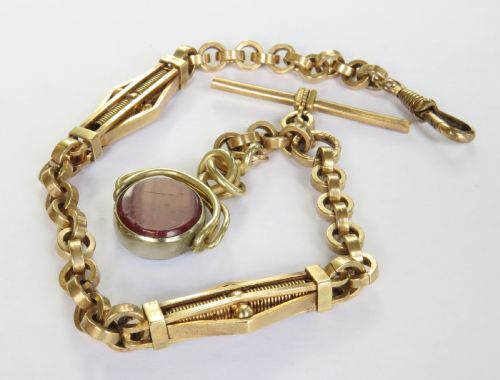
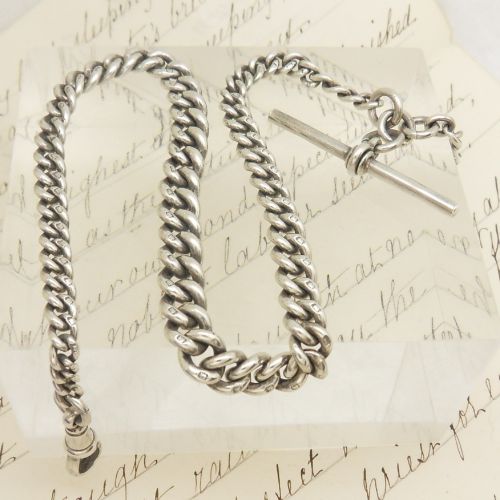
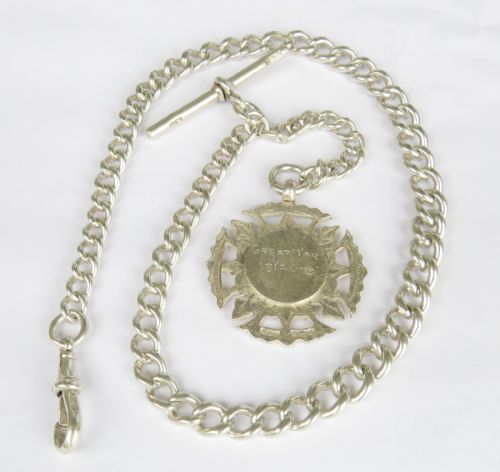
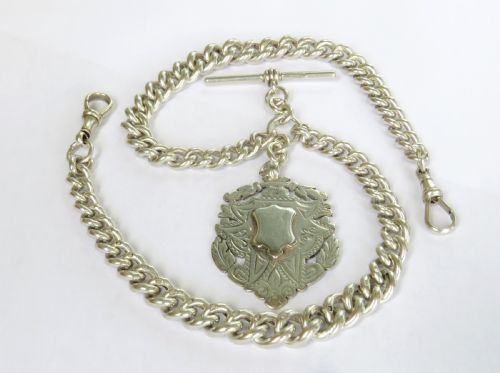
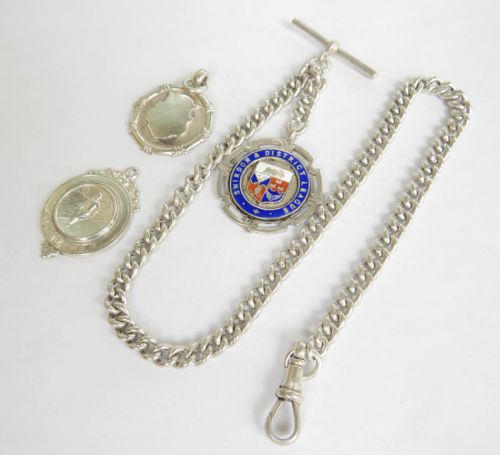
When you search for a swivel fob chain, you encounter wearable metal work designed to suspend timepieces and commemorative medals. These pieces span the Victorian, Edwardian, and 1920s periods, emerging predominantly in sterling silver and various grades of gold. You will find single and double albert chains alongside heavier watch chain bracelets.
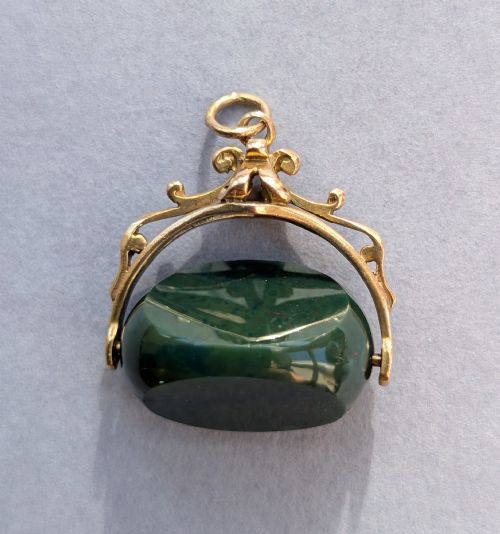
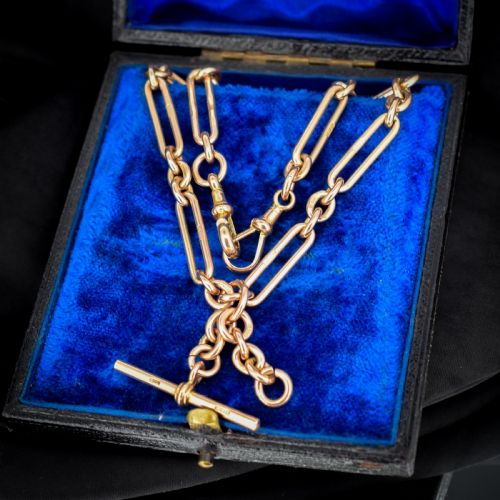
Many examples arrive paired with specific pendants, including bloodstone swivel fobs, football medals, cricket fobs, and military pieces from the Great War. The links vary from traditional trombone shapes to graduated curb links that sit heavily across the wearer. These functional accessories now find new life as statement necklaces or secure bracelets.
How they were made
Metalsmiths constructed these chains from sterling silver, rolled gold, and solid 9ct or 18ct yellow and rose gold. Links were individually formed, soldered, and hand-assembled to create flexible lengths capable of daily wear. Skilled artisans often integrated rose gold detail into silver pieces to create subtle contrast.
The characteristic swivel mechanism required precise spring-loading so the attached fob could turn freely without twisting the main chain. T-bars were securely fixed at the centre or end to anchor the chain through a waistcoat buttonhole. Enamel work frequently embellished the accompanying fobs, adding permanent colour through fired glass powders.
Listings feature items spanning the Victorian era through the 1920s, constructed in sterling silver, rolled gold, and solid 9ct or 18ct gold.
What varies in quality
The standard of a swivel fob chain rests on the substantial weight of the metal and the original integrity of the links. Finer examples retain tight, uniform links that show minimal thinning from friction against clothing. Substantial gauge wire and robust construction separate daily utility pieces from lighter, more decorative items.
The mechanical condition of the swivel clasp determines usability, as inferior springs lose tension over decades of turning. Hallmark clarity stamped into the silver or gold links indicates official assay office testing and adds historical certainty. Complete sets featuring matching fobs and original T-bars command higher regard than chains altered or assembled later.
The Swivel Fob Chain Glossary
- Swivel fob
- A small pivoting mount holding ornamental stones or medals that rotates on a central axis. This allows both sides of a hardstone or engraved seal to be displayed easily.
- T-bar
- A short transverse metal bar attached to the centre of the watch chain. It slips through a waistcoat buttonhole to anchor the entire assembly securely.
- Albert chain
- A specific style of pocket watch chain named after Prince Albert. It can be single, running from one pocket to a watch, or double, spanning across two pockets.
- Trombone link
- An elongated rectangular metal link with rounded ends, resembling the slide of a musical instrument. This geometric shape was popular during the Edwardian era.
- Rolled gold
- A manufacturing method where a thin layer of solid gold is mechanically bonded to a base metal core. This provided the appearance of solid gold at a lower cost.
Swivel Fob Chain: Frequently Asked Questions
How do I wear an antique watch chain?
These chains adapt readily to modern wear as substantial necklaces or wrap-around bracelets. The central T-bar can be tucked behind a pendant loop or left to hang as a decorative toggle.
Securing the spring-loaded swivel clasp to the end ring completes the loop. Many collectors pair them with modern pendants or wear them alone to display the historic link work.
How can I tell silver from rolled gold?
Silver pieces display British assay office hallmarks indicating sterling standard, alongside maker marks and date letters. Rolled gold items typically feature stamps denoting gold content combined with base metal backing terminology.
Examining the edges under magnification reveals whether the golden surface layer has worn through to reveal underlying base metal. Sterling silver retains its white metal colour throughout minor surface wear.
What periods do these chains come from?
The available pieces originate primarily from the Victorian era, the Edwardian period, and the 1920s. Victorian examples often showcase heavier silver links and bloodstone swivel fobs.
Later Edwardian and Great War pieces introduce commemorative military fobs and sports medals. The 1920s examples frequently incorporate rolled gold materials and geometric trombone links.