
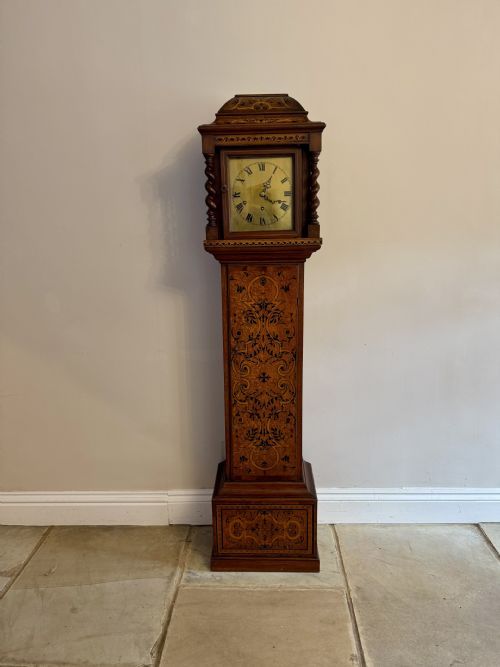
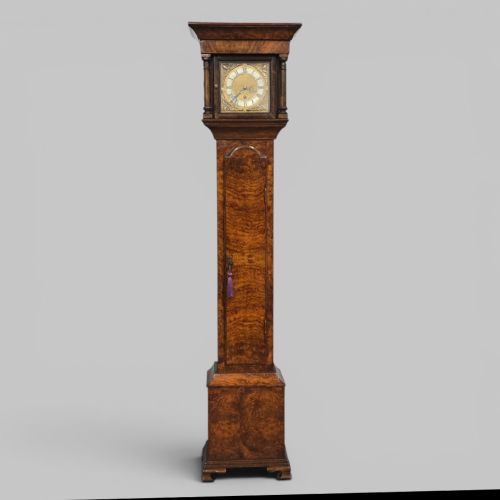


Vintage Walnut Standing Clock
These vintage walnut standing clock pieces bring centuries of precision joinery and rich timber grain to domestic halls.
Vintage Walnut Standing Clock
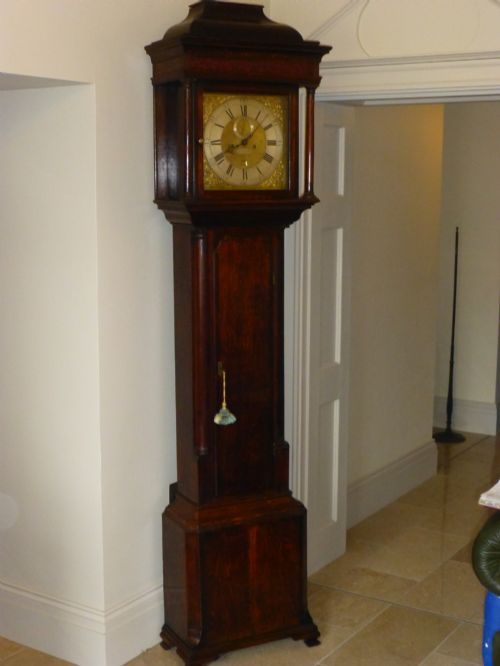
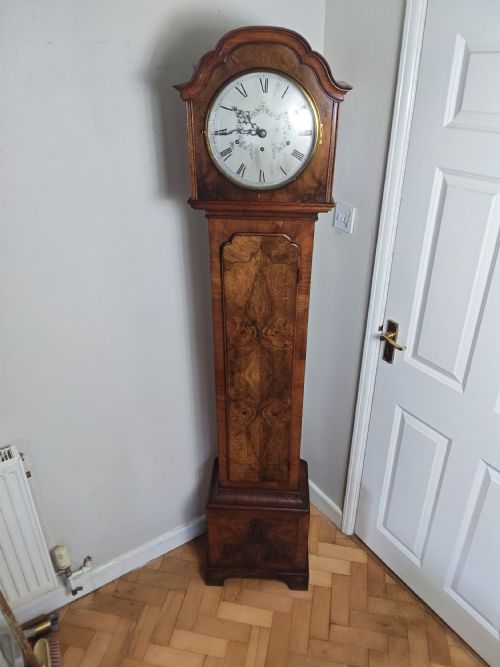
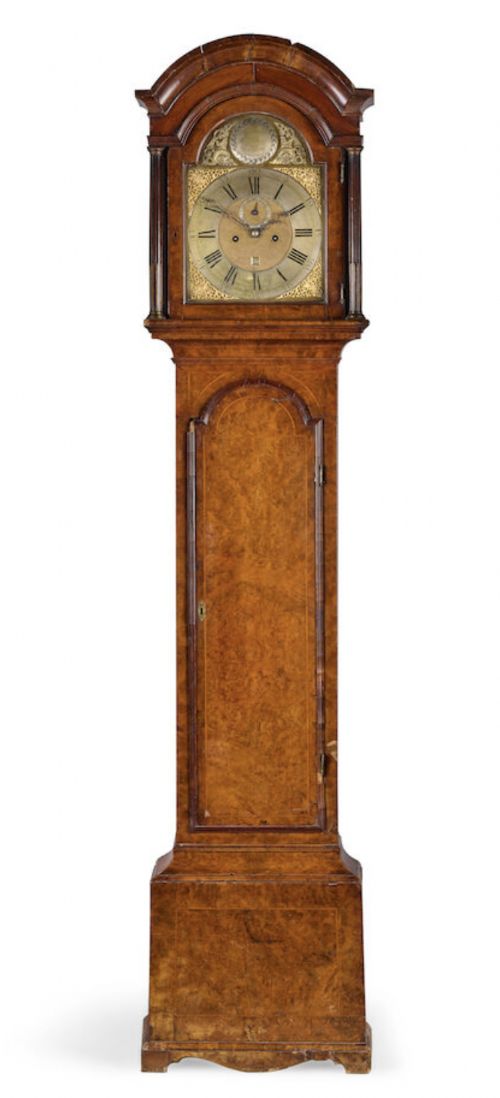
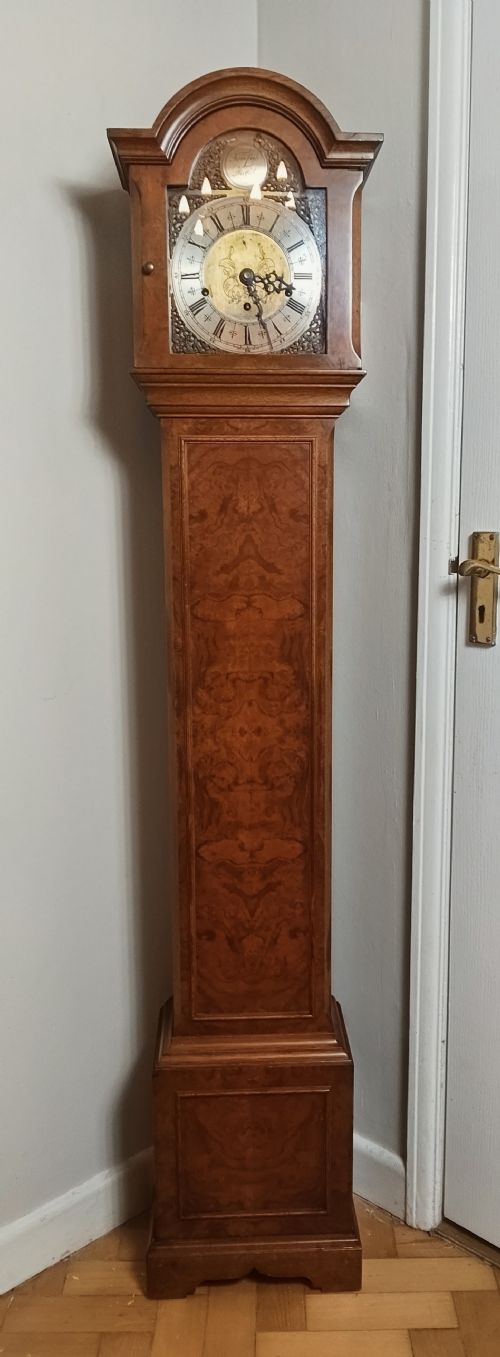
A vintage walnut standing clock forms a commanding vertical presence in a room, housing weight-driven or spring-driven movements within a tall wooden case. Buyers searching for a vintage walnut standing clock encounter grand proportions from earlier centuries alongside more compact grandaughter or grandmother alternatives from later decades.
The material palette draws heavily on figured and burr timber, often complemented by secondary woods such as oak or mahogany and detailed with brass dials. Regional English makers from London to provincial towns shaped these tall timber floor cases across the seventeenth, eighteenth, and twentieth centuries.
Materials and construction methods
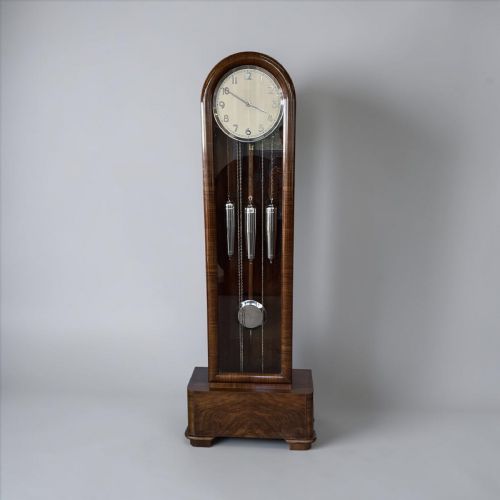
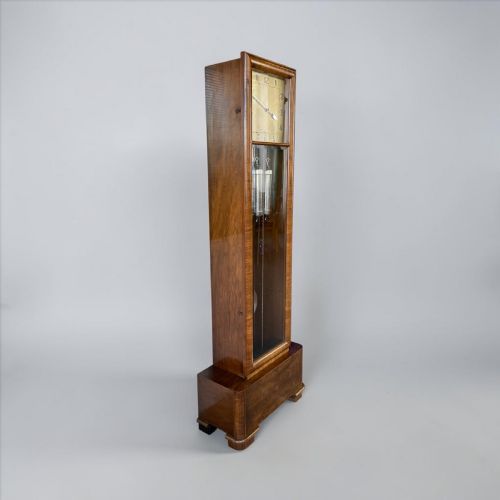
Makers integrated glass panels into the trunk doors to protect the swinging pendulum and descending weights while allowing visibility of the movement. Secondary structural timbers like oak provided stable internal framing for the substantial walnut facades.
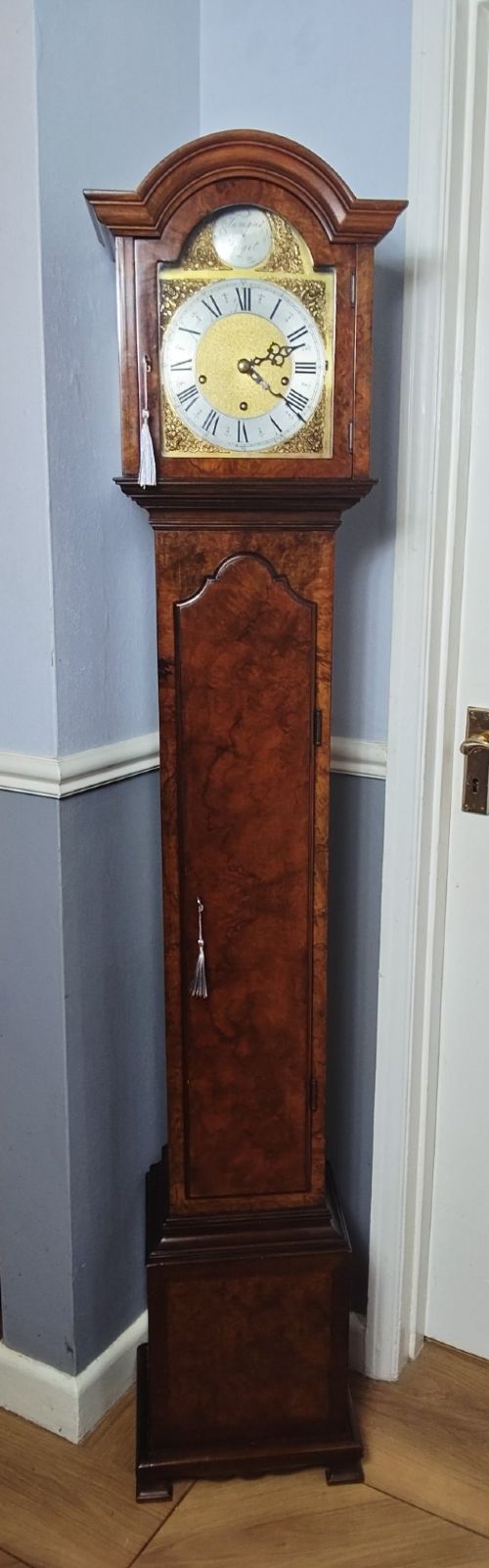
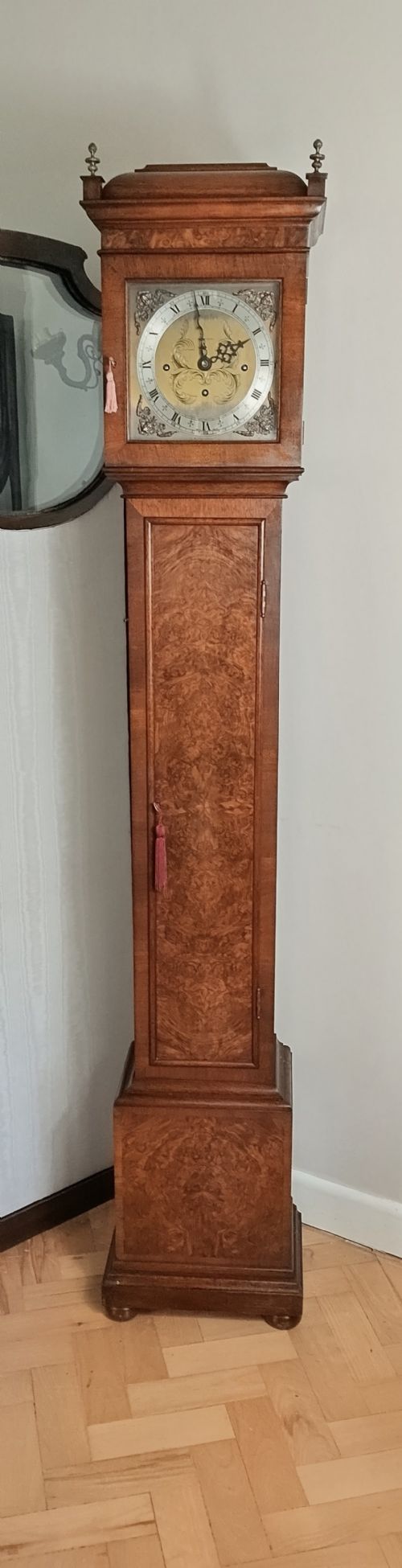
Some miniature models shrink timekeeping grandeur down to dainty proportions.
Separating the ordinary from the exceptional
Superior examples demonstrate intricate marquetry work and highly figured burr timber selection across the entire case rather than simple plain veneers. The complexity of the internal movement, such as musical chimes, tubular bells, or quarter-chiming capabilities, elevates the horological accomplishment.
Proportion and execution define the standing of each piece, where crisp brass dial engraving and balanced hood architecture distinguish master workshops from standard production.
Richard Corless of Stockport·Windmills and Wightman·Elliott·Henry Massy·Edin Burgis·Edward Upjohn·Edward East·Samuel Young·John Harrington·Peter Wise
The Vintage Walnut Standing Clock Glossary
- Burr Walnut
- A timber harvested from the tree's excrescences, yielding swirling, knotty grain patterns prized for luxury cabinet fronts.
- Longcase Clock
- A tall floor-standing timepiece utilising a pendulum, commonly called a grandfather clock.
- Marquetry
- The art of applying pieces of veneer to a structure to form decorative patterns and pictures.
- Grandmother Clock
- A smaller, more slender version of the traditional longcase clock, popular in the twentieth century.
- Quarter Chiming
- A mechanical capability allowing the clock to strike on the quarter-hour intervals using multiple bells or gongs.
Vintage Walnut Standing Clock: Frequently Asked Questions
What is the difference between a grandfather and grandmother clock?
Grandfather clocks typically stand well over six feet tall with generous proportions designed for large hallways. Grandmother clocks offer a significantly more slender and shorter stature, making them suitable for tighter domestic spaces.
Despite the reduction in scale, these smaller variants often house complex musical or chiming movements comparable to their taller counterparts.
How do I identify seventeenth-century examples?
Seventeenth-century pieces often display specific joinery traits, simpler dial arrangements, and early marquetry or plain walnut surfaces. London makers dominated this period, embedding their signatures directly onto the brass dial plates.
Examining the interior construction and timber thickness reveals the hand-worked nature of these earliest surviving floor cases.
Where should I place a standing clock in my home?
These tall floor pieces require a stable, dry environment away from direct sunlight and sudden temperature shifts to protect the wood and internal mechanism. Hallways, landings, and reception rooms provide the vertical clearance and ambient stability they need.
Ensure the floor surface is entirely level so the pendulum swings evenly and the movement keeps accurate time.
How do musical movements work?
Musical movements incorporate additional gear trains, extra weights or springs, and specialised cylinders or bells to play tunes at set intervals. These mechanisms required advanced engineering from specialised horologists.
Quarter-chiming versions activate specific hammer sequences against rods or bells every fifteen minutes.