



Vintage Walnut Etagere
These vintage walnut etagere pieces are multi-tiered display stands bringing warm timber tones and practical open storage to any room.
Vintage Walnut Etagere
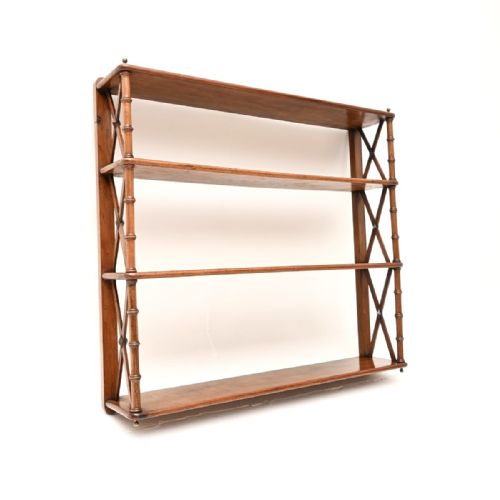
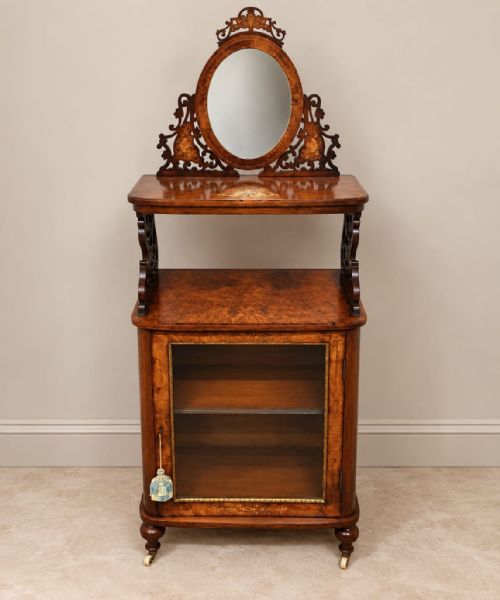
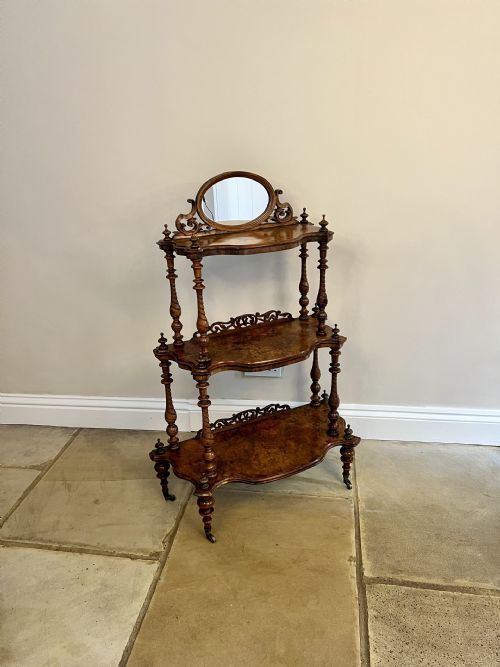
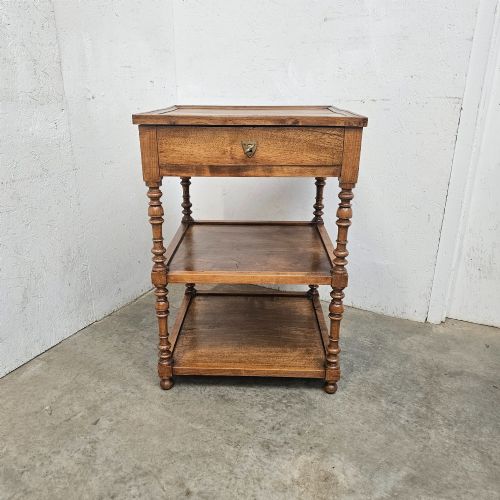
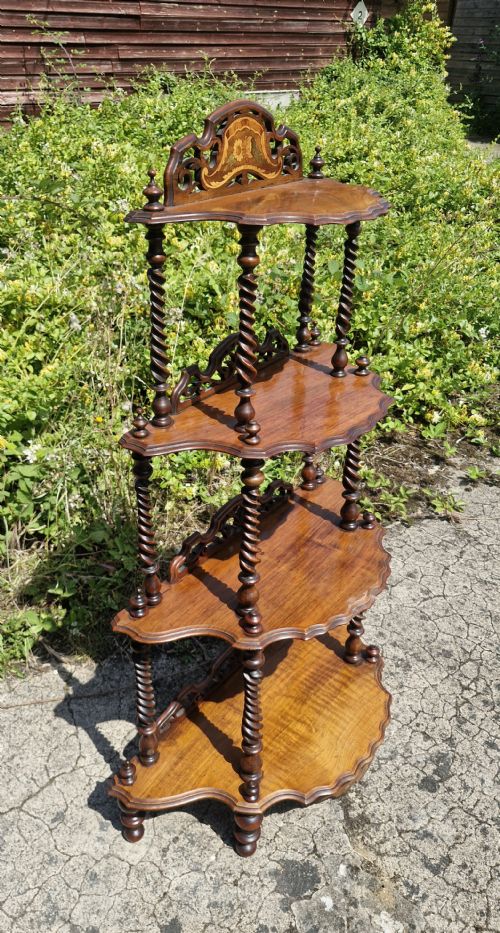
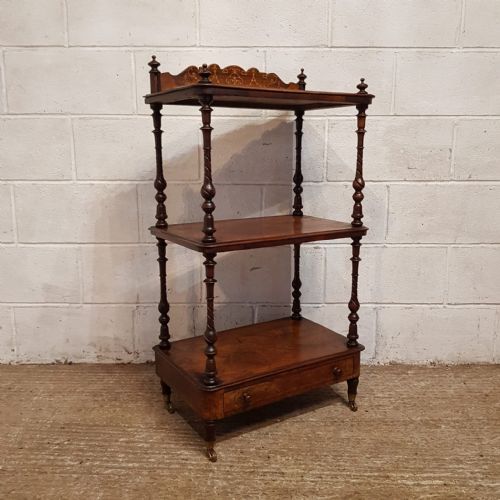
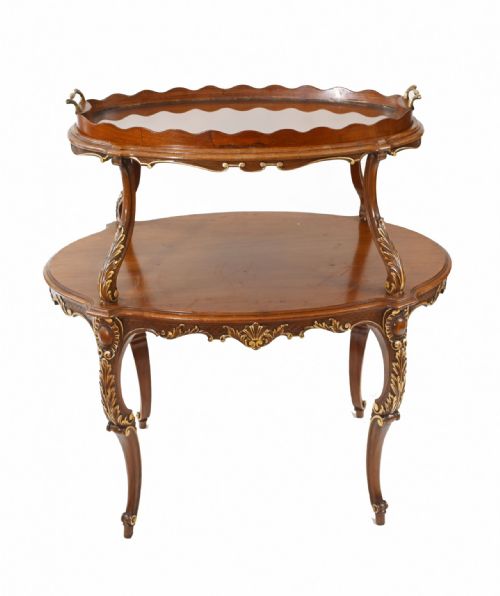
When you search for a vintage walnut etagere, you encounter multi-tiered display furniture spanning the Victorian and Edwardian eras alongside various side tables and wall shelves. The pieces appearing here range from tall multi-tier standing whats-nots to corner cabinets and French inlaid tiered tables.
The version you are most likely to meet on this page is the Victorian walnut whatnot or multi-tier shelving unit, often fashioned from figured burr walnut. These tiered stands served historically for displaying porcelain, books and ornaments in formal reception rooms.
Originating across British and continental workshops, these items include French provincial interpretations featuring marquetry inlay and ormolu mounts. Alongside standard floor-standing etageres, the selection incorporates wall-mounting bookcases and corner shelves designed to utilise compact spaces.
Assessing quality in tiered shelving
Quality reveals itself in the selection of timber, particularly the depth and movement within burr walnut veneers used across prominent surfaces. Superior examples display precise marquetry inlay and careful matching of grain patterns across multiple tiers.
Structural integrity depends upon the joinery supporting each tier, with finer pieces maintaining rigidity in their turned uprights and pillar supports. The integration of quality brass mounts or cast metal details further distinguishes standard production items from finer workshop pieces.
Listings feature walnut etageres and whats-nots spanning the Victorian, Edwardian and early twentieth-century periods, alongside French provincial styles.
The Vintage Walnut Etagere Glossary
- Etagere
- A piece of furniture consisting of a set of open shelves for displaying small objects or ornaments. These tiered stands became popular in the nineteenth century for parlour displays.
- Whatnot
- A traditional British term for an open multi-shelved piece of furniture used for storing or displaying household items. They often feature three to five ascending tiers.
- Burr Walnut
- Timber taken from a walnut tree growth, yielding highly figured and swirling grain patterns prized by cabinet makers. It was frequently applied as a veneer on Victorian furniture.
- Marquetry
- Decorative woodwork where pieces of veneer are fitted into a background to form geometric or floral patterns. French etageres often utilised this technique on their primary display surfaces.
- Ormolu
- Gilded bronze mounts applied to furniture for decorative effect, commonly seen on French continental etageres from the nineteenth century onward.
Vintage Walnut Etagere: Frequently Asked Questions
What is an etagere?
An etagere is an open piece of furniture with multiple tiers designed specifically for displaying ornaments, books or decorative objects. Originating in France, these multi-level stands provide accessible display space from all angles.
Unlike enclosed cabinets, an etagere keeps decorative items visible and accessible within a room. They suit living spaces, hallways and bedrooms where vertical display is preferred over heavy storage.
How do I use an etagere?
These tiered stands work well in living rooms, dining rooms or studies for displaying collections of ceramics, glassware or small framed photographs. Their open shelving allows light to pass through, keeping rooms feeling spacious.
Position your etagere against a wall or in an empty corner depending on whether you choose a standard standing model or a dedicated corner shelf. Balance heavier items on lower tiers to maintain stability.
How do I date a walnut etagere?
Dating involves examining the timber preparation, assembly methods, hardware and prevailing style influences such as Victorian revival or Edwardian marquetry. Earlier Victorian pieces often showcase heavy burr walnut veneers and turned uprights.
Later Edwardian and early twentieth-century examples frequently incorporate French styling, delicate inlay work, and gilt metal mounts. Comparing the construction techniques on the underside of shelves helps confirm the era.
How do I care for walnut furniture?
Maintain walnut furniture by keeping it away from direct sunlight and steady heat sources to prevent timber warping and veneer cracking. Dust regularly with a soft, dry cloth to protect the polished surface.
Apply a quality wax polish occasionally if the wood appears dry, buffing gently along the grain. Avoid placing damp items directly onto antique timber surfaces.