


Vintage Walnut Double Bedstead
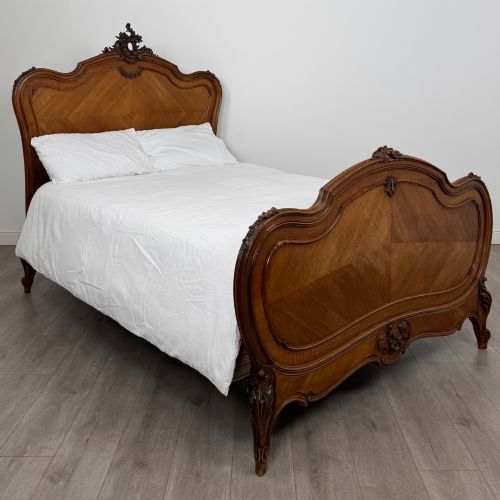
A vintage walnut double bedstead brings warmth and distinct grain to a bedroom, combining sturdy timber with period craftsmanship.
Vintage Walnut Double Bedstead
A vintage walnut double bedstead provides a substantial centrepiece for a bedroom, drawing the eye with rich timber tones. When searching for a vintage walnut double bedstead, buyers encounter pieces ranging from ornate Victorian and Edwardian examples to streamlined Art Deco designs.
The selection on this page spans several decades, with early twentieth-century Art Deco models and late nineteenth-century French styles appearing frequently. These bedsteads accommodate standard double mattresses while offering decorative headboards and footboards shaped by the aesthetic of their era.
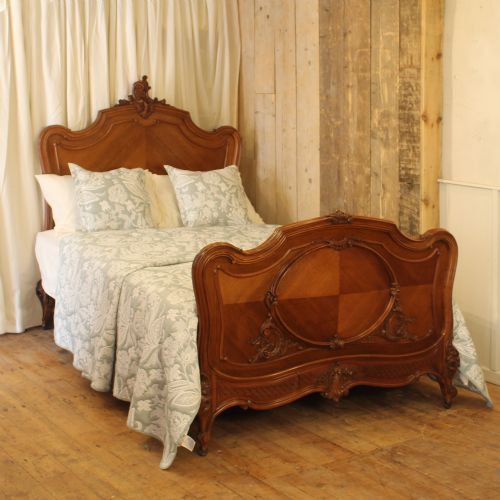
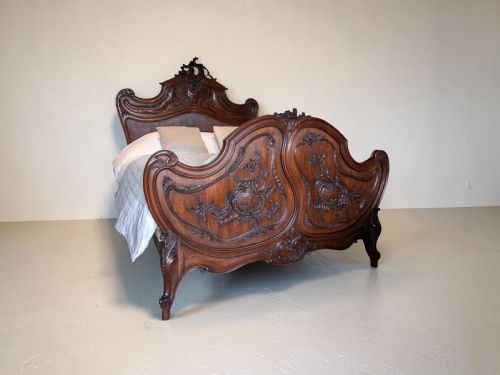
Origins vary between British workshops and continental makers, particularly French ateliers favouring Louis XV or Rococo revivals. Solid construction meets decorative veneering across the periods, reflecting shifts in taste from heavy carving to geometric modernism.
Materials and construction methods
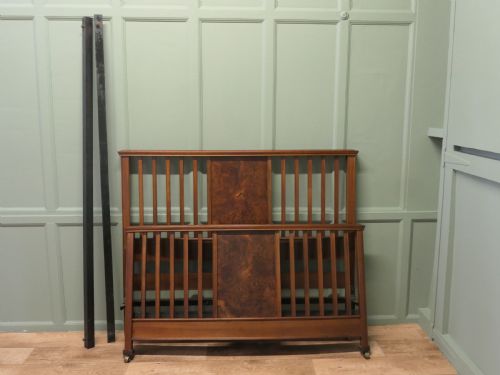
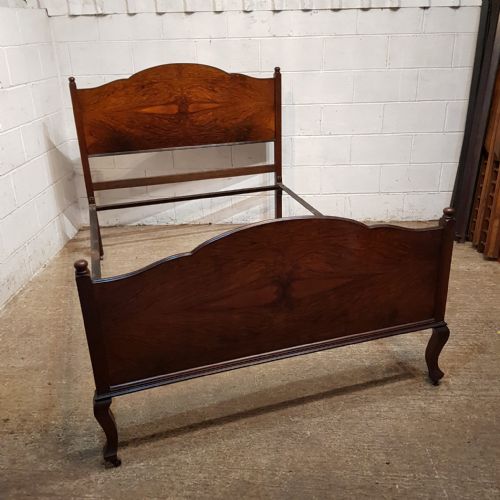
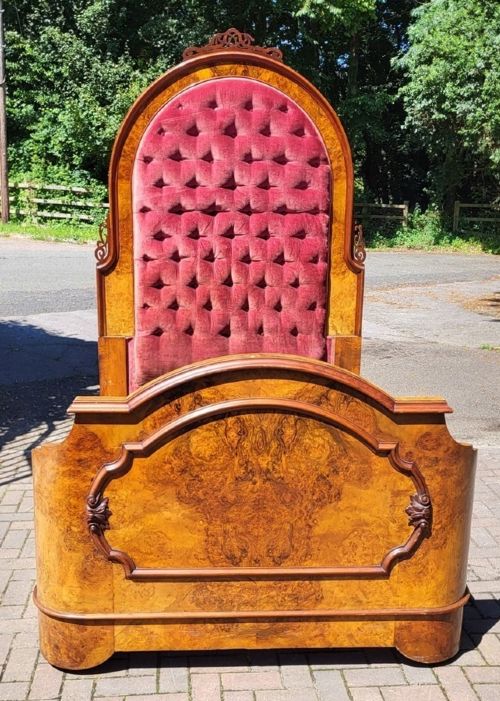
Cabinetmakers utilised solid walnut and timber frames as the foundational structure, applying walnut veneer or burr walnut slices to visible surfaces to display intricate grain patterns. Figured walnut and burl sections required skilled handling to cover large panels symmetrically on headboards and footboards.
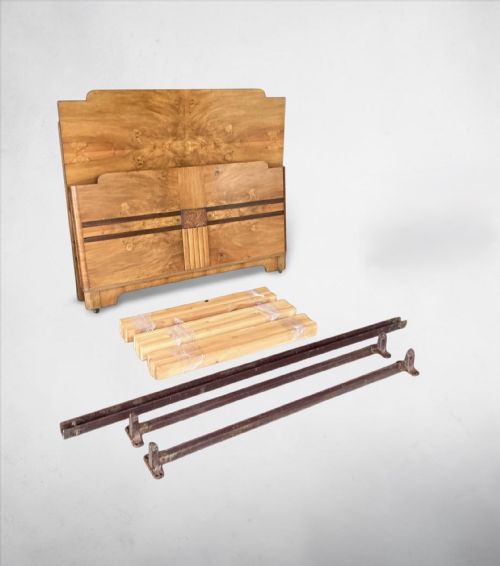
Carving and shaping defined the ornamental details, from the sweeping curves of Art Deco pieces to the traditional motifs seen on Victorian and French revival bedsteads. Metal components such as iron and brass hardware provided internal support and stability for the wooden frames.
Listings feature walnut, burr walnut, iron and brass across Victorian, Edwardian and Art Deco periods.
Quality variations in walnut bedsteads
The standard of timber selection sets finer examples apart, particularly the depth and movement found in burr, burl or figured walnut veneers. Superior pieces display carefully matched grain patterns that flow evenly across wide panels without disruption.
Joinery and carving execution dictate the structural integrity and artistic merit of a bedstead. Crisp hand-carving on solid sections and robust assembly methods distinguish master workshops from standard production items.
The Vintage Walnut Double Bedstead Glossary
- Burr walnut
- A prized veneer derived from growths on walnut trees, yielding intricate, swirling grain patterns. It adds rich texture to headboards and prominent panels.
- Art Deco
- A design style from the nineteen-thirties characterised by sleek geometric shapes, curvaceous forms and symmetrical patterns. These beds often feature streamlined silhouettes.
- Louis XV style
- An ornate eighteenth-century French revival aesthetic featuring asymmetrical scrolls, cabriole motifs and organic curves. This style appears frequently in continental walnut bedsteads.
- Bedstead
- A framework of a bed consisting of headboard, footboard and side rails designed to support a mattress and base. It distinguishes the complete wooden structure from modern divans.
- Veneer
- A thin layer of superior wood adhered to a base timber surface to provide decorative figure and texture. Skilled makers match these slices for visual balance.
Vintage Walnut Double Bedstead: Frequently Asked Questions
Will a vintage double bed fit a modern mattress?
Many vintage double bedsteads accommodate standard double mattresses, though continental sizes or older proportions can vary slightly.
It remains wise to check the internal dimensions of the side rails before purchasing a modern mattress.
How do I care for antique walnut wood?
Walnut benefits from occasional application of quality furniture wax to nourish the grain and protect the finish.
Keep wooden bedsteads away from direct sunlight and radiators to prevent the veneer from drying or cracking.
Are these beds easy to assemble?
Most antique bedsteads use traditional iron bed bolts or metal slots that connect the headboard, footboard and side rails securely.
Assembly typically requires two people and simple hand tools to ensure the frame squares up correctly.
How can I tell an Art Deco bed from a Victorian one?
Art Deco beds rely on clean geometric lines, waterfall curves and figured veneer without heavy carving.
Victorian and Edwardian examples lean towards darker timber, applied mouldings, button-backed upholstery and traditional decorative motifs.