


Art Deco Bed Footboard
An art deco bed footboard anchors the bedroom with sweeping architectural lines and rich graining from the interwar period.
Art Deco Bed Footboard
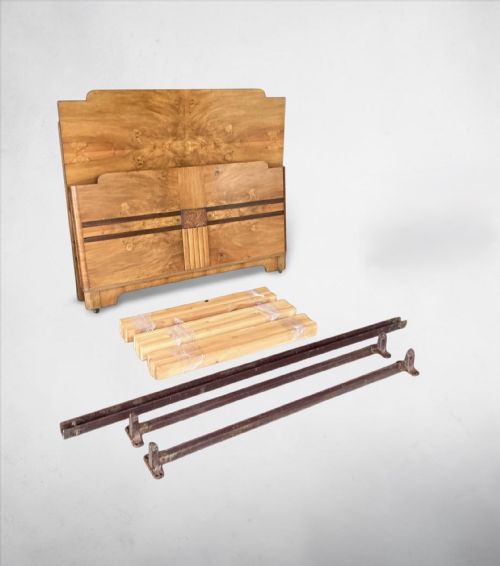
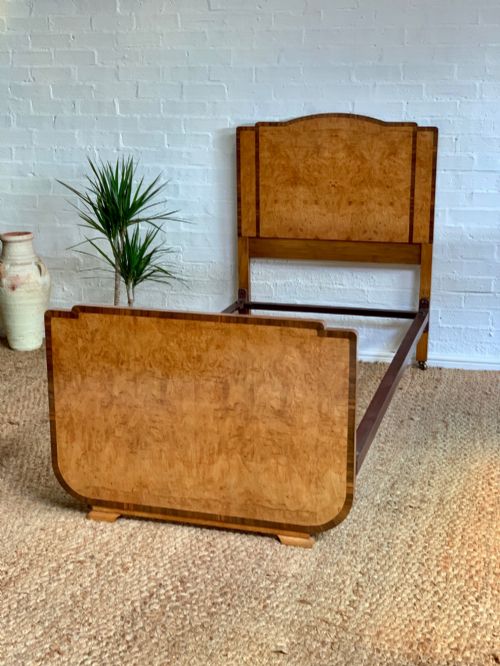
When you search for an art deco bed footboard, you are looking at the lower terminal of a twentieth-century bedstead, designed to frame the mattress with characteristic geometric or curvaceous geometry. These elements frequently survive from complete double, single, and king-size beds originating from the nineteen-twenties and nineteen-thirties.
On this page, you are most likely to meet footboards fashioned as part of French or English bed frames. They arrive in forms ranging from streamlined odeon shapes to richly figured double and single bedsteads.
The aesthetic leans heavily on symmetry and bold proportions, making the footboard the primary visual anchor at the foot of the sleeping quarters. Each piece demonstrates the distinctive architectural spirit of the interwar decades.
How they were made
Cabinetmakers constructed these pieces primarily using solid walnut and iron, often applying elaborate burr walnut veneer and satinwood to create striking visual patterns across the surface. The use of figured veneers allowed artisans to exploit the natural grain for dramatic symmetrical effects.
Metal elements such as steel also appeared in construction, pairing with timber to achieve the industrial yet polished look typical of the period. Joinery methods of the era ensured that footboards remained robust structural components of the complete bedstead.
Materials span solid walnut, burr walnut veneer, satinwood, iron, and steel.
What varies in quality
The distinction between ordinary and superior examples lies in the selection and application of veneers. Master cabinetmakers chose timber with exceptional figure and grain symmetry, ensuring the central panels possessed a natural depth that lesser pieces lack.
Proportion and carving also dictate the standing of a piece. Fluid curves and integrated ironwork reflect a higher level of design ambition than plain, utilitarian frames from the same era.
Waring and Gillow England
The Art Deco Bed Footboard Glossary
- Burr walnut
- A decorative timber derived from the warted growths on walnut trees, prized for its swirling, highly figured grain patterns. It forms the primary visual focal point on many interwar bed ends.
- Satinwood
- A luminous hardwood yielding a pale, golden yellow colour with a satiny sheen. Craftsmen utilised it for contrasting banding and inlay work.
- Veneer
- A thin slice of superior wood adhered to a foundational timber base. This technique allowed makers to display expensive grain patterns across large structural surfaces.
Art Deco Bed Footboard: Frequently Asked Questions
What periods do these footboards date from?
The pieces available originate predominantly from the nineteen-twenties and nineteen-thirties. This era embraced bold geometric forms and luxurious natural wood grains.
Craftsmen of this period favoured French and English regional designs, which heavily influenced the distinct silhouette of each bedstead.
How do I care for walnut veneer?
Walnut veneer requires protection from direct sunlight and excessive moisture to prevent warping or fading. Regular dusting with a soft, dry cloth preserves the polished surface.
Avoid placing these wooden elements near modern heat sources. Natural wax can be applied periodically to nourish the grain.
Are these footboards part of complete beds?
Many items listed originate from complete double, single, or king-size bed frames. They survive either as integrated components of a bedstead or as standalone architectural elements.
Buyers often evaluate them based on how well they match existing interwar bedroom furniture.
What timber types are most common?
Walnut and burr walnut dominate the selection, frequently paired with satinwood and blonde birds eye maple. These woods were chosen for their rich colour variation.
Metal components such as iron and steel also appear in select frames, adding structural contrast to the timber.