




Vintage Walnut Double Bed
A vintage walnut double bed offers warmth and architectural presence, anchoring a bedroom with rich timber grain and period character.
Vintage Walnut Double Bed
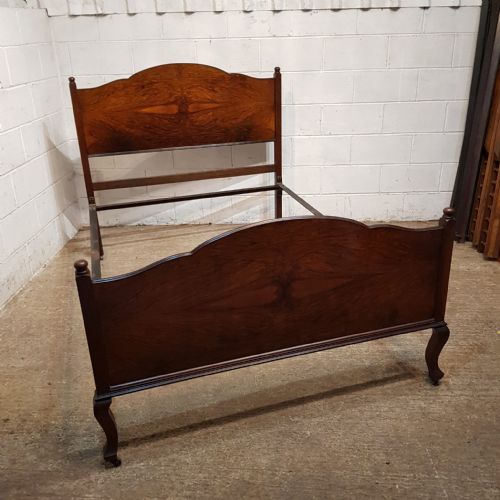
A vintage walnut double bed brings substantial timber presence and varied grain patterns into the sleeping quarters, spanning periods from the late nineteenth century through the interwar decades. Buyers encounter everything from rectilinear Art Deco frames to heavily carved Victorian and Edwardian examples.
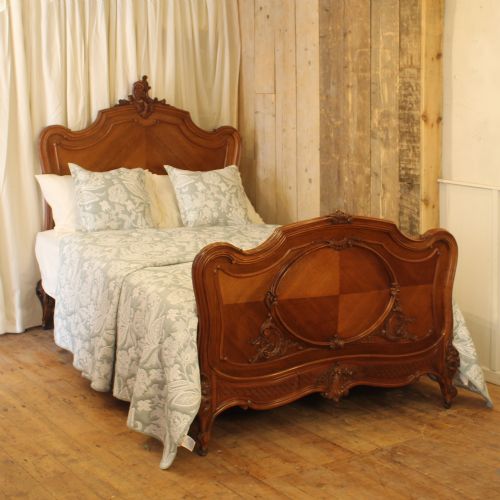
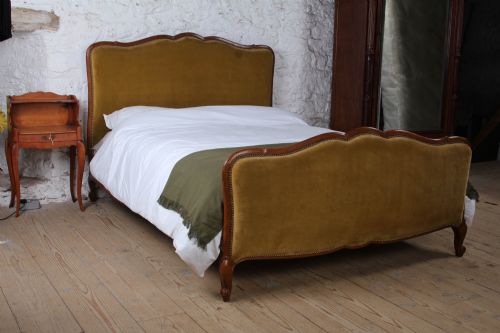
The selection here encompasses standard double dimensions alongside French chassis designs and larger formats, utilising solid walnut, burr walnut, and figured veneers over timber cores. Many pieces originate from French workshops, displaying regional interpretations of provincial styles or classical revival motifs.
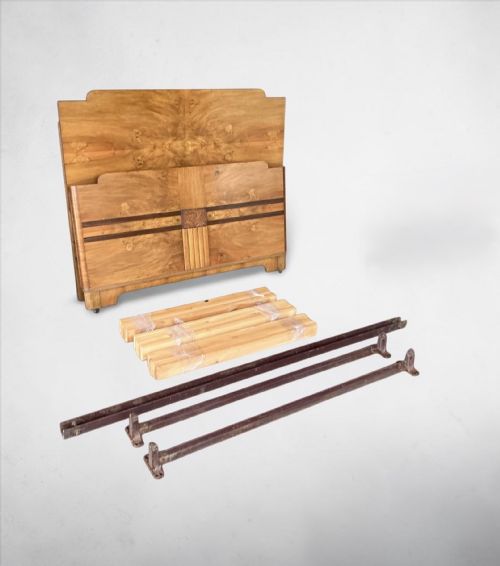
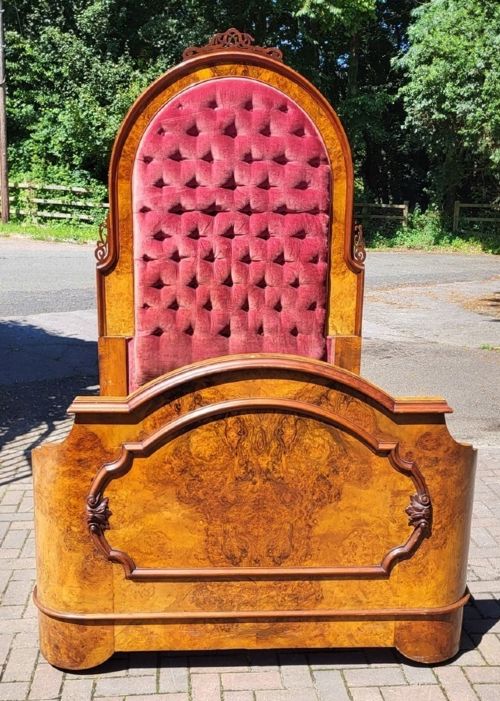
Art Deco iterations from the nineteen-thirties dominate the visual landscape, characterised by curved headboards, fan shapes, and prominent burr walnut figuring. Earlier nineteenth-century specimens lean towards carved crests, button-backed upholstery, and architectural mouldings.
How they were made
Cabinet makers utilised walnut, burr walnut, and figured veneer applied to timber frames, often pairing rich brown heartwood with decorative grain patterns. Iron and brass components frequently appear within the internal brackets, rails, and structural joinery to secure the wooden headboards and footboards.
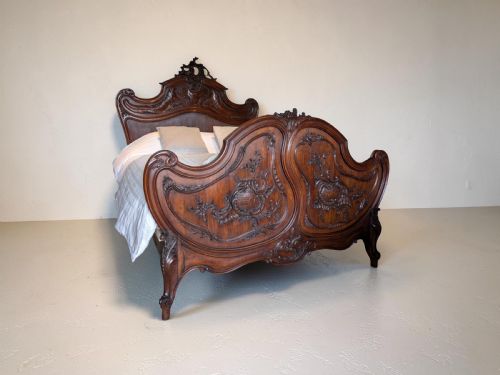
Surface treatments rely on French polishing and traditional varnishes that accentuate the natural depth and variation of the wood. Carved elements on Victorian, Edwardian, and French revival pieces show hand-chiselled detailing, whilst Art Deco frames depend upon symmetrical veneer matching and curved laminations.
Vintage Walnut Double Bed Retail Price Guide 2026
Typical asking prices for vintage walnut double bed among the pieces listed under this phrase on Sellingantiques today, from the lower quarter to the upper quarter. They describe what is for sale here now, not the wider market.
One persistent sleeper discovered their vintage bed frame still held a chalked nineteenth-century cabinet maker's tally mark behind the headboard.
What varies in quality
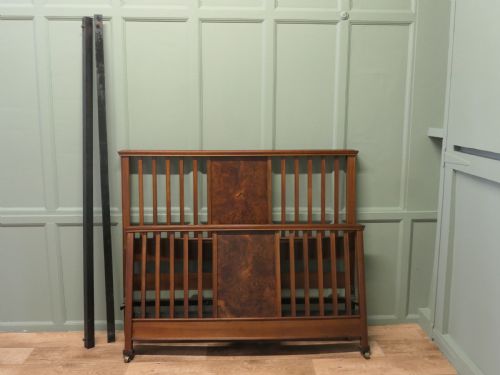
The distinction between ordinary and exceptional frames lies primarily in the selection of the timber and the complexity of the veneer work. Highly figured burr walnut and book-matched panels require superior craftsmanship compared to plain timber surfaces.
Execution of carved ornamentation and the architectural harmony of the headboard dictate the upper tier of manufacture. Pieces featuring integrated upholstery, parcel gilt accents, or complex curved woodwork demand greater skill from the cabinet maker than simple rectilinear constructions.
The Vintage Walnut Double Bed Glossary
- Art Deco
- A design style prevalent in the nineteen-thirties emphasising streamlined geometry, curved silhouettes, and symmetrical figuration. Common in the interwar beds found here.
- Bedstead
- A framework of a bed consisting of headboard, footboard, and side rails designed to support a mattress and base. Differs from modern divans by standing as a distinct piece of furniture.
- Veneer
- A thin layer of superior walnut applied over a secondary timber base to create decorative surfaces without excessive weight. Found extensively across Art Deco and Edwardian frames.
- Half tester
- A bed featuring a partial canopy or tester projecting from the headboard rather than covering the entire length. Seen in Victorian burr walnut examples.
Vintage Walnut Double Bed: Frequently Asked Questions
Will a vintage double bed fit a modern mattress?
Many vintage French and nineteenth-century frames were built to historical dimensions that differ slightly from contemporary standard sizes. Buyers often check internal rail lengths and widths carefully before sourcing a mattress.
Custom mattress makers frequently supply bespoke dimensions to fit older wooden side rails precisely. This ensures proper support without altering the original antique timber frame.
How do I care for walnut veneer furniture?
Walnut benefits from consistent indoor humidity levels to prevent timber movement or veneer lifting. Regular dusting with a soft cloth preserves the original polish without harsh chemical interference.
Applying occasional specialist wax feeds the timber and maintains the subtle sheen of the grain. Direct sunlight should be avoided to prevent fading in figured burr walnut panels.
How do I tell Art Deco from Victorian walnut beds?
Art Deco walnut beds from the nineteen-thirties display curvaceous, streamlined silhouettes and prominent fan-shaped or figured veneers. They omit the heavy classical carving and dark, dense proportions typical of earlier decades.
Victorian and nineteenth-century examples rely on architectural mouldings, button-backed upholstery, and deep relief carvings in solid timber. The distinction rests between geometric modernity and ornate historical revivalism.
Are these beds easy to assemble?
Most antique wooden bed frames utilise traditional metal bolt-in side rails or drop-in brackets that dismantle for transport. Assembly typically requires simple spanners to secure the headboard and footboard to the long rails.
Care must be taken not to over-tighten iron bolts against aged wood. Having two people manage the heavy walnut panels ensures safe installation in the bedroom.