





Vintage Wall Mercury Barometer
A vintage wall mercury barometer offers precise atmospheric measurement housed in traditional wood and glass cases.
Vintage Wall Mercury Barometer
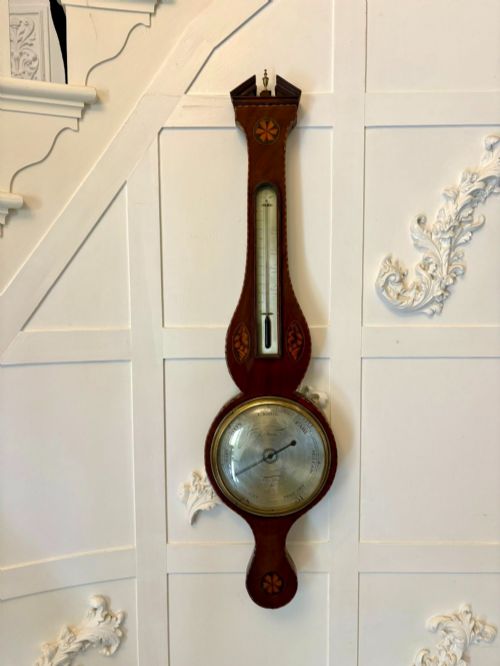
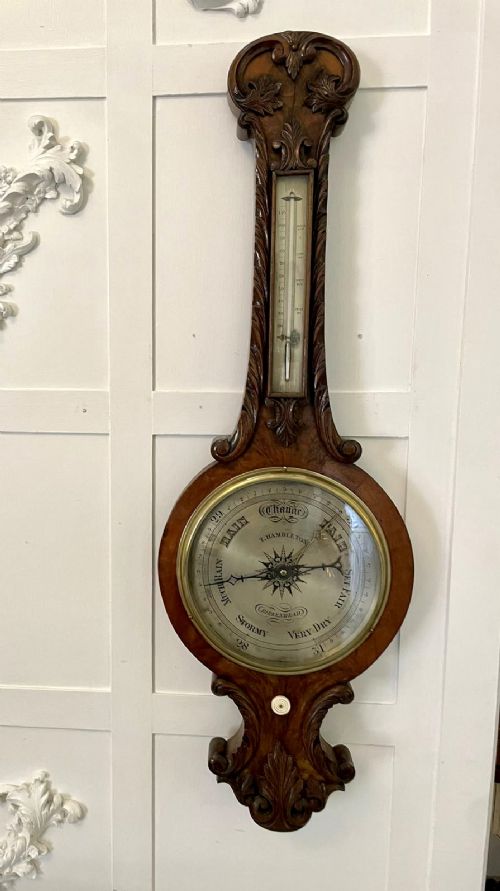
A vintage wall mercury barometer is a functional scientific instrument designed to measure atmospheric pressure while serving as an interior decorative fixture. These pieces span the Georgian, Regency, and Victorian periods, alongside later revival styles.
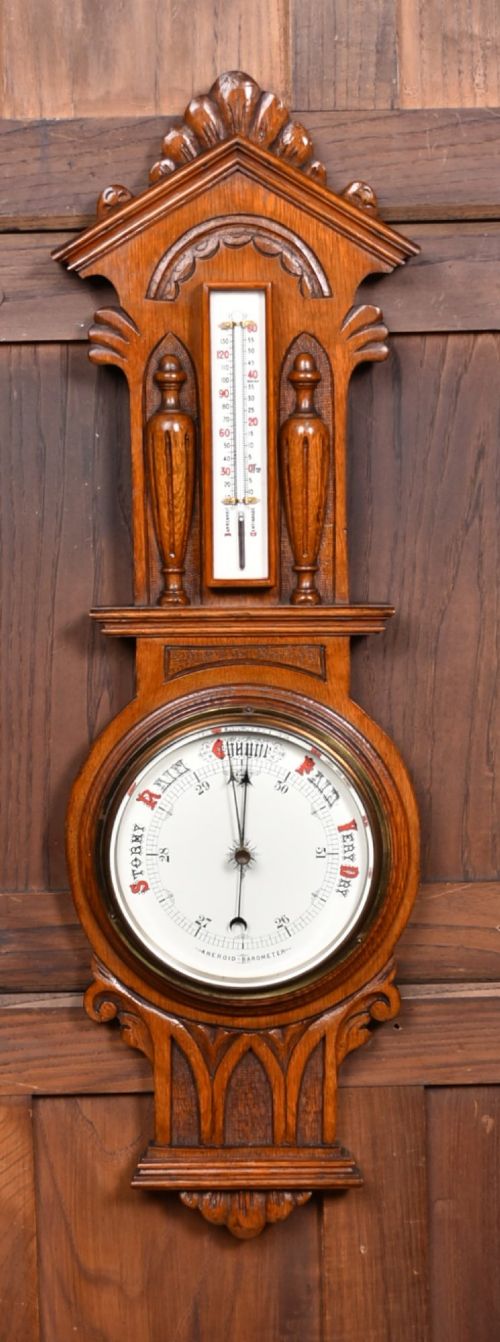
Makers ranged from provincial English towns to prominent London workshops, producing domestic pieces and specialised marine stick barometers. Woods like mahogany and rosewood dominate the early examples, while oak becomes prevalent in Victorian designs.
Materials and Construction
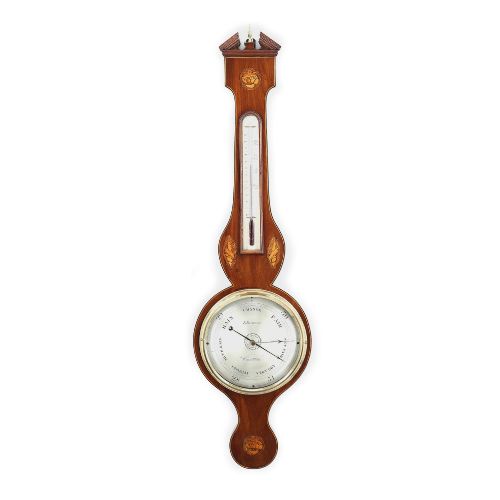
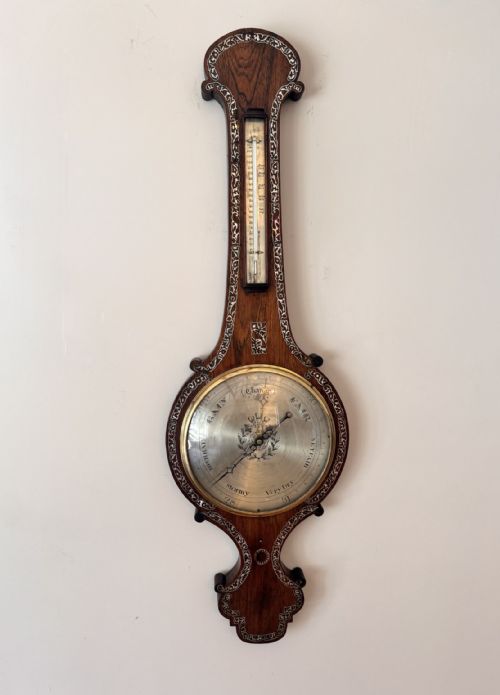
Cases are constructed from dense hardwoods including mahogany, rosewood, burr walnut, and oak, often shaped with scroll pediments or bow fronts. Finer examples incorporate decorative techniques such as shell inlay, mother of pearl highlights, and marquetry.
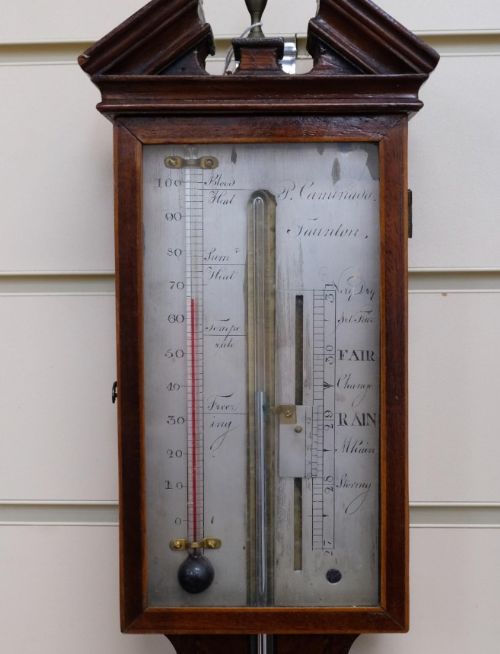
The working mechanism relies on a glass tube filled with mercury, mounted alongside engraved silvered brass or silvered metal dials. Bone is occasionally utilised for dial adjustment knobs and scale indicators.
Makers housed these delicate glass columns securely within wooden backplates, protecting the fluid column with glazed bezels and brass or silver gilt fittings.
Listings feature stick and banjo barometers spanning the Georgian, Regency, and Victorian periods, constructed primarily in mahogany, rosewood, and oak.
Quality Variations
The distinction between standard domestic barometers and superior pieces rests in the crispness of the case carving and the depth of the cabinet timbers. Fine examples feature carefully selected flame mahogany or rich rosewood grain matched across the entire instrument.
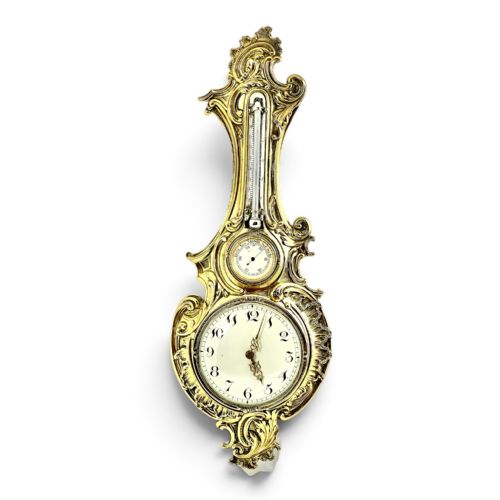
Dial execution separates workshops, with signed silvered metal plates displaying finer hand-engraved graduations and lettering than unsigned utilitarian alternatives. The integration of secondary functions like reliable clock movements or working thermometers elevates the standard of the piece.
Originality of the mercury tube assembly and the condition of the exterior woodwork dictate the standing of a barometer. Pieces retaining their original signed bezels, bone indicators, and unpolished dial faces command greater appreciation.
P. Caminada·B. Besozzi·Negretti and Zambra·Dollond of London·Ganthony of London·Alexander Wright·Molton of Norwich·Fagioli of Clerkenwell·Bate of London·Jenkins Of Old Swindon·J Hughes London
The Vintage Wall Mercury Barometer Glossary
- Banjo barometer
- A domestic wall barometer shaped with a narrow trunk and a widened circular dial base resembling a banjo. This form became dominant during the Georgian and Victorian periods.
- Stick barometer
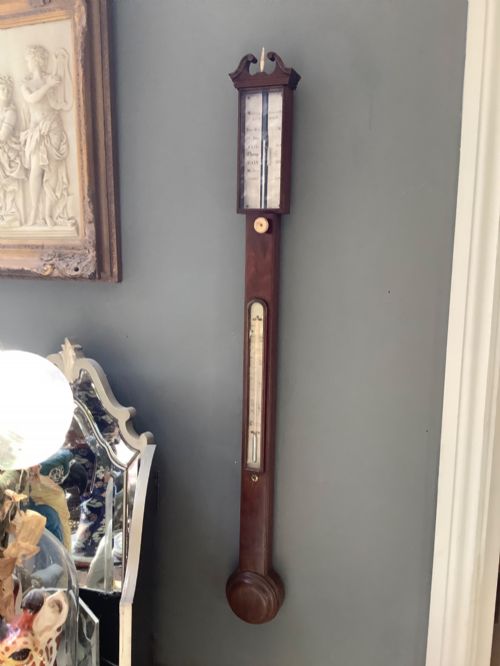
- A tall, narrow wall barometer displaying the open glass tube and scale directly against the wooden backplate. These instruments prioritize scientific precision over decorative casing.
- Silvered brass
- A brass dial plate treated with a silver compound to produce a bright matte finish for engraved graduations. This surface catches room light clearly without excessive glare.
- Marine barometer
- A specialised instrument featuring gimbals or secure mounting brackets to maintain a vertical position on a moving ship. Fitzroy models represent a notable development of this type.
- Aneroid barometer
- A later barometer design utilising a sealed flexible metal capsule rather than liquid mercury to register pressure changes. These appeared alongside traditional mercurial instruments by the late Victorian era.
Vintage Wall Mercury Barometer: Frequently Asked Questions
How do I read a mercury barometer?
Read the height of the mercury column against the fixed scale to determine current atmospheric pressure. Rising levels typically indicate fair weather, while falling levels suggest approaching rain or wind.
Use the manual setting hand on the glass bezel to mark the present reading so future changes are immediately visible.
Can these barometers be hung in any room?
Hang these instruments on interior partition walls away from direct sunlight, central heating radiators, and damp external masonry. Rapid temperature fluctuations can affect the wood case and the internal mechanism.
Ensure the wall fixing is secure enough to support the weight of the dense hardwood case and glass components.
How do I distinguish a stick barometer from a banjo barometer?
A stick barometer is built as a long, narrow wooden shaft where the entire length of the glass mercury tube remains visible behind a glass panel. They are straightforward functional instruments designed for accuracy.
A banjo barometer widens into a bulbous or circular dial housing at the bottom to accommodate a larger pressure dial, often accompanied by decorative stringing or inlay.
Are signed dials important?
Signed dials bearing the name of the maker and their location add historical context and usually indicate a higher standard of workshop production. Makers took pride in engraving their business details directly onto the silvered metal scale.
Unsigned examples remain common and functional, though attribution to specific regional or London makers is lost without the signature.