




Vintage Wall Hanging Clock
These vintage wall hanging clock pieces bring working timepieces and barometers into domestic and commercial spaces with period character.
Vintage Wall Hanging Clock
A vintage wall hanging clock brings mechanical timekeeping and barometric instruments together in timber, metal, and glass cases designed for interior display. Buyers hunting for a vintage wall hanging clock encounter a mix of domestic and trade forms spanning the nineteenth and twentieth centuries.
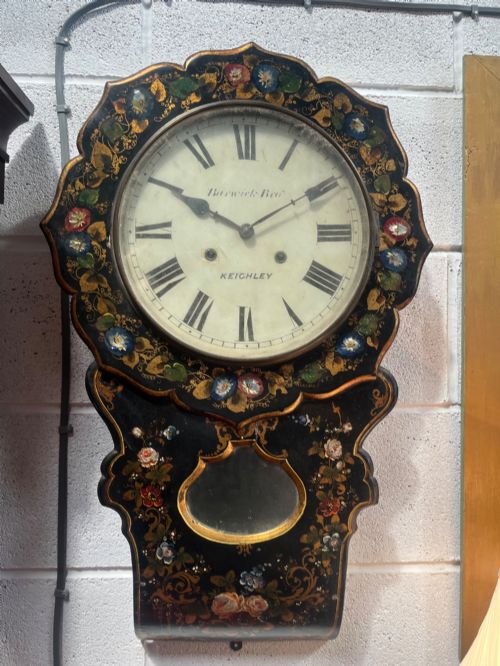
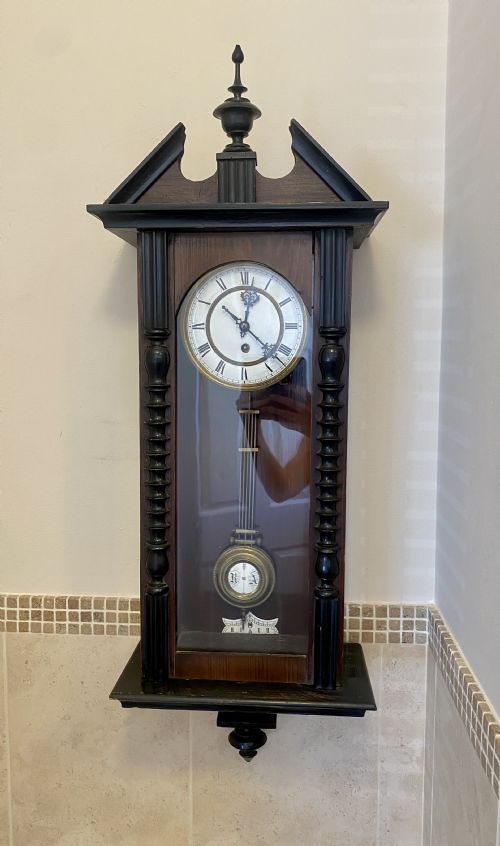
The selection here ranges from carved oak aneroid barometers and mahogany chiming timepieces to ornate French rosewood and gilt metal cartel wall clocks. School clocks with fusee movements and Vienna wall clocks in walnut cases represent the more traditional domestic designs available.
Industrial pieces and trade signs, including a large double-sided pocket watch sign by Josef Herzog, broaden the category beyond standard domestic timepieces. Makers such as Johann Baptist Beha and Perivale of England appear among these wall-mounted instruments.
How they were made
Casework relies on traditional cabinet timbers including walnut, oak, mahogany, rosewood, and ebonised wood, shaped with carved details or smooth polished surfaces. Glass protects painted dials, while brass and gilt metal form bezels, cartel frames, and mechanical movements.
Movements span mechanical fusee systems, chiming mechanisms, and aneroid barometer assemblies housed within wall-mounted timber or metal enclosures. Enamel and painted decoration finish the dial faces of nineteenth and twentieth-century examples.
The listings feature wall clocks and barometers utilising walnut, oak, mahogany, rosewood, brass, and gilt metal materials across Victorian and Art Deco styles.
What varies in quality
The refinement of the casework separates standard production timepieces from superior examples, particularly in the depth of carved oak or the finish of rosewood and gilt metal cartel frames. Regional and maker attribution, such as signed movements by Perivale or Johann Baptist Beha, distinguishes notable pieces from anonymous production.
The integration of multiple instruments, such as combined clock, barometer, and thermometer units, elevates the complexity of the piece. Preservation of original painted decoration, enamel dials, and mechanical fusee movements governs the standing of each timepiece.
Hyde & Sons Sleaford·Josef Herzog·Johann Baptist Beha·Perivale of England
The Vintage Wall Hanging Clock Glossary
- Fusee mechanism
- A conical pulley used in clockmaking to equalize the driving force of the mainspring as it unwinds. This system helps maintain consistent timekeeping accuracy throughout the power reserve.
- Cartel clock
- A wall clock housed in an ornate ornamental frame, typically made of gilt metal or carved wood. These French-inspired designs became popular during the eighteenth and nineteenth centuries.
- Aneroid barometer
- An instrument that measures atmospheric pressure without using liquid, relying instead on a flexible metal box. It often appears combined with thermometers and clocks in wall-mounted wooden cases.
- School clock
- A sturdy, plain-dial wall timepiece with a simple wooden surround designed for clear visibility in public rooms and institutions. These functional clocks use reliable mechanical movements.
- Vienna wall clock
- A precision weight-driven regulator clock developed in Austria during the nineteenth century. These pieces feature tall walnut or hardwood cases with glass side panels displaying the pendulum.
Vintage Wall Hanging Clock: Frequently Asked Questions
How do I wind a mechanical wall clock?
Mechanical wall clocks require a key inserted into the dial winding holes to tension the spring or lift the driving weights. Care must be taken not to over-wind the mechanism.
Most traditional movements run for a specific duration, such as eight days, before needing another winding session to maintain accurate time.
Where should I hang a heavy wall clock?
Heavy wall clocks and barometers need secure attachment directly into structural wall studs or solid masonry using appropriate fixings. Hanging them from plasterboard alone risks structural failure.
Positioning the timepiece away from direct sunlight and damp areas helps protect the timber case and delicate internal metal components.
What is a fusee movement?
A fusee movement uses a spiral-grooved cone to regulate the power delivered from the mainspring to the gear train. This ensures even force as the spring loses tension.
Such mechanisms indicate higher technical quality in nineteenth-century British and European wall clocks.