





Late Victorian Regulator Clock
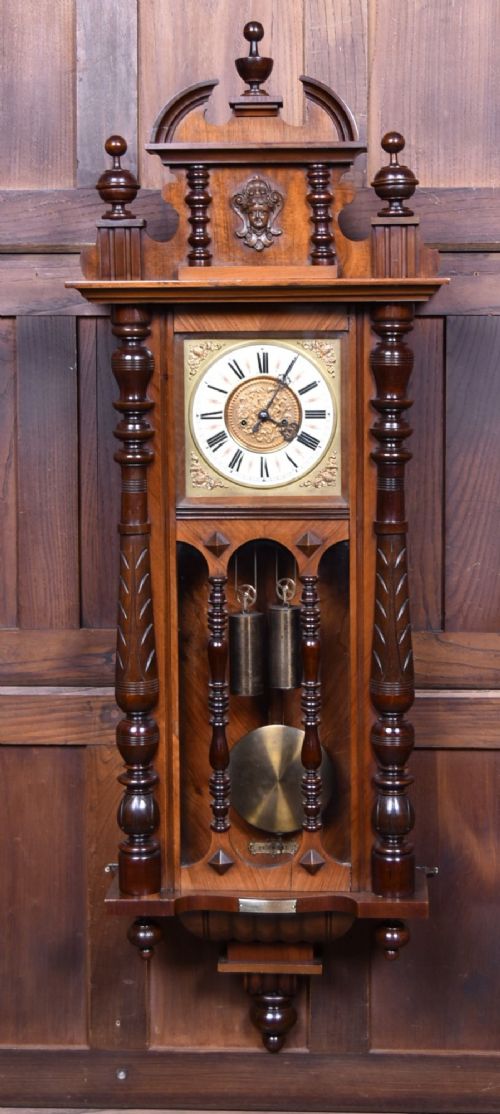
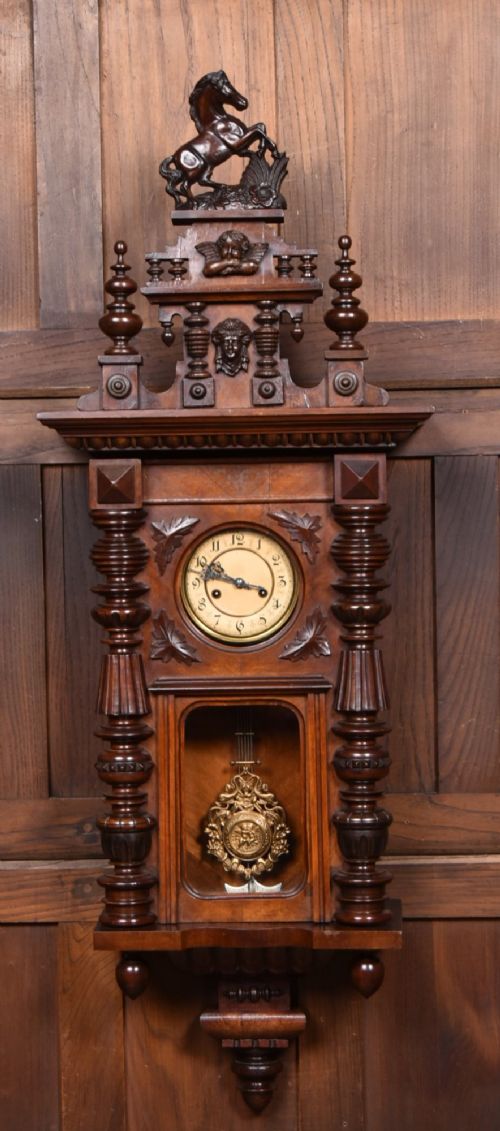
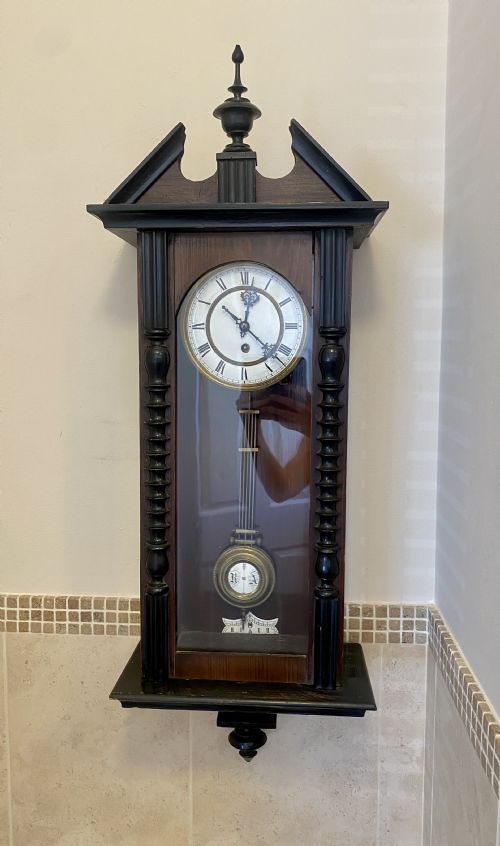
A late victorian regulator clock brings precision timekeeping and rich walnut cases into a room, offering the steady swing of a long pendulum.
Late Victorian Regulator Clock
A late victorian regulator clock represents the pinnacle of nineteenth-century domestic timekeeping, designed for precise accuracy and reliable daily service. These pieces typically take the form of wall-mounted Vienna regulators housed in rich wooden cases or freestanding four-glass mantel clocks.
Most examples found in this selection date from the 1880s through to 1890, capturing a period when clockmakers refined both mechanical precision and architectural casing design. Buyers frequently encounter walnut wall clocks alongside gilded brass and bevelled glass mantel pieces from French workshops.
The aesthetic bridges utilitarian accuracy with decorative elegance, featuring enamel dials and visible pendulums that animate a hallway or study. Whether selecting a German movement or a French crystal regulator, the core purpose remains reliable mechanical timekeeping housed in handsome materials.
Materials and construction
Cases rely heavily on walnut for wall-mounted Vienna regulators, providing a stable and handsome timber frame that protects the delicate gear trains within. French mantel variants utilise brass and gilt brass, often combined with heavy bevelled glass panels that allow an unobstructed view of the movement.
Internal mechanisms depend on cast brass for plates, wheels, and escapements, engineered to maintain tension and deliver consistent power to the striking train. Dials are constructed from white enamel with painted Roman numerals, paired with finely pierced hands designed to sweep across the face with minimal friction.
Some late nineteenth-century clockmakers secreted tiny adjustment instructions inside the case door, written in faint pencil by weary apprentices.
Distinctions in quality
The calibre of the movement separates standard production from superior examples, visible in the finish of the brass gear trains and the precision of the escapement. Higher-grade pieces feature robust 8-day striking mechanisms that operate smoothly and hold a more dependable arc on the pendulum.
Case construction likewise dictates the standing of a clock, where tightly grained walnut and hand-bevelled glass demonstrate superior joinery and material selection. Subtle details such as crisp enamel dials without hairline fractures and well-cast bezels indicate a maker who prioritised lasting durability alongside visual appeal.
AG Lenzkirch·Samuel Marti·F.Milliot
The Late Victorian Regulator Clock Glossary
- Regulator clock
- A precision timekeeper designed for exceptional accuracy, originally used as a standard to set other clocks. These pieces feature a long pendulum and clear, easy-to-read dials.
- Four-glass clock
- A mantel clock housed in a brass framework with glass panels on all four sides, offering a full view of the interior movement. This style gained immense popularity during the late nineteenth century.
- Enamel dial
- A clock face made by fusing powdered glass onto a metal substrate under high heat. This creates a durable, glossy white surface that resists fading over decades of use.
- Bevelled glass
- Glass panes featuring an angled edge ground and polished to a specific slope. This technique catches the light and adds a refined decorative border to clock doors and panels.
- Striking train
- The secondary gear train within a clock movement responsible for sounding the hours or half-hours on a bell or gong. It operates independently from the timekeeping mechanism.
Late Victorian Regulator Clock: Frequently Asked Questions
How do I wind a regulator wall clock?
Most 8-day movements require a key inserted into the winding holes on the enamel dial to tension the mainsprings every week. Care must be taken not to overwind the mechanism.
Ensuring the pendulum hangs plumb and the case rests firmly against the wall keeps the beat regular and prevents the clock from stopping.
Where should I hang a wall clock?
Wall clocks require a sturdy partition capable of supporting the combined weight of the timber case and the brass movement. Plasterboard fixings must anchor securely into solid studs.
Placement should avoid damp environments and direct sunlight to protect the walnut timber and the delicate white enamel on the dial face.
Why does my clock run fast or slow?
Mechanical clocks adjust their speed through a small nut located at the base of the pendulum bob. Raising the bob shortens the pendulum arc and makes the clock run faster.
Lowering the bob has the opposite effect, slowing the beat down. Small adjustments made over several days help the movement settle into accurate timekeeping.
What is a crystal regulator?
A crystal regulator is a mantel clock enclosed by heavy bevelled glass panels on a brass or gilded frame. This design showcases the entire mechanical movement from multiple angles.
Originating largely in French workshops during the late nineteenth century, these pieces combine heavy glass construction with refined mercury or compensated pendulums.