




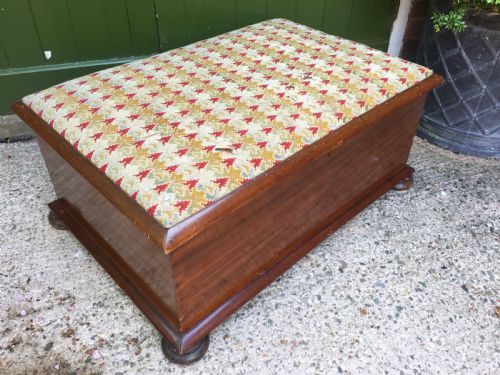


Vintage Upholstered Hassock
A vintage upholstered hassock brings warmth and traditional comfort to a room, offering a versatile resting place for feet or an extra seat.
Vintage Upholstered Hassock
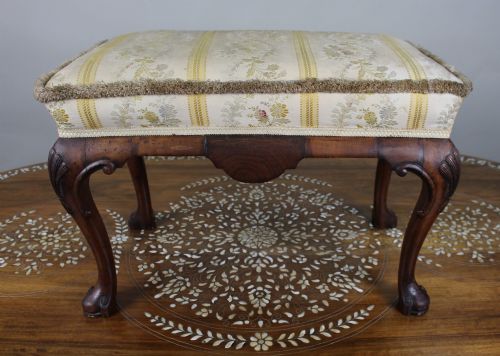
A vintage upholstered hassock, often listed as a footstool, ottoman or stool, serves as a traditional low seat or footrest. These pieces appear across several periods, including the Regency, Victorian, and Edwardian eras, reflecting changing domestic comforts and interior tastes.
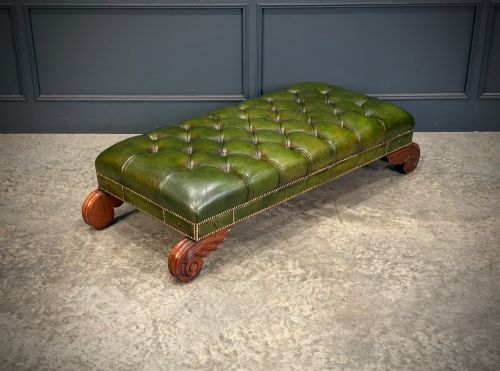
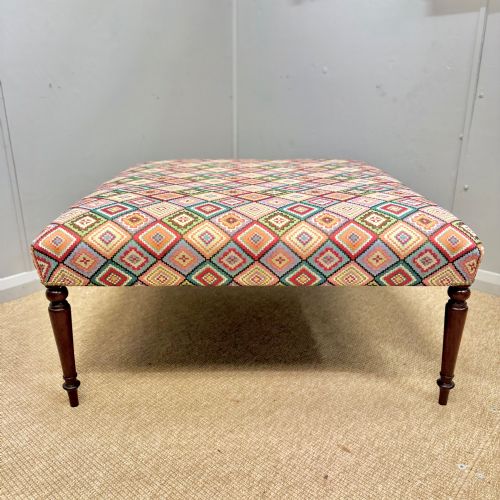
The versions most commonly met on this page span the nineteenth century up to nineteen hundred. They take forms ranging from compact square stools to very long footstools and larger ottomans designed for substantial rooms.
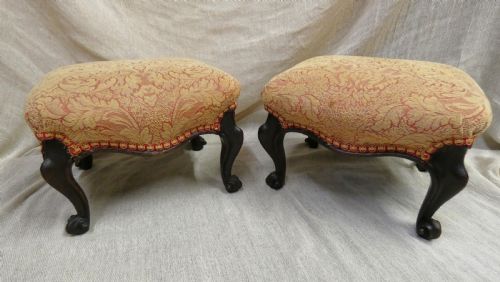
Stylistic influences vary widely across the selection, drawing on English Country House aesthetics, Queen Anne Revival lines, Rococo Revival curves, and Edwardian Chinoiserie. Makers also turned to distant traditions, producing carved Anglo-Indian designs alongside domestic frameworks.
How they were made
Frames rely on sturdy timbers such as mahogany, alongside giltwood and black lacquer, providing a robust structural skeleton for the upholstery. Brass hardware sometimes appears on these frames for decorative or functional detail.
Vintage Upholstered Hassock Retail Price Guide 2026
Typical asking prices for vintage upholstered hassock among the pieces listed under this phrase on Sellingantiques today, from the lower quarter to the upper quarter. They describe what is for sale here now, not the wider market.
The listings span multiple eras, encompassing Regency, Victorian, and Edwardian periods alongside nineteen-hundred designs.
What varies in quality
The distinction between ordinary and exceptional pieces rests in the ambition of the timber carving and the fidelity of the period style. Elaborate Rococo Revival curves or intricate Anglo-Indian carving demand a higher level of artisan skill than plain geometric frames.
Upholstery materials and execution dictate the upper tier of the range. Original gros-point needlework tops, buttoned leather, and fine silk or woven fabric coverings indicate a greater investment of original craftsmanship.
Howard and Sons
The Vintage Upholstered Hassock Glossary
- Gros-point
- A heavy needlepoint stitch used in historical upholstery and tapestry work. It produces a durable and textured surface suitable for heavy foot traffic.
- Ottoman
- A low, upholstered seat or footstool without arms or a back. Larger versions provided substantial seating or lounging surfaces in nineteenth-century drawing rooms.
- Giltwood
- Timber that has been coated with a thin layer of gold leaf. This finish was favoured in Baroque and revivalist styles to catch the candlelight.
- Chinoiserie
- European decorative style reflecting Chinese artistic motifs. Edwardian interpretations often featured black lacquered surfaces and painted ornamentation.
- Buttoned leather
- Upholstery technique where leather is pulled tight and secured with deep buttons in a geometric grid. This method creates characteristic diamond folds.
Vintage Upholstered Hassock: Frequently Asked Questions
What is a hassock?
A hassock is a traditional upholstered footstool or low seat designed to support the feet or serve as a casual seat.
Historical examples frequently feature timber frames beneath textile or leather coverings.
How do I date a Victorian footstool?
Dating relies on examining the timber frame, such as mahogany, and the style of the upholstery.
Victorian pieces often display revivalist influences like Rococo curves or incorporate traditional buttoned leather and needlework.
Where should I place an ottoman?
These pieces fit naturally in front of armchairs or sofas as functional footrests.
Larger ottomans also work effectively as standalone seats or centre tables in traditional living spaces.
Are Edwardian stools different from Victorian ones?
Edwardian pieces often lighter styles, including black lacquered Chinoiserie finishes and very long proportions.
Victorian versions tend to rely on heavier mahogany frames and formal upholstery techniques.