




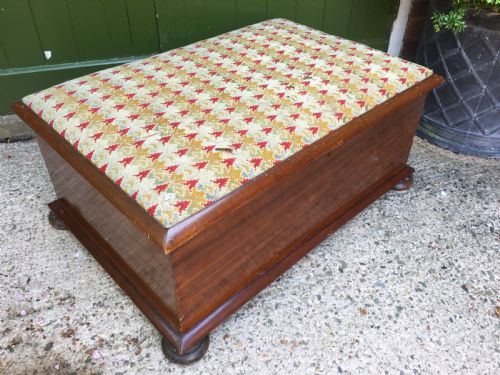


Vintage Upholstered Box Ottoman
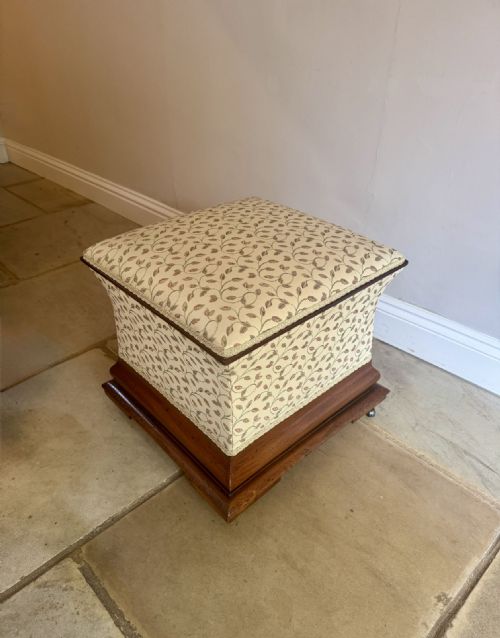
A vintage upholstered box ottoman combines concealed storage with deep seating, offering the ideal practical centrepiece for a period bedroom or drawing room.
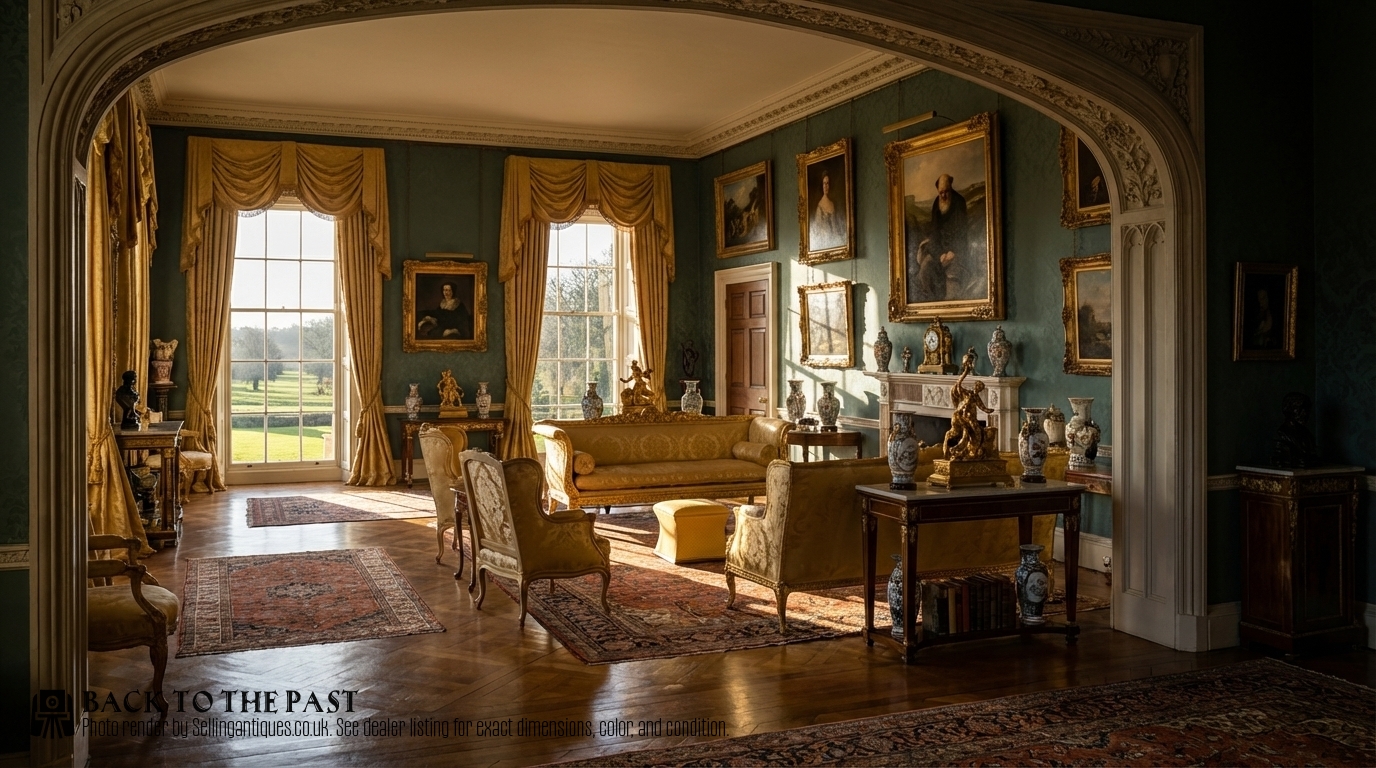
Vintage Upholstered Box Ottoman
A vintage upholstered box ottoman provides practical utility by combining a hinged lid for storage with a padded seat or top. The pieces appearing under this search phrase span forms such as blanket boxes, work boxes, storage chests, daybeds, and footstools.
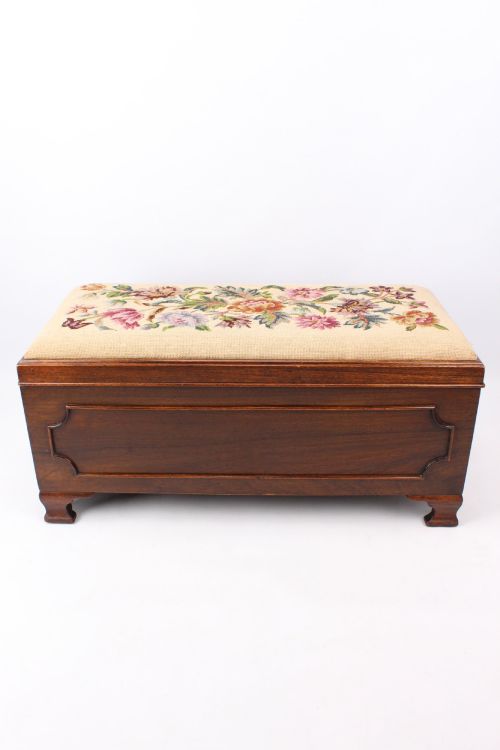
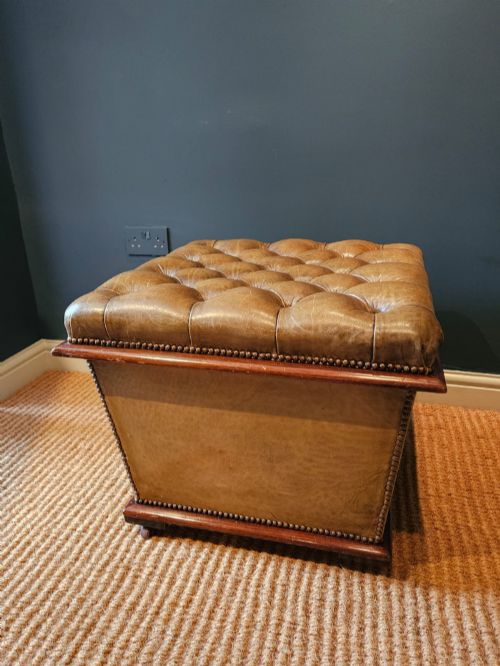
The versions most commonly met on this page date from the nineteenth century through the early twentieth century. Victorian examples frequently utilise rich timbers like mahogany, walnut, and birch alongside leather or needlework covers.
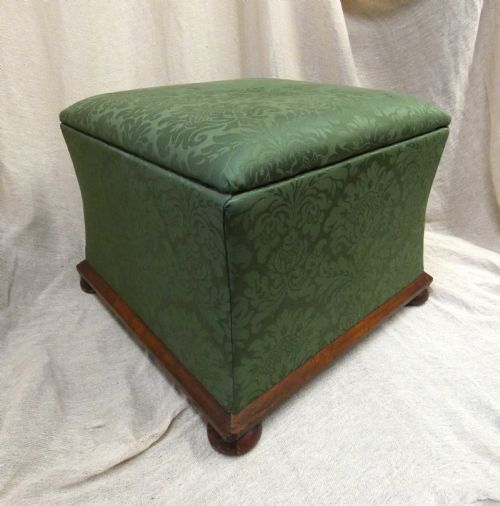
Makers and craftsmen of the period constructed these dual-purpose items for country houses and town residences alike. The structural forms range from concave shaped blanket boxes to sturdy mahogany frames fitted with original gros-point needlework.
How they were made
Makers constructed the carcases of these items using solid hardwoods and timber such as mahogany, walnut, birch, and pine. These robust wooden frames provided the necessary durability for furniture intended to serve as both storage chest and seat.
Upholstery techniques involved padding the top sections and covering them in textiles including leather, wool, fabric, and detailed gros-point needlework. Metal elements such as brass occasionally appeared in hardware, fittings, or structural details.
Vintage Upholstered Box Ottoman Retail Price Guide 2026
Typical asking prices for vintage upholstered box ottoman among the pieces listed under this phrase on Sellingantiques today, from the lower quarter to the upper quarter. They describe what is for sale here now, not the wider market.
Some nineteenth-century makers hid needlework secrets inside work boxes, ensuring your mending pile stayed comfortably out of sight.
What varies in quality
The choice of primary timber and secondary wood sets the baseline for construction quality across these pieces. Dense hardwoods like mahogany and walnut indicate higher workshop standards than softer alternatives like pine.
The refinement of the upholstery and the survival of original textiles dictate the visual standard of the piece. Items retaining period gros-point needlework or patinated leather demonstrate superior original commission value.
Hallett & Sons
The Vintage Upholstered Box Ottoman Glossary
- Ottoman
- A padded seat or stool without arms or a back, frequently designed with a hinged lid to allow internal storage. This form evolved to serve multiple functions within domestic interiors.
- Gros-point
- A type of needlepoint embroidery worked in coarse wool on a canvas ground. It creates a durable, textured surface frequently found on Victorian seat covers.
- Canterbury
- A low piece of furniture featuring partitioned sections for holding papers, music, or books, sometimes combined with a seated stool top. Victorian examples often incorporate turned wooden supports.
- William IV
- A British architectural and decorative style spanning roughly the 1830s, bridging Regency and early Victorian tastes. Pieces from this period display robust classical proportions and heavy mahogany construction.
Vintage Upholstered Box Ottoman: Frequently Asked Questions
What is a box ottoman?
A box ottoman is a dual-purpose piece of furniture featuring a hollow interior for storage beneath a padded, hinged seat. These items functioned as blanket boxes, work boxes, or comfortable footstools in period homes.
Craftsmen built the frames from sturdy timbers like mahogany and pine before upholstering the tops in leather, fabric, or needlework. They provide an unobtrusive way to keep linens or personal items stored out of sight.
How do I date a Victorian ottoman?
Dating these pieces relies on examining the timber species, construction joints, and upholstery materials used by the maker. Victorian examples frequently utilise solid mahogany or walnut alongside hand-stitched needlework.
Stylistic cues also help narrow the period, such as the heavy proportions typical of William IV designs or the distinctive concave shapes found on mid-nineteenth-century blanket boxes.
Were these used as beds?
Certain nineteenth-century examples functioned as reversible box ottoman daybeds, serving multiple purposes in smaller rooms or dressing quarters. Their convertible nature made them practical additions to period interiors.
These versatile items combined the storage capacity of a chest with the horizontal proportions required for daytime resting or lounging.
How do I care for antique upholstery?
Maintaining antique upholstery requires gentle cleaning methods suitable for delicate textiles, wool, or aged leather. Avoiding direct sunlight prevents the fabric colours from fading over time.
Treating the wooden frames with appropriate furniture wax helps preserve the timber without damaging the surrounding fabric or leather elements.