





Vintage Turkish Runner Rug
A vintage turkish runner rug brings the warmth of Anatolian village weaving and historic nomadic design directly into a hallway.
Vintage Turkish Runner Rug
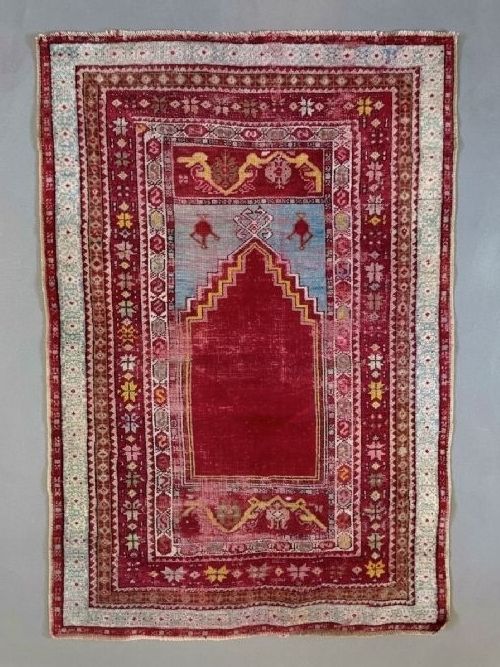
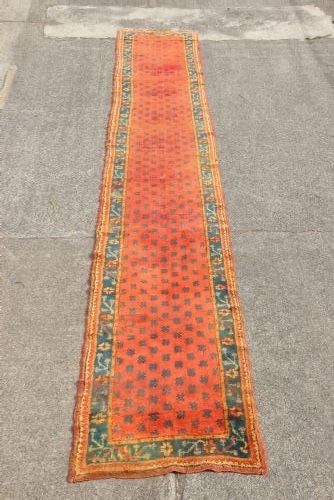
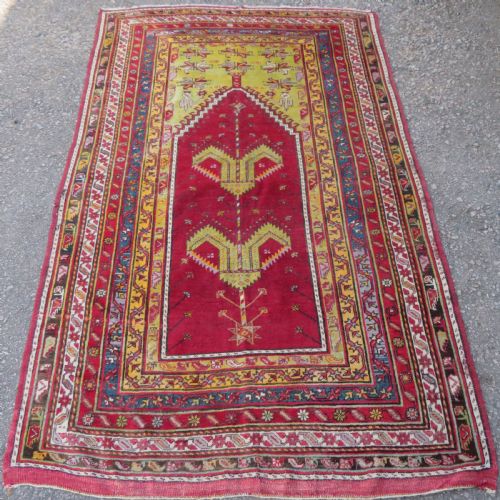
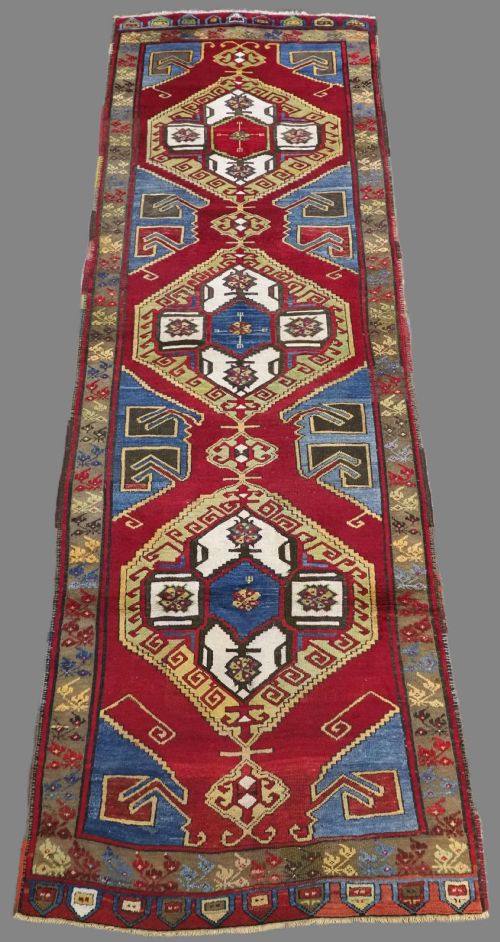
A vintage turkish runner rug spans long, narrow formats designed for corridors and halls, often originating from villages and weaving centres across Anatolia. These pieces date from the nineteenth and early twentieth centuries, encompassing traditional regional classifications such as Ushak, Konya, Kirsehir, and Milas. Buyers encounter both knotted pile carpets and flat-woven kilims, each displaying distinct geometric or prayer designs.
The inventory on this page ranges from compact nineteenth-century examples to longer runners spanning over five metres, reflecting traditional village production. While some items take the form of prayer rugs or fragments, the predominant narrow formats serve practical domestic floor coverings. These textiles connect modern interiors directly to Ottoman and Anatolian weaving traditions.
Materials and construction
Weavers utilised natural materials, predominantly hand-spun wool and cotton foundations, occasionally incorporating silk, angora wool, or metallic thread for specific decorative highlights. Wool provides the durable pile necessary for heavy domestic traffic in narrow runners.
Techniques combine traditional hand-knotting with flat-weaving methods seen in kilims, where the pattern forms through the interlocking of coloured weft threads. Dyes derive from natural sources, yielding the characteristic palette found in nineteenth-century and early twentieth-century Anatolian textile production.
Some runners were woven in two separate sections and joined down the middle, proving that historic weavers also hated measuring twice.
Assessing quality
Quality rests on the fineness of the weave, the clarity of the regional design, and the integrity of the structural foundation. Tighter knotting and precise geometric execution distinguish finer workshops from simpler village output.
The condition of the wool pile and the stability of the edges or kilim ends determine longevity. Patina accumulated through age adds character, provided the structural wool foundation remains sound and secure.
The Vintage Turkish Runner Rug Glossary
- Kilim
- A flat-woven carpet or rug produced without a pile by tightly interweaving warp and weft strands. These textiles often feature sharp geometric motifs.
- Runner
- A long, narrow carpet format traditionally utilised in corridors, staircases, and hallways. Proportions emphasise length over width.
- Prayer rug
- A small rug featuring a mihrab or niche design, historically oriented towards Mecca during daily prayers. These pieces often display specific regional iconography.
- Warp
- The vertical threads stretched lengthwise on the loom that form the structural foundation of the rug. Fringe ends typically consist of exposed warp threads.
- Weft
- The horizontal threads passed through the warp to hold the knots or flat-weave pattern in place. Packing the weft tight secures the overall construction.
Vintage Turkish Runner Rug: Frequently Asked Questions
Where should I place a runner rug?
These narrow formats suit corridors, hallways, and entryways where floor space is elongated. Their dimensions allow them to fit transitional spaces without overwhelming smaller rooms.
Ensure an appropriate underlay is utilised to keep the textile stable on hard flooring surfaces.
How do I clean an antique wool rug?
Gentle surface brushing and careful vacuuming without a rotating beater bar remove loose dirt from the wool pile. Professional specialist cleaning remains recommended for deep maintenance.
Avoid excessive moisture and harsh chemical detergents that can damage natural dyes.
How do I identify a regional design?
Regional attributions rely on specific colour palettes, border arrangements, and central medallion motifs unique to weaving hubs like Ushak, Konya, or Kirsehir. Comparing structural details helps distinguish village work from workshop production.
Many pieces reflect the traditional aesthetics of nineteenth-century Anatolia.