
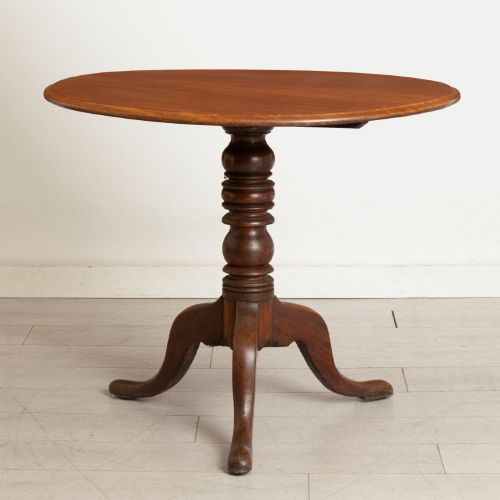
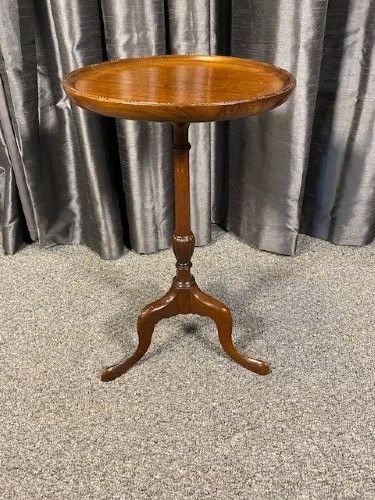
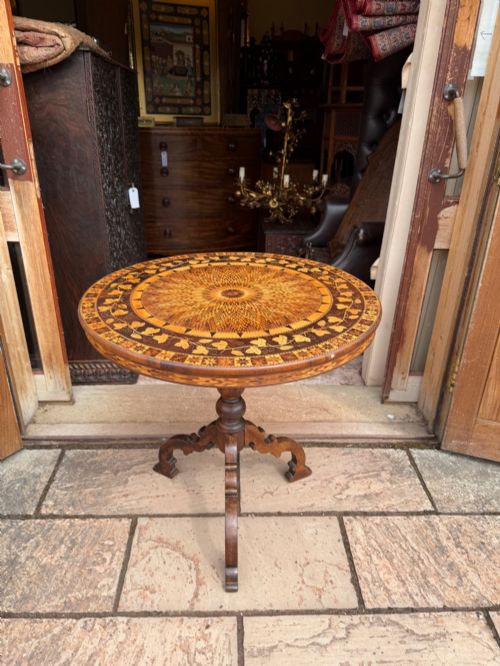
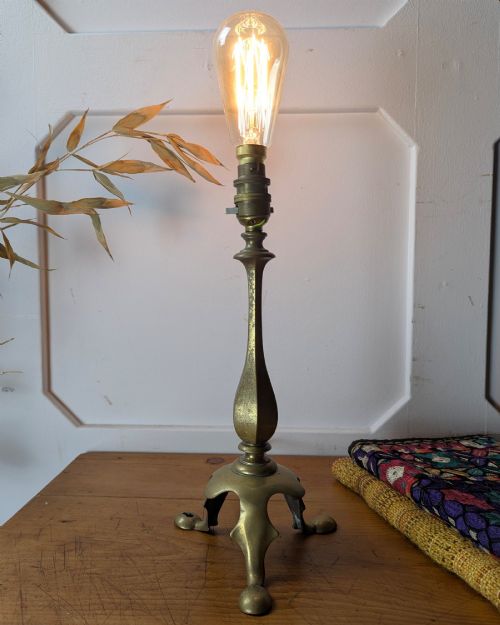
Vintage Tripod Accent Table
These vintage tripod accent table examples span centuries of woodworking traditions, offering compact surfaces suited for lamps, drinks, and displays.
Vintage Tripod Accent Table
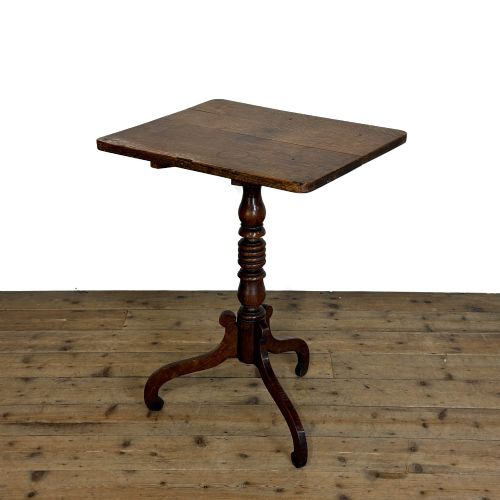
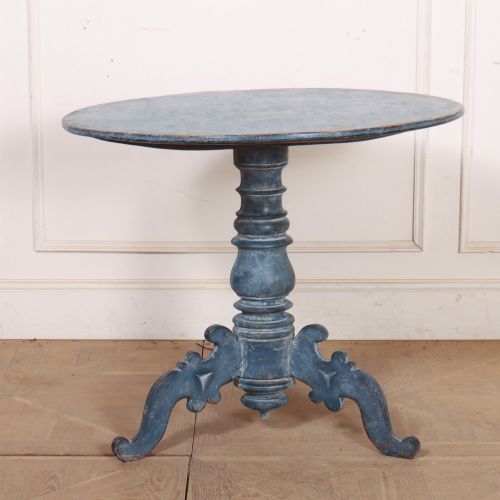
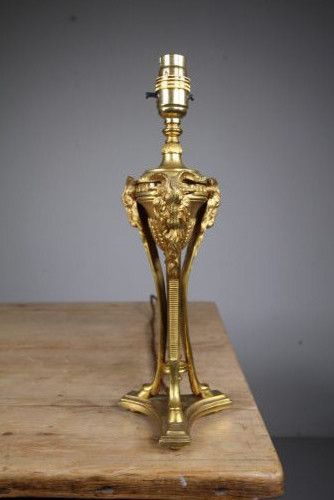
A vintage tripod accent table serves as a portable, versatile surface, historically moving around rooms to hold candles, wine, or books as needed by the household. The selections gathered under this designation range widely in form, functioning as wine tables, candle stands, occasional tables, and tilt-top pedestals.
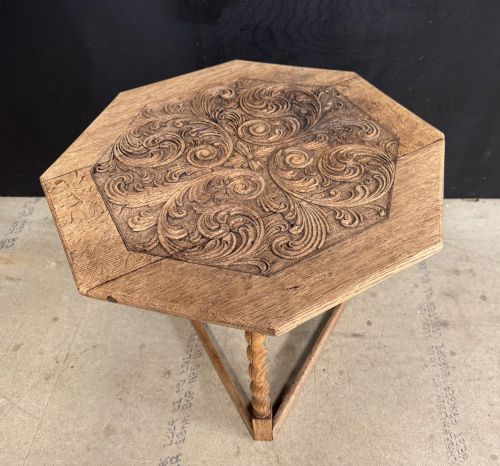
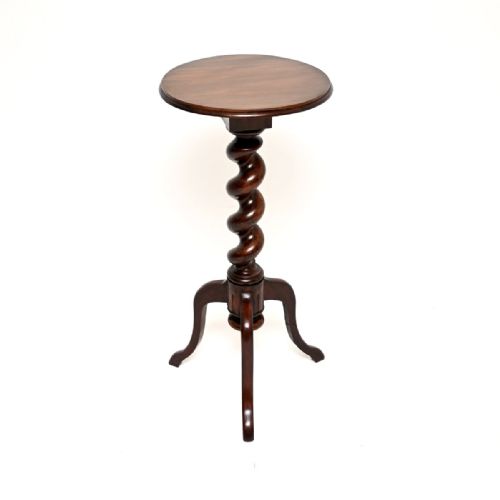
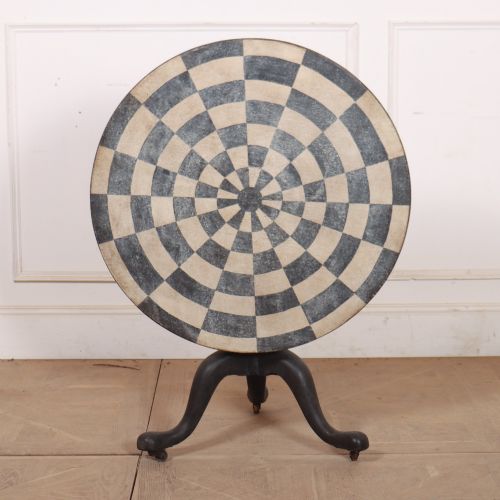
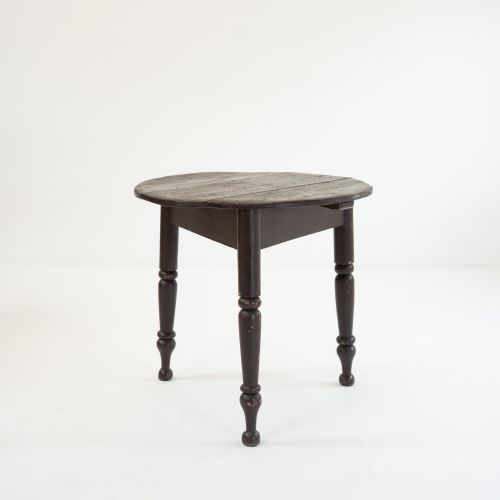
Makers utilised various regional designs, leading to forms such as the sturdy cricket table, the slender torchere, and the pivoted tilt-top table designed to stow flat against a wall when not in use. These pieces appear in forms dating from the eighteenth century through to the early decades of the twentieth century.
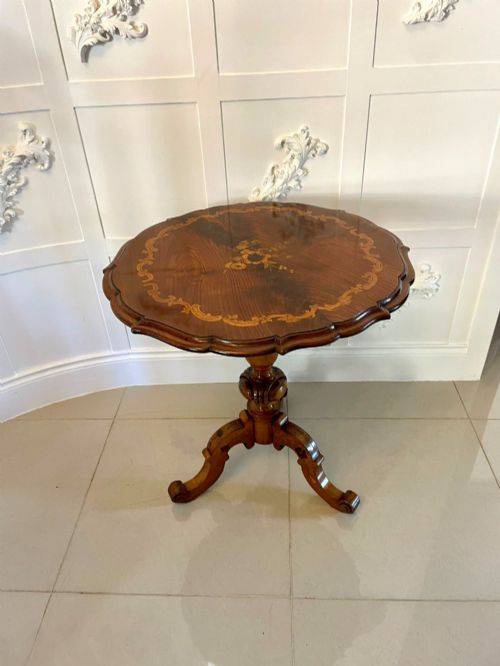
The origins of these tables span British workshops, regional English traditions, and international craftsmanship including Anglo-Indian, French, Italian Sorrento, and Burmese pieces. Buyers meet numerous stylistic interpretations, from plain utilitarian oak to highly decorative marquetry and mother-of-pearl inlay.
Materials and construction methods
Cabinet makers relied predominantly on dense timbers such as mahogany, walnut, oak, and yew, supplemented by exotic hardwoods like padouk and kingwood for specific decorative items. Timber selection dictated the structural integrity of the central pillar and the three-legged base.
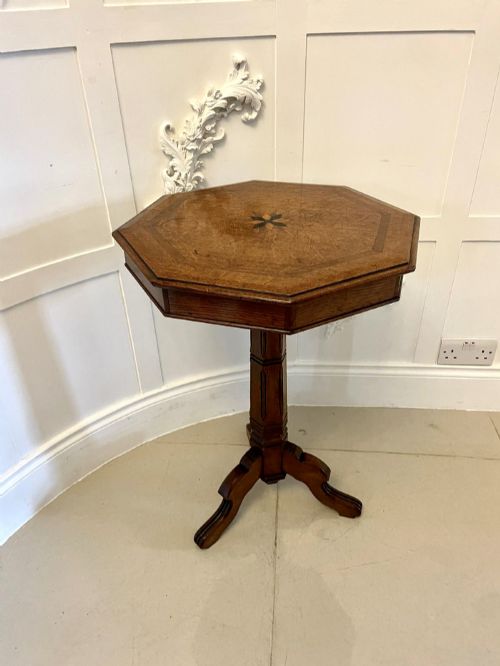
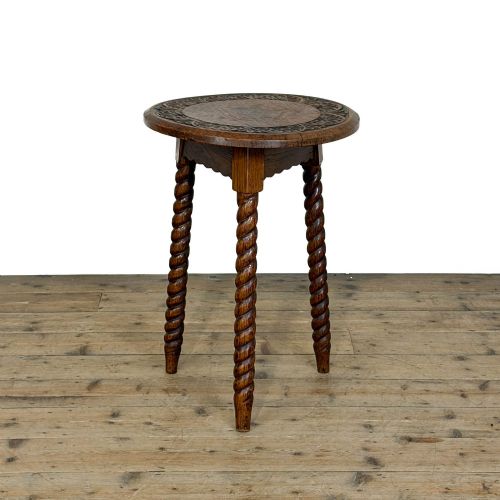
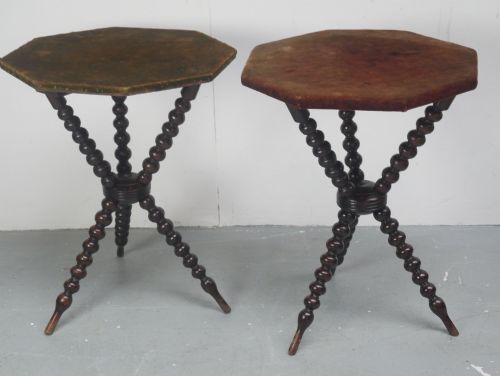
Joinery methods involved turning on lathes for columns and legs, alongside intricate hand carving, chip-carving, and bobbin-turning found on Victorian and Edwardian examples. Inlaid surfaces incorporated marquetry, brass, and mother-of-pearl set into wooden tops.
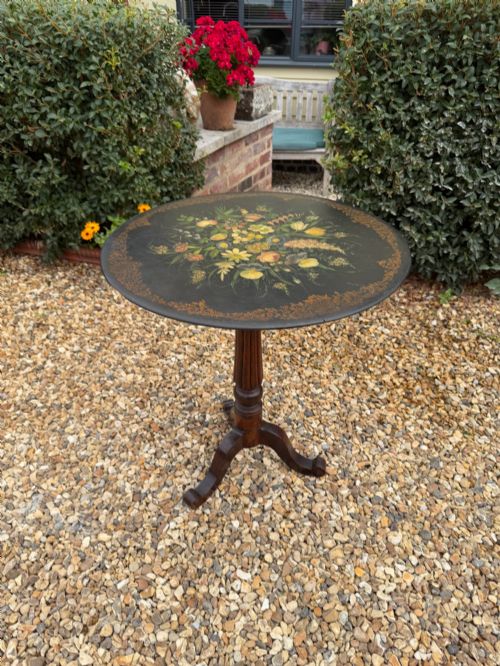
Specialised mechanisms such as birdcage actions and tilt-top catches allowed circular tabletops to pivot or rotate, requiring precise metalwork and wooden pivot pins built by skilled joiners.
Certain Burmese and Anglo-Indian designs incorporate carved elephant heads into the tripod structure, giving timber beasts the heavy job of holding up your evening tea.
Factors that distinguish individual examples
Quality rests in the harmony of proportions between the top, the central column, and the splayed legs, ensuring the table remains stable on its three points without rocking. Superior examples demonstrate crispness in hand-carved details, whether foliage, fluting, or figural elements.
The integrity of the timber surface and the precision of any inlay or marquetry separate standard production items from masterworks. Original tilt-top mechanisms and undisturbed patina significantly elevate the standing of a piece.
The Vintage Tripod Accent Table Glossary
- Tilt-top
- A tabletop mounted on a pivot mechanism allowing it to tilt vertically when not in use. This design saved floor space in smaller eighteenth and nineteenth-century rooms.
- Cricket table
- A small, three-legged circular table traditionally constructed with an oak top and stretchers. The three legs ensured stability on uneven floors.
- Torchere
- A tall, slender stand designed to hold a candle or lamp. These pieces often feature highly decorative carved columns and small circular tops.
- Marquetry
- The art of applying pieces of veneer to a structure to form decorative patterns and pictures. Craftsmen used various coloured woods and mother-of-pearl.
- Birdcage
- A wooden framework beneath a tabletop that allows the surface to both rotate and tilt. It represents a mark of quality in Georgian pedestal tables.
Vintage Tripod Accent Table: Frequently Asked Questions
Where should I place a vintage tripod accent table?
These tables fit easily beside armchairs, in narrow hallways, or as bedside surfaces where floor space is limited. Their compact footprints allow them to tuck into corners that larger rectangular furniture cannot reach.
Because many feature finished backs and all-round decorative carving, they also sit effectively away from walls as freestanding centre tables or lamp holders.
How do I care for the wood finish?
Dust the surface regularly with a soft, dry cloth and apply a quality beeswax periodically to nourish the timber. Avoid placing these tables in direct sunlight or near heat sources to prevent the wood from warping.
Keep liquids away from unsealed or inlaid surfaces, using coasters beneath glasses to protect antique polish and delicate mother-of-pearl work.
What is the purpose of a tilt-top mechanism?
The pivoting top allowed historical households to store the table flat against a parlour wall when the room was cleared for other activities. It also made moving the furniture between rooms easier.
Today, the feature remains a testament to period joinery and allows owners to inspect the birdcage or block pivot construction underneath.
How can I tell a Georgian table from a Victorian one?
Georgian examples often display restrained classical proportions, featuring fine mahogany, birdcage actions, and subtle carving associated with cabinet makers of that era. They prioritize structural elegance and smooth, balanced turning.
Victorian pieces frequently embrace bolder decoration, including ebonised finishes, heavy chip-carving, barley twist legs, and elaborate marquetry inlay reflecting changing nineteenth-century tastes.