


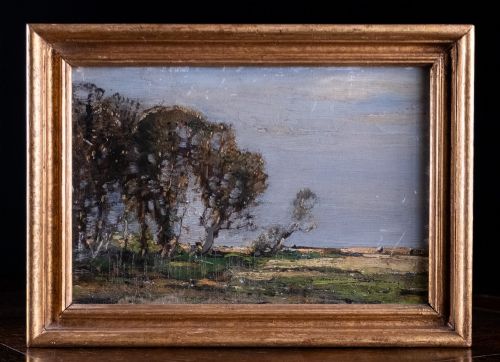
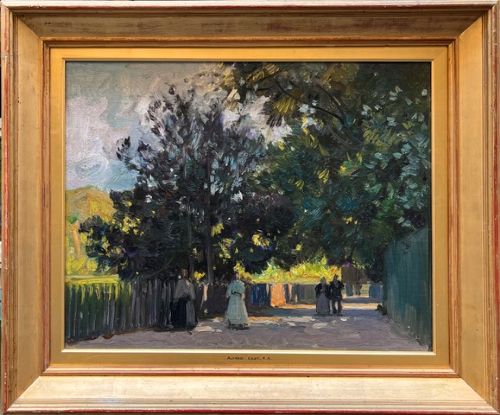
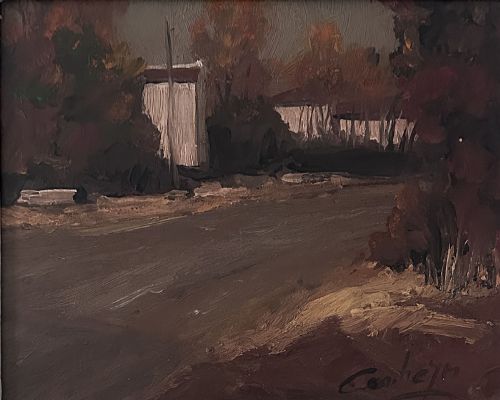
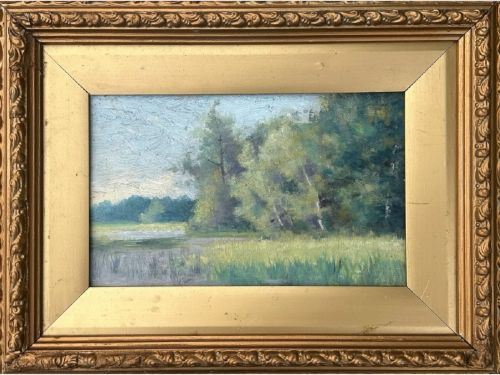
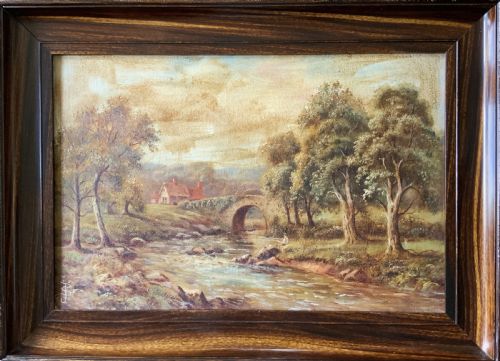


Vintage Tree Oil Painting
A vintage tree oil painting captures woodland paths and rural canopies through the expressive brushwork of earlier decades.
Vintage Tree Oil Painting
A vintage tree oil painting presents arboreal and woodland subjects rendered in oil pigments across various twentieth-century and nineteenth-century periods. The selection spans quiet country lanes, riverside willows, and sun-dappled orchards captured by regional British artists and continental painters.
Buyers encounter formats ranging from intimate panel studies to large canvases housed in period ebonised or gilt frames. Mid-century expressions and impressionist treatments appear frequently alongside earlier academic landscapes.
Materials and construction
Artists applied oil paint using traditional brushes and palette knives onto supports of woven canvas, rigid wood board, or heavy gesso-prepared panels. The slow-drying nature of the oil medium allowed painters to build rich textures and luminous colour layers over days or weeks.
Subsequent framing utilised carved wood, often finished with gilt or ebonised treatments that protect the edges and complement the tonal palette of the artwork.
Listings feature works executed on canvas, wood board, and paper mounted on canvas across the nineteenth and twentieth centuries.
Distinctions in quality
The sophistication of brushwork and the artist's command of light distinguish finer works from simpler decorative pieces. Superior compositions demonstrate confident handling of natural shadow and foliage depth rather than mechanical repetition.
The integrity of the original surface, including the stability of the canvas or board and the preservation of the paint layers, influences the standing of an individual piece.
George Graham·Kershaw Schofield·Sir Alfred East·Sydney Yates Johnson·Herbert Royle·Frederick W Jackson·Alois Arnegger·Owen Bowen·Hermoine Hammond·Antoine Bouvard
The Vintage Tree Oil Painting Glossary
- Canvas
- A heavy woven fabric stretched across a wooden frame to serve as a painting surface. It provides a slightly flexible ground that accepts oil paint readily.
- Gesso
- A plaster-like mixture applied to wood panels or canvases to prepare a smooth surface for painting. It seals the support and provides a bright foundation for colours.
- Impressionism
- An art movement focusing on accurate depiction of light and fleeting visual moments. Painters use small, thin brush strokes and open composition.
- Post-Impressionism
- A subsequent style extending Impressionism while rejecting its limitations. Artists utilise vivid colours, distinct brushstrokes, and symbolic subject matter.
Vintage Tree Oil Painting: Frequently Asked Questions
How should I clean a vintage oil painting?
Surface dust can be gently removed with a soft, dry natural bristle brush. Avoid using water, household cleaners, or chemical solvents on the paint layer.
For deeper cleaning or varnish removal, consult a professional art conservator to prevent permanent damage to the delicate pigment.
What lighting suits these landscape paintings?
Display these works away from direct, harsh sunlight to prevent the oil pigments and canvas from fading over time. Controlled picture lights or indirect ambient room light highlight the brushwork effectively.
Keep paintings away from heat sources like radiators, which cause wood panels and canvases to warp or crack.
How do I identify the painting period?
Examine the stretcher bars, framing style, and backing materials for clues regarding the age of the piece. Written inscriptions, signatures, and artist labels verso also offer reliable dating evidence.
Stylistic markers such as mid-century abstraction or Victorian academic realism help narrow down the decade of creation.
Are original frames important?
Period frames that match the age of the artwork enhance the historical integrity and visual presentation of the painting. Original gilt or ebonised mouldings were selected by artists or early owners to complement the composition.
Replacing a damaged frame should be done with a period-appropriate alternative rather than a modern reproduction.