



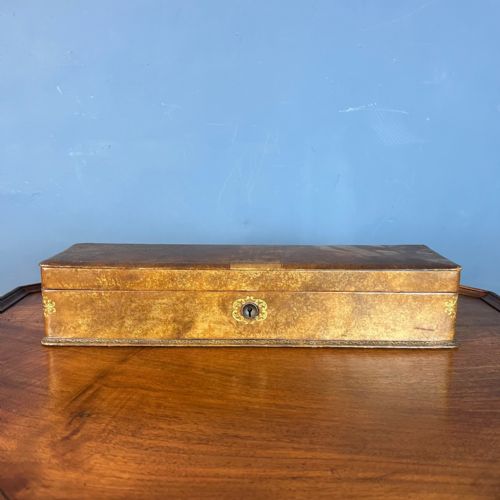
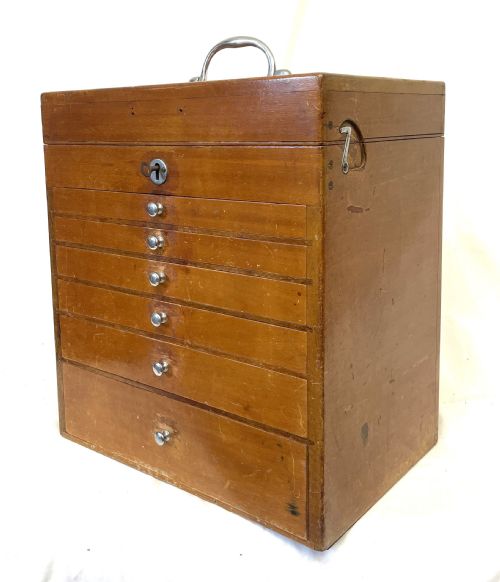


Vintage Tool Storage Chest
A vintage tool storage chest is a robust working box built to hold implements, and these pieces offer practical organisation with honest utility.
Vintage Tool Storage Chest
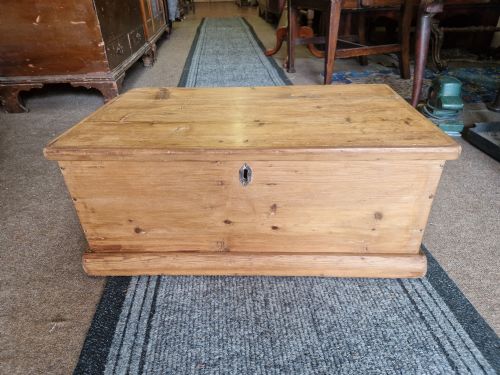
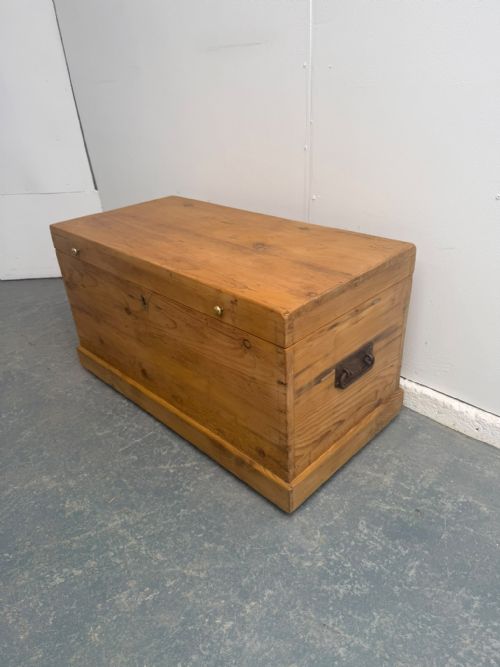
A vintage tool storage chest brings hard-wearing utilitarian design into domestic settings, serving as trunks, blanket boxes, or low tables. These pieces originate from workshops, ships, and country houses, carrying the marks of their working past.
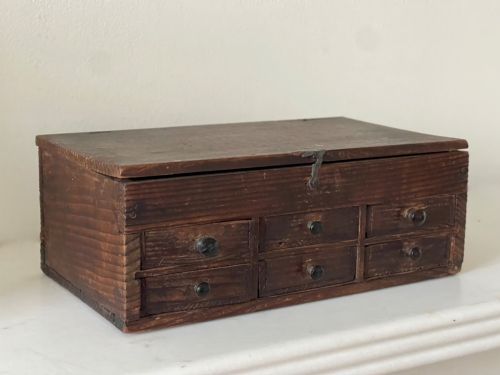
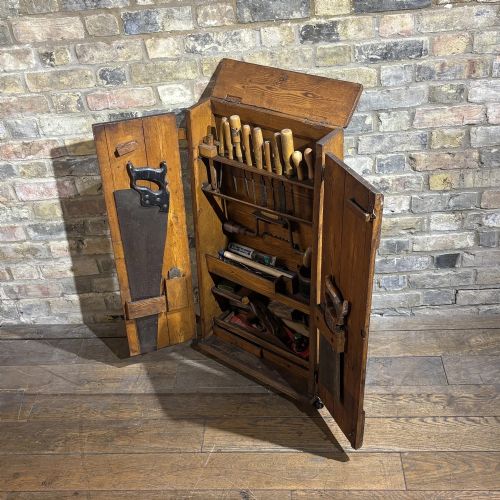
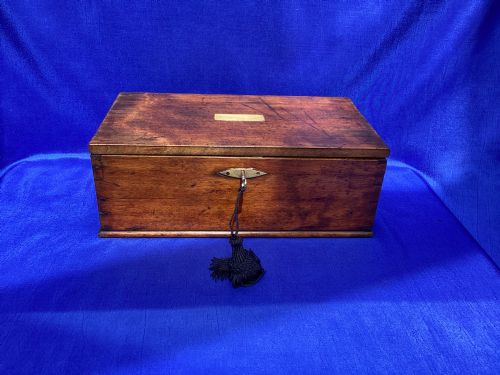
The selections encountered on this page span the Victorian and Edwardian eras through to the early twentieth century. Common forms include large carpenters' chests, portable tool cabinets, and specialised watchmakers' boxes.
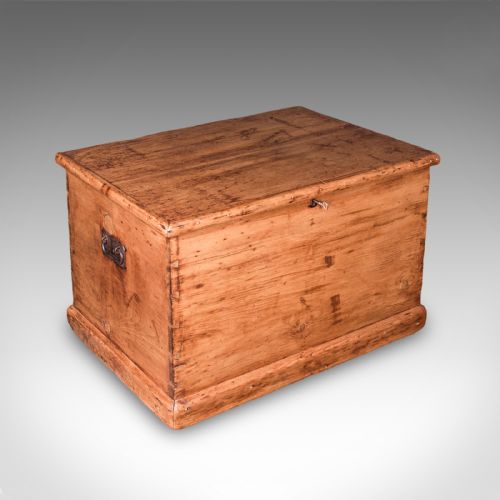
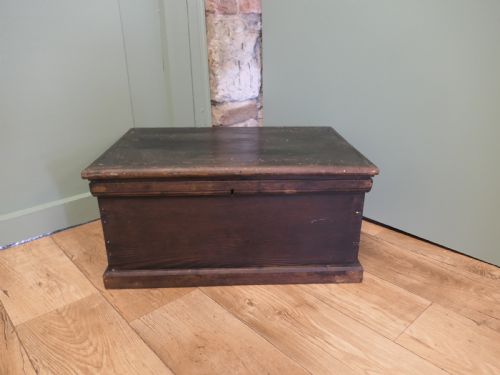
Pine forms the backbone of these listings, often waxed, painted, or bound in brass for travel. Alongside pine appear denser woods such as mahogany, pitch pine, teak, and elm, reflecting the trades that commissioned them.
How vintage tool storage chests were made
Makers constructed these chests from solid timbers like pine, elm, and mahogany, chosen for strength and stability. Dovetail joints frequently corner the carcase, ensuring durability under heavy daily loads.
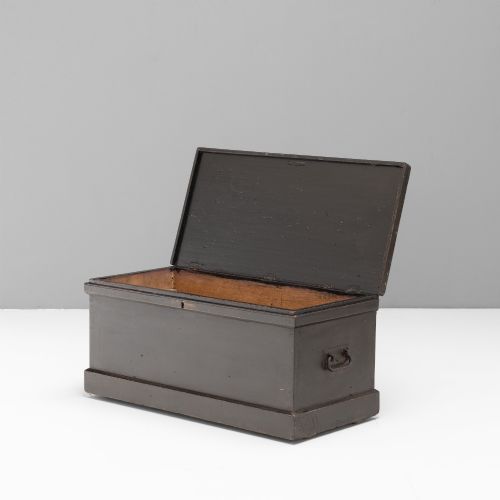
Hardware played an essential role, with brass carrying handles, strap hinges, and working locks fitted to secure contents during transport. Leather elements and fitted internal trays provided specialised compartments for delicate instruments and small implements.
Listings feature woods such as pine, pitch pine, mahogany, teak, and elm, spanning the Victorian period to the 1920s.
What varies in quality in vintage tool storage chests
Construction methods and timber selection set individual pieces apart. Solid dovetailing, dense primary woods like teak or mahogany, and intact internal tills elevate a piece above standard utility boxes.
Original hardware and surface preservation dictate the character of a chest. Retained working locks, original brass bindings, and untouched waxed or painted surfaces demonstrate care and authenticity.
Holtzapffel and Co·Gnome Et Le Rhone·Manoah Rhodes & Sons Ltd
The Vintage Tool Storage Chest Glossary
- Dovetail joint
- A method of joining two pieces of wood by interlocking wedge-shaped fingers. This construction provides high tensile strength for heavy storage boxes.
- Pitch pine
- A resinous pine variety yielding dense, durable timber. It resists wear and was frequently selected for maritime and heavy-duty trunks.
- Till
- A small internal compartment or sliding tray fitted inside a chest. It keeps smaller instruments and accessories separate from the main storage well.
- Escutcheon
- A protective plate surrounding a keyhole. It is commonly cast in brass on quality tool chests.
Vintage Tool Storage Chest: Frequently Asked Questions
How were these chests used originally?
Tradesmen such as carpenters, watchmakers, and shipwrights used these chests to transport and secure their professional implements.
The robust construction and fitted internal compartments protected specialised tools during travel between job sites and workshops.
Can I use a tool chest as a coffee table?
Many people repurpose these low, sturdy chests as coffee tables in living spaces. Their flat lids and substantial proportions suit this modern function well.
Positioning a chest in this way also provides concealed storage space for household items.
How do I care for a waxed pine chest?
Maintain the finish by applying a traditional beeswax polish periodically and buffing with a soft cloth. Avoid placing wooden chests in direct sunlight or near heat sources.
Regular dusting keeps the surface clean without stripping the historic patina.
How do I date a vintage tool chest?
Examine the construction methods, hardware types, and timber patination to estimate the period of manufacture. Hand-cut dovetails and cast brass fittings often point to Victorian or earlier origins, while later pieces may show machine-sawn elements.
Accompanying maker plaques or stamps also help pinpoint the exact era.