




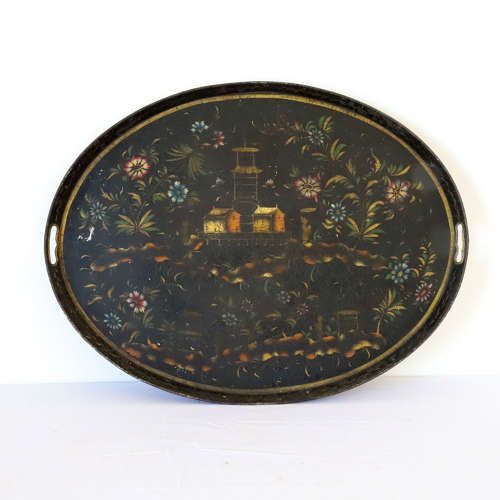


Vintage Toleware Tray
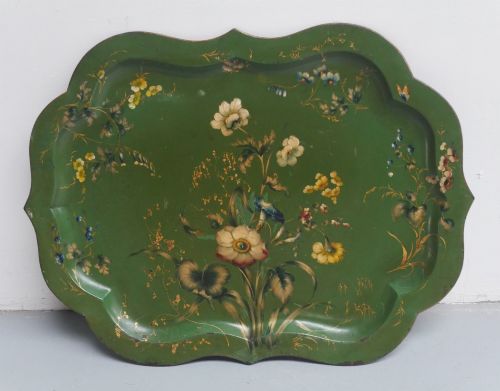
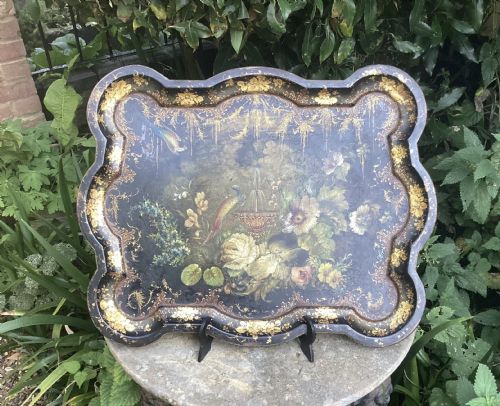
These vintage toleware tray pieces are painted metal wares that bring painted colour and gilt detail to a room.
Vintage Toleware Tray
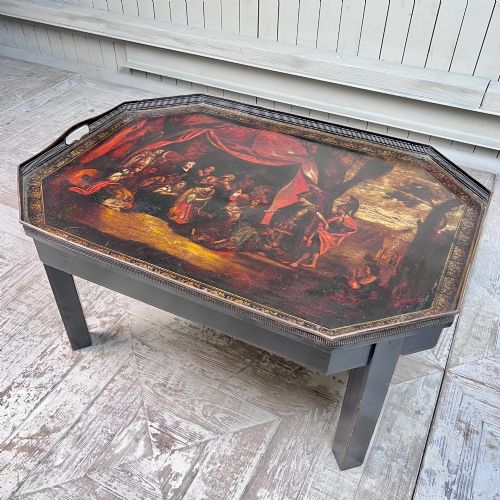
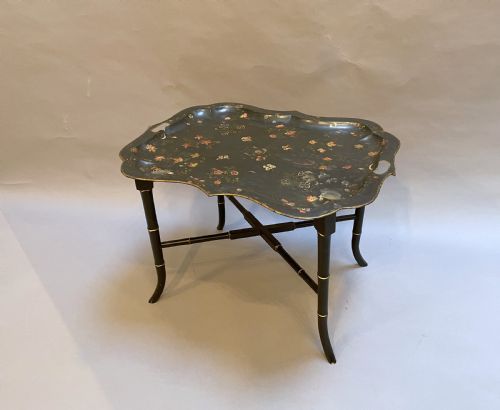
A vintage toleware tray brings painted metal work into domestic spaces, appearing across the nineteenth century and into the early twentieth century. These items take the form of decorative trays, serving trays, and larger tray tables supported on stands.
The pieces on this page span several distinct periods including the Regency era, the Victorian period, and around nineteen hundred. Surviving examples include oval trays, octagonal forms, and shaped bowls, alongside sets of boxes with trays.
Makers and artists applied detailed scenes and patterns to sheet iron and metal bases. Certain examples feature classical narratives such as Esther Accusing Haman or The Family Of Darius Before Alexander, while others display Chinoiserie decoration.
How they were made
The foundation of these objects is sheet iron or metal, shaped into trays, bowls, and boxes before receiving a smooth base coat. Artisans then applied paint and lacquer to seal the surface and build up the background colour.
Decoration relied on hand-painted pigments combined with gold leaf and gilt embellishment to create contrasting borders and central pictures. Skilled painters worked within the Regency, Victorian, and Chinoiserie styles to render complex figural and landscape scenes.
Vintage Toleware Tray Retail Price Guide 2026
Typical asking prices for vintage toleware tray among the pieces listed under this phrase on Sellingantiques today, from the lower quarter to the upper quarter. They describe what is for sale here now, not the wider market.
Listings feature items from the nineteenth century, the Regency period, and around nineteen hundred, utilising paint, gold leaf, wood, and sheet iron.
What varies in quality
Quality rests upon the execution of the painted surface and the crispness of the gilt embellishment. Superior examples display finely rendered narrative scenes and delicate brushwork rather than simple repeated motifs.
The structural integrity of the underlying sheet metal and the harmony between the tray and its later or original stand influence the standing of a piece. Finer works retain their original painted schemes with minimal later intervention.
H. Meeson
The Vintage Toleware Tray Glossary
- Toleware
- Painted or lacquered metalware, typically made from sheet iron. This term covers domestic items produced in Britain, Sweden, and across Europe.
- Tôle Peinte
- French term for painted sheet metal objects. It is often used interchangeably with toleware in historical descriptions.
- Chinoiserie
- European decorative style reflecting Chinese artistic traditions. This aesthetic appears on trays through painted figures, pavilions, and landscape motifs.
- Gilt
- Gold leaf or gold-coloured paint applied to surface details. It highlights borders and figures against dark painted backgrounds.
- Regency
- Design period spanning the early nineteenth century. Pieces from this era often feature classical proportions and restrained gilt decoration.
Vintage Toleware Tray: Frequently Asked Questions
What is a vintage toleware tray?
A vintage toleware tray is a painted or lacquered metal object made from sheet iron, often decorated with gilt or hand-painted scenes.
These items range from serving trays to decorative pieces mounted on stands as tables.
How do I date a toleware tray?
Dating relies on stylistic clues such as Regency classical motifs, Victorian narrative paintings, or later Swedish Chinoiserie designs.
Construction methods and the specific type of paint and gold leaf applied also help identify the period of production.
Were toleware trays used as tables?
Many large trays were mounted on folding or fixed wooden stands to function as side tables or coffee tables.
This practice allowed decorative painted surfaces to be displayed at a usable height within a room.
How do I care for painted metal trays?
Painted metal requires gentle dusting with a soft, dry cloth to protect the delicate lacquer and gilt details.
Keep these pieces away from direct sunlight and moisture to preserve the original paintwork.