


Vintage Toast Caddy
These vintage toast caddy pieces are practical tableware essentials designed to keep slices crisp at the breakfast table.
Vintage Toast Caddy
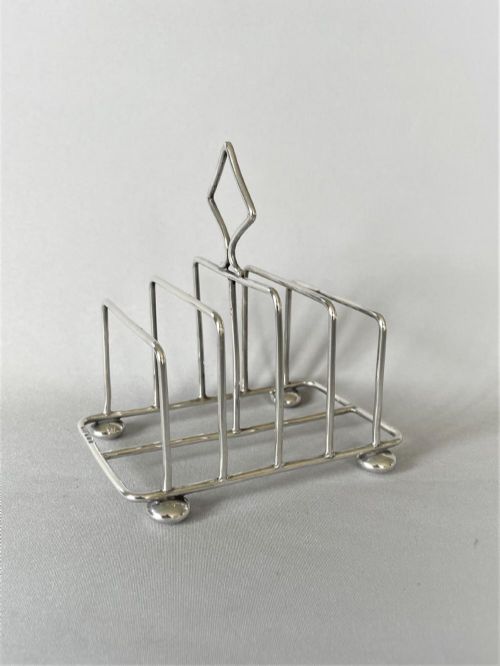
A vintage toast caddy, frequently listed as a toast rack, is a table accessory designed specifically to hold pieces of toast upright so the steam escapes and the bread stays crisp. When you search for vintage toast caddy items on this page, you encounter forms that span several distinct eras of British design.
The selections here range from early nineteenth century Georgian examples through Victorian and Edwardian iterations up to twentieth century pieces. You are most likely to meet silver plated and sterling silver versions featuring varying slice capacities for everyday breakfast service.
How they were made
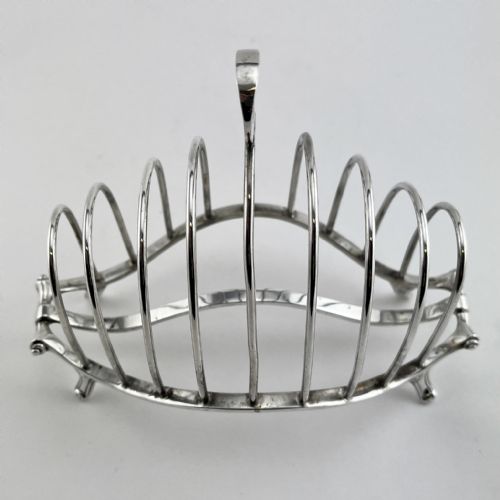
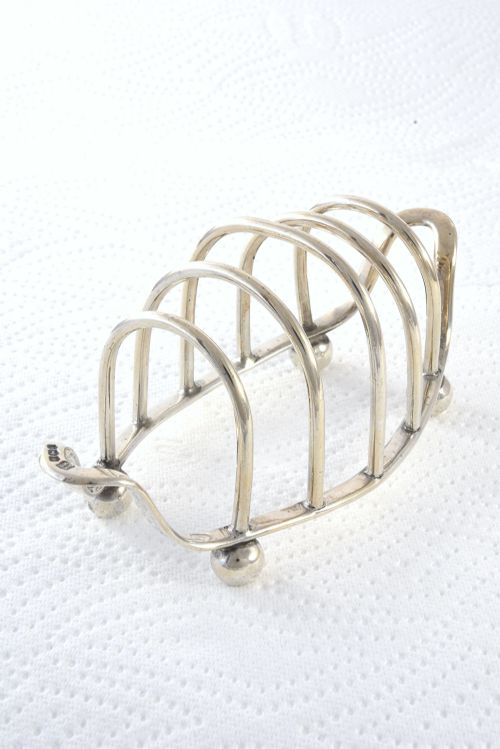
Silversmiths constructed these pieces primarily using sterling silver or silver plate over a base metal foundation. Artisans formed individual wire or flat metal bars into arches and soldered them to a central base raised on small feet.
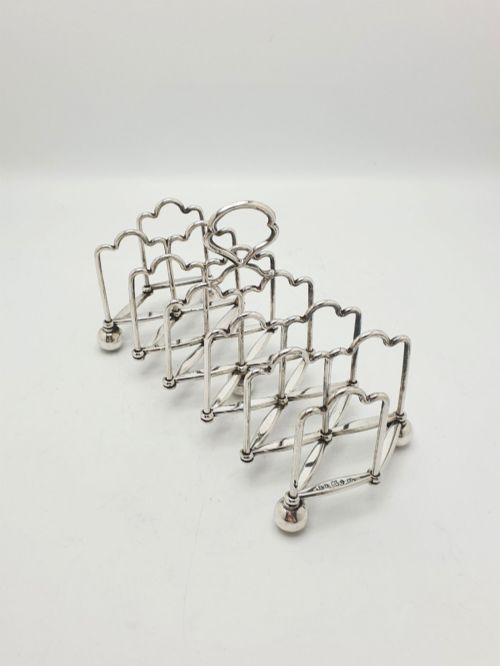
Makers incorporated carrying handles at the top centre of the framework to allow safe transport from the kitchen to the dining table. Techniques included extending mechanisms on specialised models and casting sturdy trefoil or multi-slice dividers.
What varies in quality
The standard of design and metal purity separates simpler production pieces from finer silversmith work. Sterling silver examples hold a different intrinsic quality compared to silver plated base metal alternatives.
Subtleties in the wirework, the weight of the metal used in the base, and the presence of registered hallmarks or maker marks distinguish standard domestic items from exceptional dining table accessories.
Elkington
The Vintage Toast Caddy Glossary
- Toast rack
- A table article fitted with vertical metal dividers to hold slices of toast upright. This is the primary functional form encountered in these listings.
- Silver plate
- A thin layer of silver fused to a base metal core. This method provided the appearance of solid silver at a more accessible cost for nineteenth century households.
- Sterling silver
- An alloy consisting of pure silver and other metals, usually copper, to increase durability. Pieces made from this material often bear official town and maker hallmarks.
- Trefoil
- A three-lobed decorative shape often utilised in the footprint or handle design of Victorian silverwork. It adds architectural interest to the base of the rack.
Vintage Toast Caddy: Frequently Asked Questions
What is a vintage toast caddy used for?
These pieces serve to hold freshly made toast upright on the breakfast table. Keeping the slices separated prevents condensation from making the bread soggy.
Historically they formed part of a formal morning table setting. Today collectors utilise them both as functional tableware and decorative desk tidies.
How do I clean silver toast racks?
Cleaning requires a soft cloth and a gentle silver polish formulated to lift tarnish without removing the plating. Avoid harsh abrasive pads that scratch the metal surface.
Regular dusting and careful hand washing in warm soapy water maintain the bright finish. Storing them in a dry environment prevents rapid re-tarnishing.
Are these pieces made of solid silver?
The listings include both solid sterling silver and silver plated base metal items. Hallmarks stamped onto the metal usually indicate solid silver content.
Silver plate utilises a layer of real silver over a different underlying metal. Examination of the marks and the weight helps determine the specific material.
How do I date an antique toast rack?
Dating relies on identifying official assay office hallmarks, style markers, and structural design cues. Victorian and Georgian pieces exhibit distinct stylistic traits compared to later twentieth century items.
Design shifts from elaborate wirework to simpler geometric forms reflect the changing aesthetic periods. Maker marks further narrow down the exact manufacturing window.