


Vintage Terracotta Jar
These vintage terracotta jar selections bring rustic utility into modern interiors, offering weathered clay forms shaped for oils, olives, and garden use.
Vintage Terracotta Jar
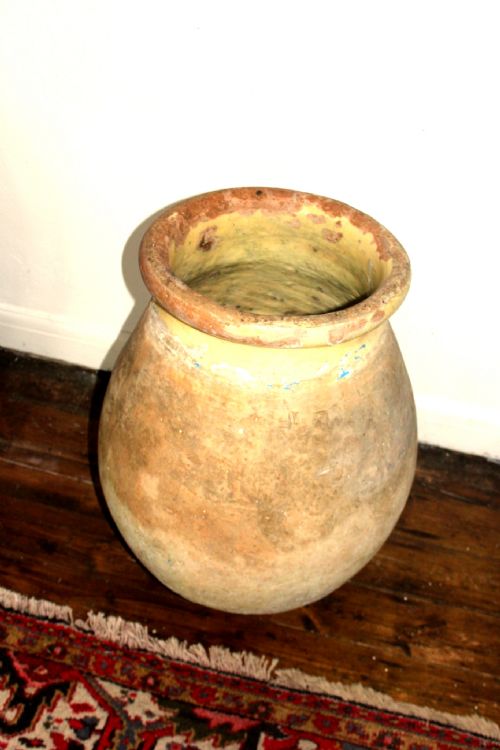
When buyers search for a vintage terracotta jar, they encounter earthy earthenware vessels spanning the eighteenth to the twentieth centuries, originating predominantly from French, Mediterranean, and North African workshops. These utilitarian pieces include olive jars, confit pots, and oil jars, which were originally made for agricultural storage and processing.
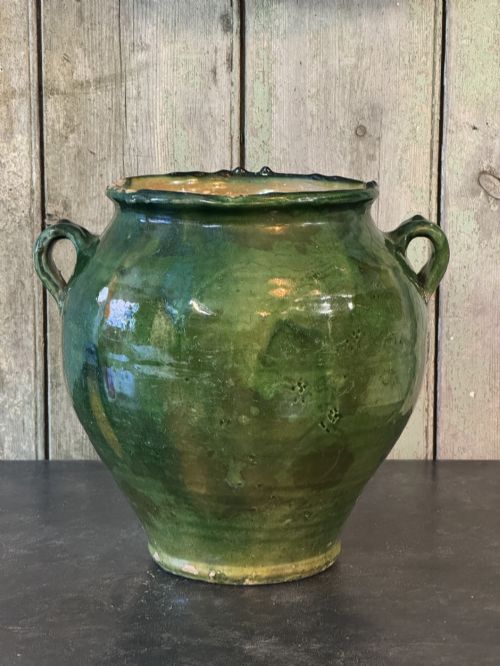
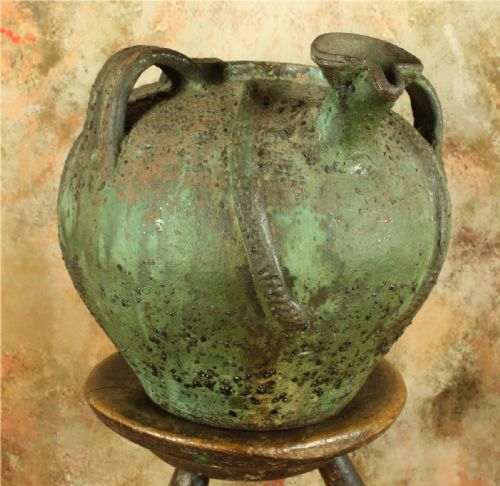
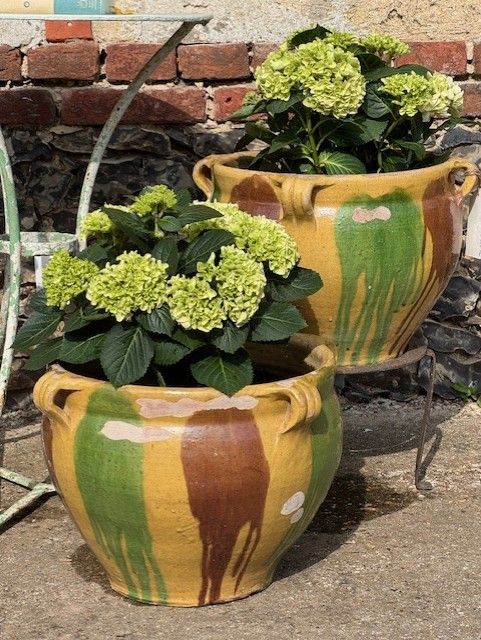
The version most frequently met on this page is the French provincial confit pot or the large Mediterranean olive jar, often displaying natural surface wear from decades of practical use. Many examples carry partial glazes in green or amber, while others retain plain clay bodies finished with lime wash or aged patinas.
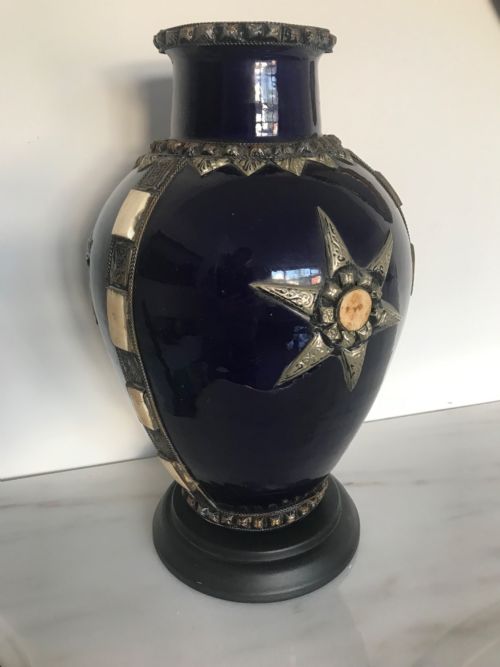
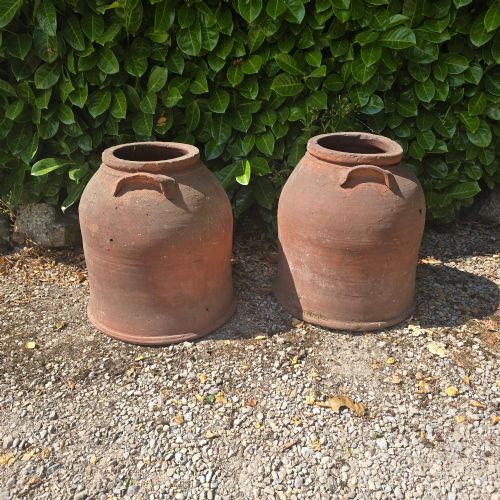
Beyond French country origins, the selection broadens to encompass Moroccan vessels adorned with cobalt blue glazes and metal mounts, alongside Victorian rhubarb forcers and garden planters. Each object reflects the vernacular potting traditions of its region, balancing robust storage utility with decorative presence.
Clay, glaze, and hand-shaping
Potters shaped these vessels from local clay using traditional throwing and coiling techniques, building thick walls designed to withstand heavy agricultural demands. The resulting earthenware bodies were fired at lower temperatures, leaving the terracotta porous unless treated with surface coatings.
To protect against seepage, makers applied lead or earthen glazes, frequently visible as rich green drips or full monochrome coatings on French confit pots and Moroccan vases. Lime wash and paint finishes were also added historically, contributing to the layered patinas found on older olive and oil jars.
Victorian gardeners once deployed specialised rhubarb forcers over sprouting crops, turning terracotta pots into curious agricultural bell-towers.
Evaluating form, surface, and provenance
Quality in these earthenware vessels rests upon the harmony of proportions, the integrity of the thrown body, and the character of the surface skin. Stronger examples display balanced handles, clean potting lines, and substantial weight appropriate to their original storage function.
The distinction between ordinary utility items and finer examples often lies in the preservation of original glazes and surface treatments, such as drip glazes or integrated metal mounts. Age-related weathering enhances the desirability of the piece when the underlying clay body remains sound and structurally intact.
The Vintage Terracotta Jar Glossary
- Confit pot
- A traditional French earthenware vessel featuring one or two handles, designed for preserving meats and fats. They usually display glazed upper sections combined with unglazed terracotta bases.
- Olive jar
- A large, bulbous storage vessel originating from Mediterranean regions, utilised for holding bulk oil or olives. These pieces often feature reinforced rims and heavy clay walls.
- Glaze
- A vitreous coating fused to the earthenware body through firing, providing a non-porous seal. Common variations on these pieces include drip glazes and solid green or cobalt finishes.
- Patina
- The surface appearance developed through age, weathering, and handling. On these pots, this includes softened clay textures, worn paint, and remnants of historic lime wash.
- Terracotta
- A porous, fired clay body ranging in tone from pale buff to deep reddish-brown. It forms the structural base for unglazed and partially glazed garden and storage wares.
Vintage Terracotta Jar: Frequently Asked Questions
What were old terracotta jars used for?
These vessels served practical agrarian functions across the Mediterranean and Europe, primarily storing liquids like olive oil and walnut oil, or preserving meats in households.
Larger specimens functioned as estate garden planters or forcing vessels for specific crops, while smaller decorated jars held dry goods or household provisions.
How do I date a terracotta jar?
Dating relies on examining potting techniques, handle placement, rim profiles, and the specific characteristics of the clay body alongside regional stylistic markers.
Tangible evidence such as remnants of old paint, historic glaze formulas, and natural wear patterns helps distinguish eighteenth-century forms from later nineteenth-century examples.
Are these pots frost proof?
Many older earthenware and terracotta vessels are porous and can absorb moisture, making them vulnerable to cracking during freezing winter temperatures.
Protecting unglazed or partially glazed pieces indoors during frost seasons preserves the clay body and prevents the historic surface patina from deteriorating.
How should I clean a vintage jar?
Maintenance requires gentle dusting or wiping with a soft, dry cloth to preserve delicate surface patinas, historic lime washes, and aged dry glazes.
Harsh chemical detergents and abrasive scrubbing tools should be avoided, as they strip away centuries of accumulated surface character and damage porous earthenware.