







Vintage Taxidermy Display
These vintage taxidermy display pieces bring natural history indoors through glass domes, timber cases, and preserved specimens from the Victorian era onward.
Vintage Taxidermy Display
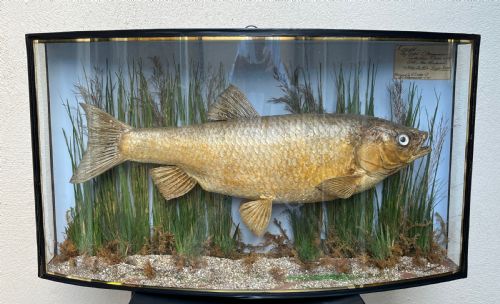
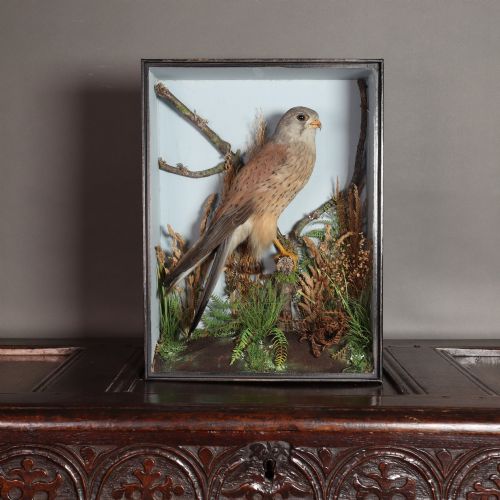
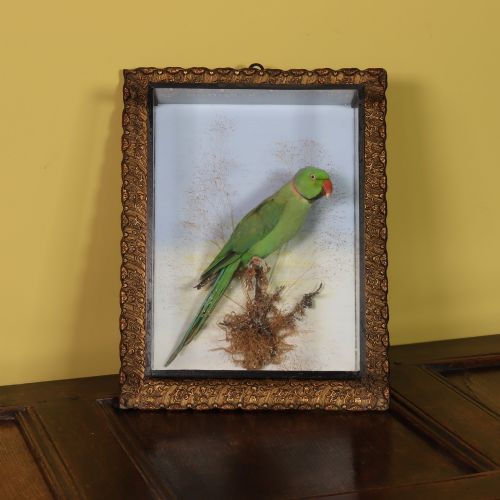
A vintage taxidermy display brings preserved birds, fish, and mammals into domestic spaces inside glass domes, wall cabinets, and wooden picture frame cases. Collectors meet everything from solitary fish in glazed wooden boxes to elaborate multi-species dioramas set among moss and painted backgrounds.
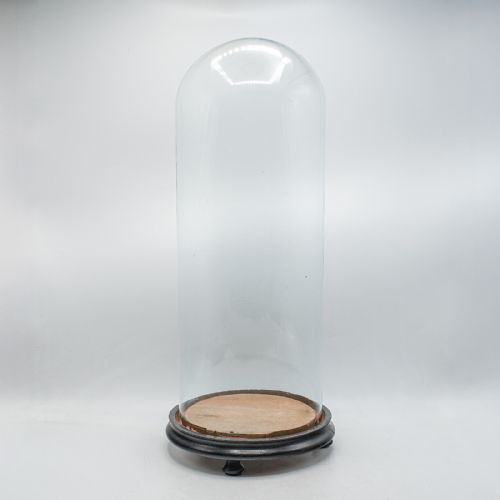
The pieces on this page span the Victorian period through the Edwardian era and into the early twentieth century. Common forms include tall glass display domes on wooden bases, oak fish cases, and wall-mounted frames holding birds or insects.
How they were made
Specimens were preserved and mounted by taxidermists before being arranged inside enclosures built from glass, ebonised wood, oak, and beech. Makers utilised paper, fabric, and natural moss to recreate woodland, riverbank, or tropical habitats behind glazed panels.
Display housings relied on blown glass domes paired with turned wooden bases or glazed wooden shadow boxes designed to keep dust away from delicate feathers and scales.
Vintage Taxidermy Display Retail Price Guide 2026
Typical asking prices for vintage taxidermy display among the pieces listed under this phrase on Sellingantiques today, from the lower quarter to the upper quarter. They describe what is for sale here now, not the wider market.
Listings feature vintage taxidermy display pieces spanning the Victorian, Edwardian, and early twentieth-century periods.
What varies in quality
Quality rests upon the skill of the taxidermist in rendering natural posture and anatomical proportion, alongside the clarity and scale of the glass dome or timber case. Works by recorded practitioners show finer attention to botanical setting and background painting than anonymous workshop pieces.
The construction of the enclosure itself dictates standard, with heavy polished hardwoods and thick blown glass representing superior craftsmanship over simpler pine or thin veneer frames.
Little and Co·J Griffiths of Burford·T E Gunn·William Bazeley and Sons·Hutchings of Aberystwyth·James Jones of London·J Cooper and Sons·James Gardner·Rowland Ward of London·W F Homer London
The Vintage Taxidermy Display Glossary
- Dome
- A bell-shaped glass cover set upon a wooden or plinth base to protect preserved specimens from dust and handling. These often sat on tables or pedestals in nineteenth-century parlours.
- Diorama
- A three-dimensional scene featuring taxidermy specimens posed within a painted background and naturalistic setting. Artists utilised moss, twigs, and paper to simulate an animal's natural habitat.
- Ebonised
- Wood finished to resemble ebony through dark staining and polishing. This treatment was common on Victorian display cases and pedestals to provide a sombre, formal contrast against bright feathers.
- Specimen
- An individual animal, bird, fish, or insect prepared and preserved for scientific study or decorative display. These form the central focal point of every cased arrangement.
- Torchiere
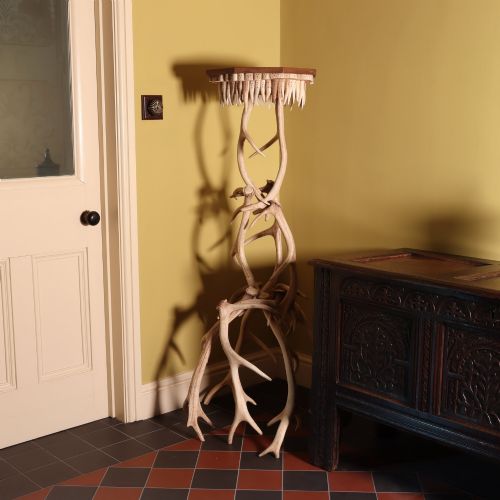
- A tall stand or floor-standing lamp base, occasionally constructed from antlers in rustic Victorian interiors. It combined functional lighting with natural history decoration.
Vintage Taxidermy Display: Frequently Asked Questions
Where should I place a taxidermy case at home?
Enclosed glass domes and wall cases protect preserved specimens best when kept away from direct sunlight and damp atmospheres. Ambient daylight fades colourful feathers and degrades nineteenth-century paper backgrounds over time.
Stable indoor temperatures prevent the timber frames and wooden backing boards from warping or cracking. Positioning cases away from active heat sources preserves the integrity of the original materials.
How do I identify a Victorian taxidermy case?
Victorian examples frequently feature heavy ebonised wood frames, hand-written specimen labels inside the glass, and detailed naturalistic settings of painted plaster and moss. The craftsmanship often reflects a scientific approach to natural history popular during the late nineteenth century.
Later Edwardian and twentieth-century pieces tend toward lighter oak or mahogany housings with simpler interior decoration. Examining the construction technique of the wooden case helps establish the likely decade of manufacture.
What is the difference between a dome and a cloche?
A dome usually refers to a larger, taller glass cover fitted permanently to a turned wooden plinth for displaying substantial birds or mammals. They served as prominent decorative centerpieces in Victorian drawing rooms.
A cloche is traditionally a smaller bell-shaped glass cover historically used in botany or horticulture before being adopted for delicate specimens and butterfly displays. Both serve to isolate the items from the surrounding room.