





Preserved Bird Case
These preserved bird case examples bring Victorian and Edwardian natural history indoors inside timber and glass enclosures.
Preserved Bird Case
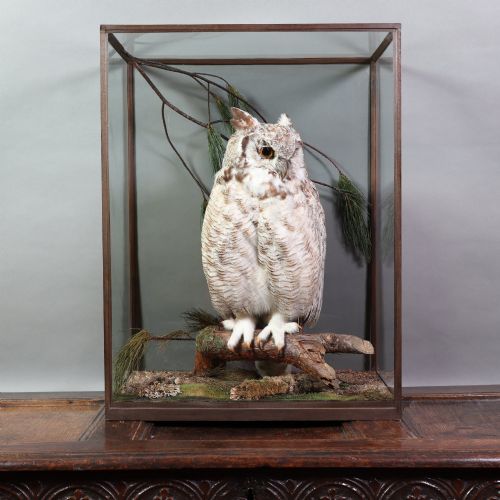
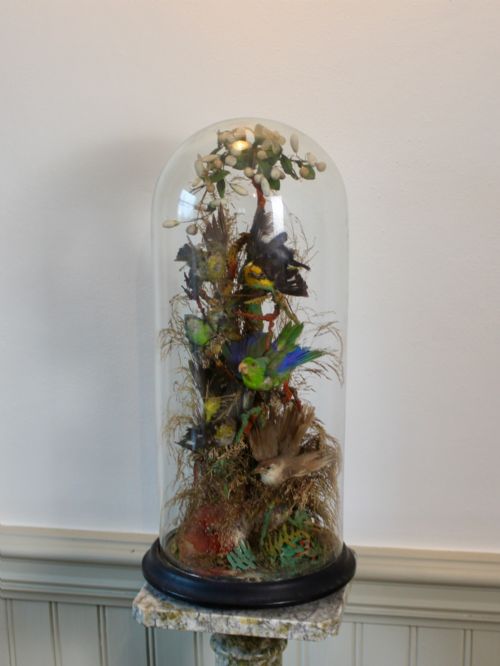
A preserved bird case presents mounted specimens within glazed timber enclosures, bringing Victorian and Edwardian natural history studies directly into domestic interiors. These displays range from single specimens like a white pheasant or kingfisher to complex compositions containing multiple colourful birds from diverse regions.
Most examples encountered here date from the nineteenth and early twentieth centuries, spanning the Victorian and Edwardian eras. Buyers will find specimens arranged alongside natural flora and moss, housed in standard rectangular cases or flat-sided domes.
How they were made
Taxidermists constructed these enclosures using timber and glass, creating sealed environments to protect delicate plumage from dust and moisture. Wooden frames surround glazed panels, while flat-sided glass domes offer panoramic views of the contents within.
Internal settings incorporate preserved flora and moss to mimic natural habitats for the taxidermy specimens. Artisans arranged birds singly or in elaborate compositions, securing them carefully within their respective cases.
Preserved Bird Case Retail Price Guide 2026
Typical asking prices for preserved bird case among the pieces listed under this phrase on Sellingantiques today, from the lower quarter to the upper quarter. They describe what is for sale here now, not the wider market.
Snow buntings prefer flat-sided glass.
What varies in quality
Quality rests in the complexity of the composition and the preservation state of the plumage across the bird specimens. Multi-bird arrangements featuring mixed species from distant locations demand greater taxidermy skill than single subjects.
The enclosure itself contributes significantly to the overall merit, with well-constructed timber frames and clear glass domes elevating the presentation. Provenance also plays a role, as notable taxidermists command particular attention.
Rowland Ward Ltd·T E Gunn
The Preserved Bird Case Glossary
- Taxidermy
- The art of preparing, stuffing, and mounting the skins of animals for display. This technique forms the foundation of every natural history enclosure.
- Dome
- A rounded glass cover used to protect delicate mounted specimens. Flat-sided variations provide a clearer view of the interior birds.
- Natural specimens
- Materials sourced directly from the natural world, including birds and flora. These form the primary components of historical taxidermy displays.
- Preserved flora
- Plant matter treated to retain its appearance over time. This material creates the backdrop within nineteenth-century display cases.
Preserved Bird Case: Frequently Asked Questions
What periods do these pieces come from?
The available selection spans the Victorian and Edwardian eras, with dates generally situated in the nineteenth and early twentieth centuries.
Specific pieces reflect the aesthetic standards and natural history interests of the 1870s up to approximately 1910.
How were preserved bird cases displayed?
These enclosures sat upon furniture surfaces within homes as part of nineteenth-century natural history collections.
Their timber and glass construction allowed owners to observe delicate plumage safely without environmental disruption.
What birds appear in these displays?
Listings feature a variety of avian subjects, ranging from single examples such as kingfishers, owls, and pheasants to complex multi-bird compositions.
Some arrangements incorporate mixed species originating from New Guinea, South America, and Australia.
What materials make up the enclosures?
Enclosures utilise timber frames combined with glass panels to shield the interior taxidermy from external elements.
Internal settings frequently incorporate moss and preserved flora to simulate the natural environment of the birds.