



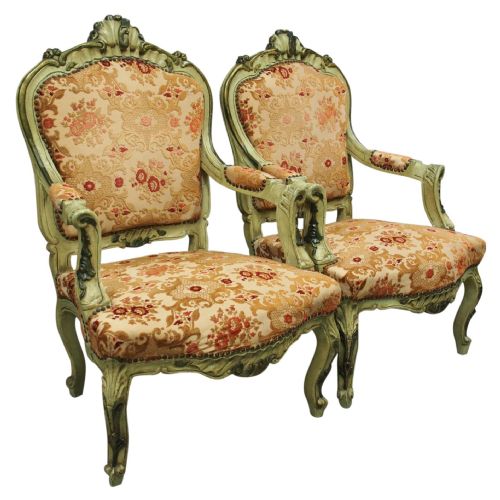

Vintage Tapestry Lounge Chair
These vintage tapestry lounge chair examples bring tactile depth and period warmth to a room through traditional textile upholstery and sturdy timber frames.
Vintage Tapestry Lounge Chair
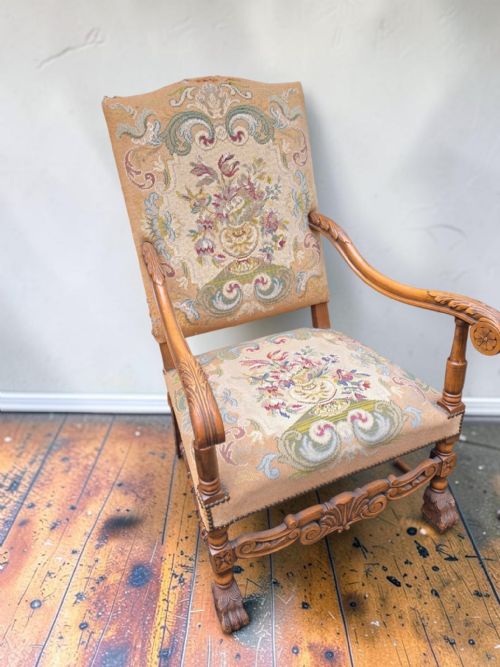
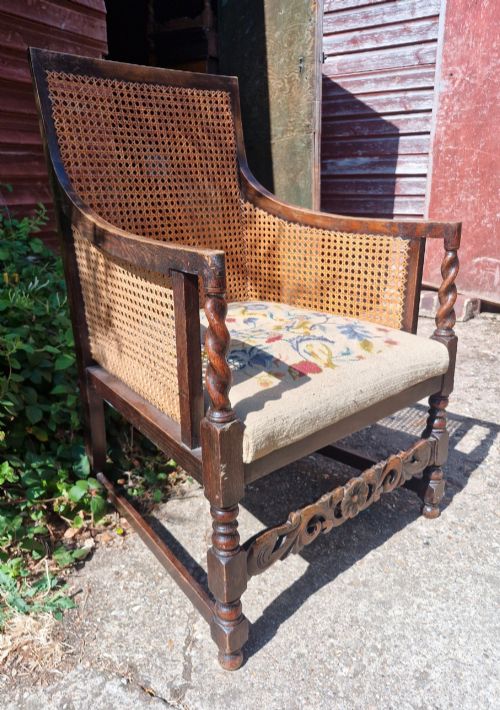
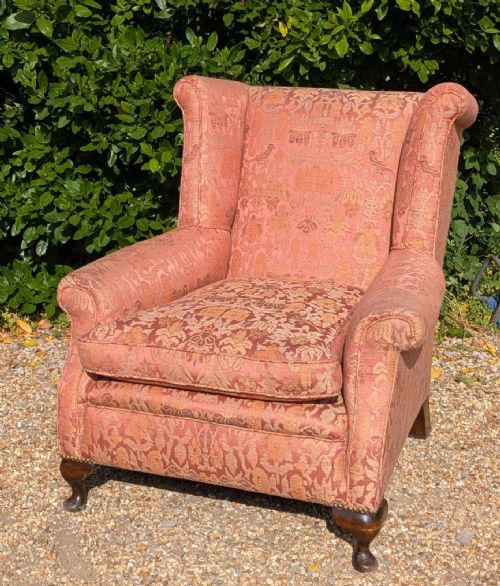
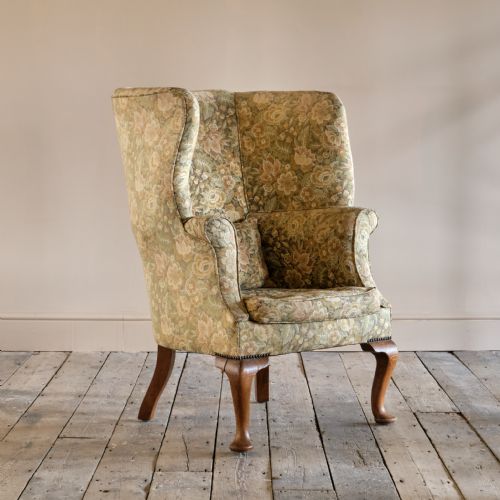
A vintage tapestry lounge chair combines robust seating frames with woven textile covers, drawing on traditions from the nineteenth century through the interwar decades. Buyers searching for a vintage tapestry lounge chair encounter sturdy armchairs, wingbacks, and salon suites dressed in wool, petit point, carpet, velvet, and kilim textiles.
The selections on this page span diverse stylistic revivals, including Queen Anne, Jacobean, Arts and Crafts, and Art Deco designs. Most pieces hail from the Victorian, Edwardian, and early twentieth-century eras, reflecting English country house aesthetics and European craftsmanship.
Formats vary from barrel backs and fireside chairs to substantial walnut and oak armchairs. Walnut and hardwood frames support dense upholstery, often featuring feather fillings or traditional sprung interiors.
How they were made
Carpentry foundations rely on hardwoods such as walnut, oak, and general timber, shaped into carved, painted, or bentwood frames. Joinery methods support heavy daily use, pairing solid timber with supportive internal springing systems and feather fillings.
Upholstery incorporates heavy textiles including tapestry fabric, wool, carpet, velvet, and kilim. Artisans applied these woven surfaces to wingbacks, salon suites, and fireside chairs using traditional tacking and stitching techniques.
Some chairs wear kilim and carpet fragments, proving that a hardworking floor covering makes a remarkably resilient seat.
What varies in quality
The distinction between tiers rests on the integrity of the timber frame and the complexity of the textile work. Carved walnut and oak structures demonstrate superior cabinetmaking compared to simpler utilitarian frames.
Textile quality ranges from standard woven fabrics to intricate petit point needlework and authentic kilim or carpet coverings. Internal padding also differs, with feather-filled cushions and traditional sprung upholstery offering superior comfort over basic padding.
Howard and Sons
The Vintage Tapestry Lounge Chair Glossary
- Petit point
- A form of tent stitch embroidery executed on fine canvas, allowing for high detail and pictorial depth in upholstery panels.
- Bergere
- An enclosed upholstered armchair with wooden framing, typically featuring cane work or fabric sides developed in France.
- Kilim
- A flatwoven carpet or rug utilised as durable upholstery material, bringing geometric motifs to chair coverings.
- Bentwood
- Wood heated and bent into curved structural shapes, characteristic of innovative early twentieth-century seating design.
Vintage Tapestry Lounge Chair: Frequently Asked Questions
How do I clean tapestry upholstery?
Vacuum gently using a low suction brush attachment to remove surface dust without catching loose threads. Professional textile cleaning is recommended for deeper maintenance to protect old fibres.
Avoid soaking the fabric or using harsh chemical detergents, as moisture can weaken the underlying wooden frame and age the wool or cotton yarns prematurely.
Are these chairs comfortable for daily use?
Many examples feature deep seats, supportive wings, and feather fillings designed for prolonged relaxation. Their ergonomic proportions match modern lounging standards while retaining historical character.
Internal springing and padding condition varies by piece, so checking the description for cushion details helps determine daily comfort levels.
How do I date a wooden armchair?
Examine the timber species, joinery methods, and stylistic cues such as carved cabriole legs or Arts and Crafts linear simplicity. Victorian and Edwardian pieces often display heavier proportions and distinct revival motifs.
Upholstery fabric may be newer than the frame itself, meaning the structural woodwork provides the most reliable indicator of age.
Will a tapestry chair suit modern interiors?
The rich textures and patterns of woven textiles provide a striking contrast against minimalist contemporary decor. They anchor neutral spaces by introducing warmth, colour, and historical narrative.
Pairing a patterned armchair with plain walls or simple wooden floors allows the intricate textile work to function as a focal point.