



Vintage Tambour Door Cabinet
These vintage tambour door cabinet examples offer clever slatted closures that conceal office files and bedside storage with smooth mechanics.
Vintage Tambour Door Cabinet
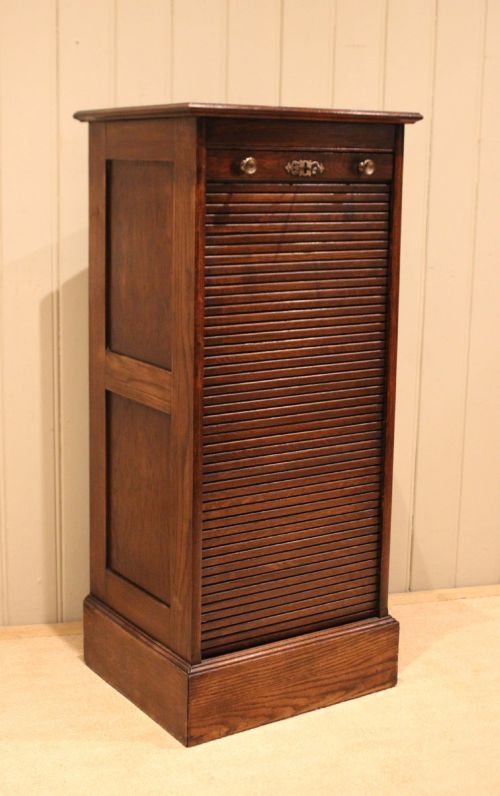
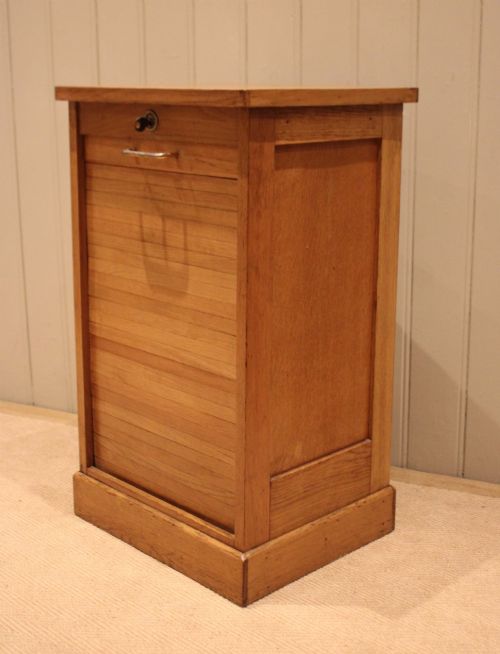
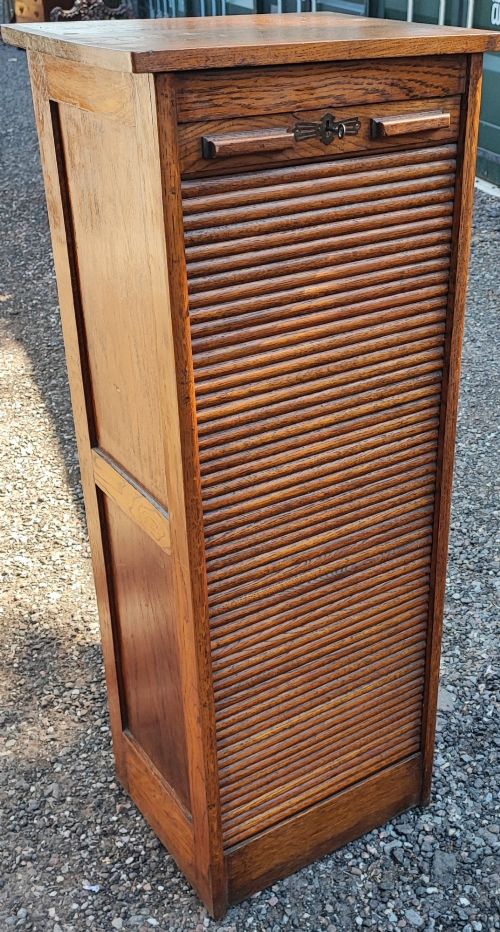
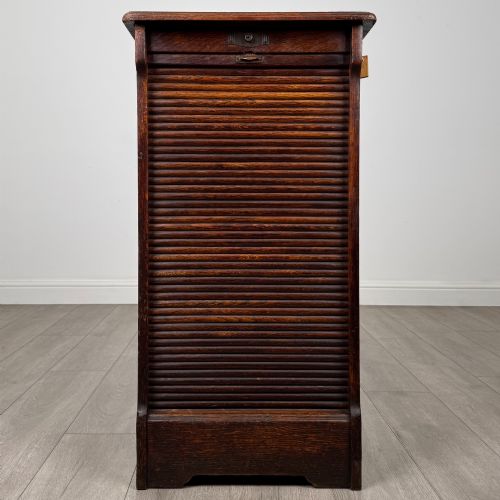
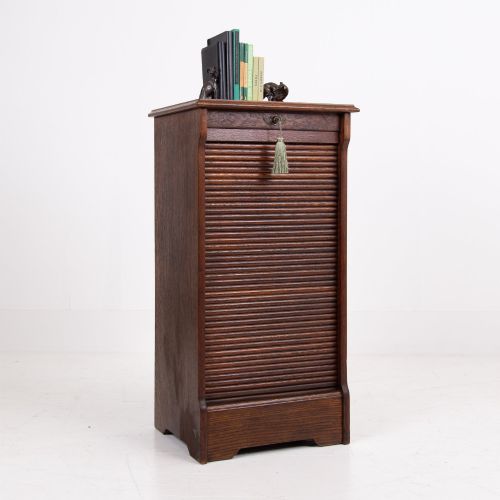
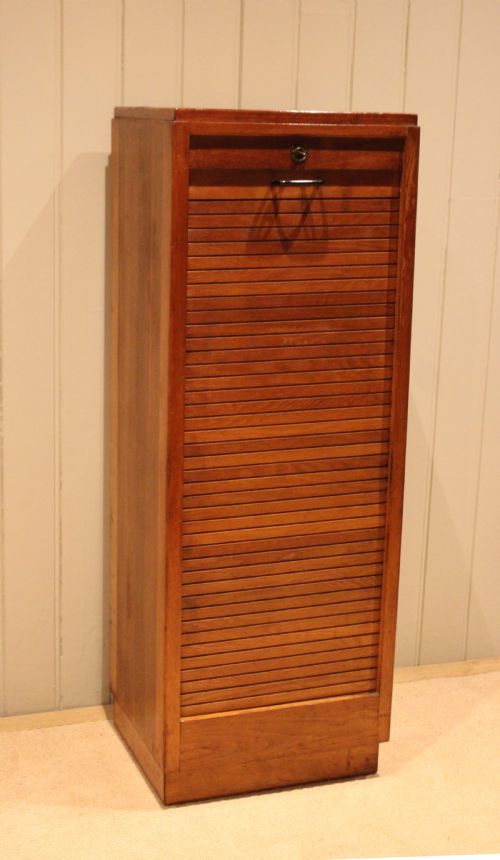
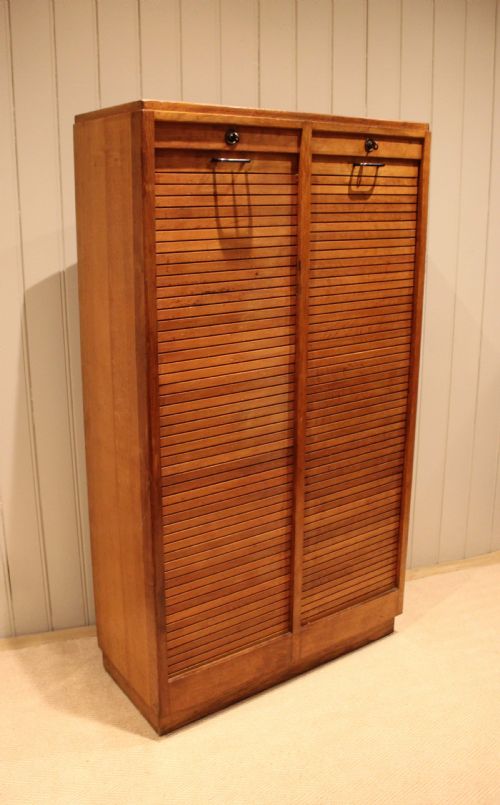
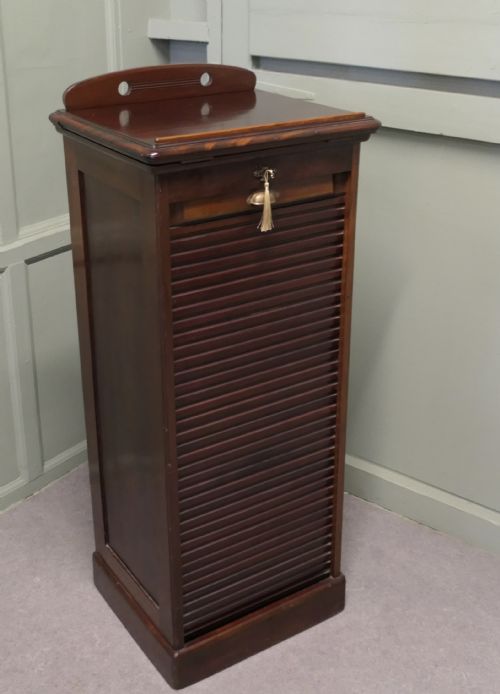
A vintage tambour door cabinet brings together flexible slatted closures and practical storage forms, most frequently appearing here as oak filing cabinets from the early twentieth century. These pieces serve primarily as office furniture or bedside tables, where sliding slats save space compared to swinging doors.
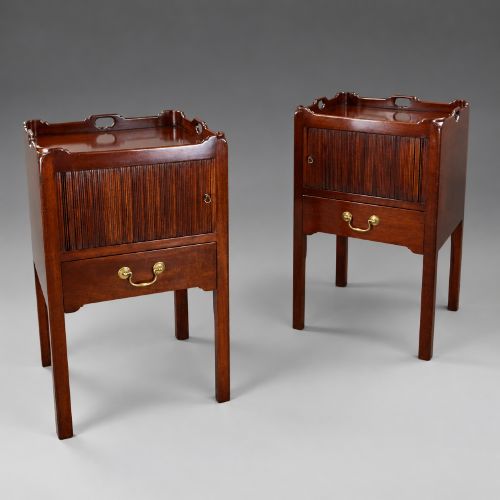
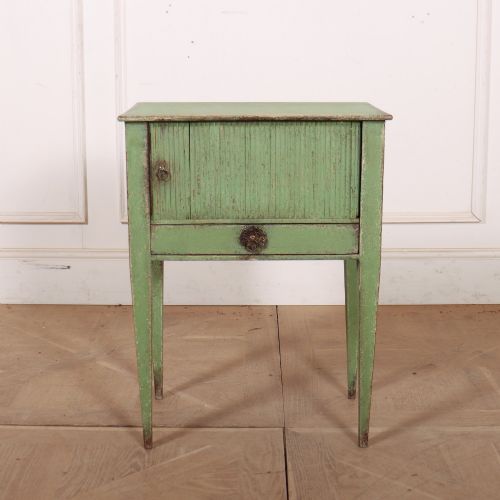
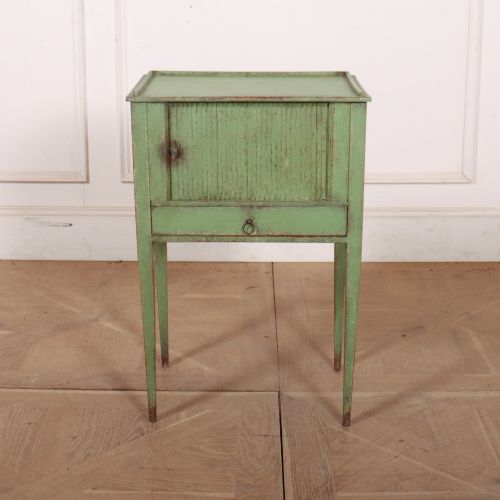
Beyond utilitarian filing furniture, the selection includes Georgian and Victorian bedside cupboards alongside French and Dutch provincial pieces. Oak and mahogany dominate the offerings, spanning the nineteenth century up to the nineteen-forties.
How they were made
Cabinet makers constructed the flexible doors from narrow vertical wooden strips glued to canvas or fabric backings, allowing the curtain to track smoothly around a curved interior channel. Solid timbers like oak and mahogany formed the main carcases and panelled sides.
Drawer linings and secondary woods often utilise softwood or pine, while brass handles and pulls complete the hardware fittings on these functional storage units.
The selection spans from the eighteenth century through the Edwardian era up to nineteen-forties office furniture.
What varies in quality
The precision of the slatted track mechanism dictates daily utility, separating pieces that glide effortlessly from those that bind in their grooves. Smooth operation depends on the stability of the canvas backing and the alignment of the wooden ribs.
Timber selection and secondary wood choice mark the difference between standard office filing furniture and finer residential bedside pieces. Clean joinery and well-fitted internal pigeon holes or drawers elevate the standard of construction.
The Vintage Tambour Door Cabinet Glossary
- Tambour
- Flexible sliding door constructed from narrow vertical strips of wood attached to a fabric backing. This allows the door to curve around the side or back of the cabinet when opened.
- Marquetry
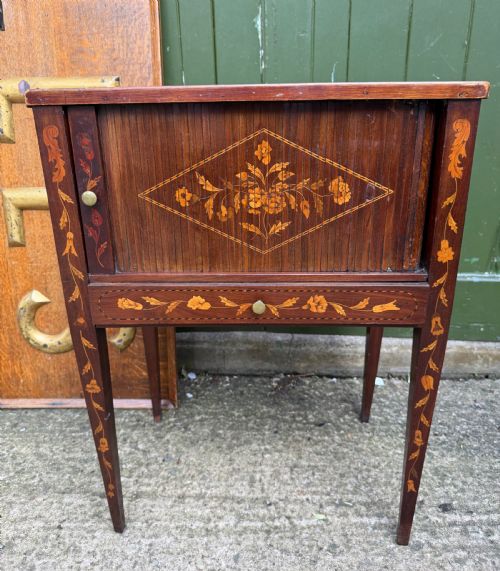
- Decorative technique of applying veneers of different woods to form intricate floral or geometric patterns. It appears on select eighteenth and nineteenth-century pieces.
- Commode
- Low cabinet or chest of drawers, often used in a bedroom setting during the Georgian and Victorian periods. The term frequently applies to bedside cupboards in these listings.
- Tray-top
- A raised, gallery-edged top designed to prevent items from rolling off the surface. This feature occurs on specific eighteenth-century bedside tables.
- Softwood
- Timber from conifer trees, such as pine, typically utilised for secondary structural elements like drawer linings and internal framing.
Vintage Tambour Door Cabinet: Frequently Asked Questions
How do tambour doors actually work?
Tambour doors consist of narrow wooden slats fastened side by side onto a flexible canvas backing. This construction allows the entire shutter to slide smoothly along a grooved track built into the cabinet frame.
When pulled, the curtain wraps around an internal corner or recess, completely hiding inside the carcase. This mechanism provides full access to the interior without requiring clearance space for swinging doors.
Where were these cabinets used originally?
Many of these pieces served in commercial offices and legal chambers as vertical filing systems for paperwork and ledgers. Their compact footprint made them practical for busy workspaces.
Other variations functioned domestically as bedside tables or pot cupboards in bedrooms. The flexible front kept chamber items or nighttime essentials neatly out of sight.
Are tambour cabinets difficult to maintain?
Regular maintenance involves keeping the running tracks free from dust and debris that might cause the slats to stick. A light application of appropriate wax helps the wooden ribs slide smoothly along the grooves.
Avoid placing these cabinets in rooms with extreme humidity changes, as wood expansion can affect the tracking mechanism. Gentle cleaning preserves both the timber and the backing fabric.
How can I date an oak office cabinet?
Dating relies on examining construction methods, hardware styles, and timber characteristics. Early twentieth-century pieces often feature quarter-sawn oak with visible medullary rays and simple brass pulls.
Earlier examples from the nineteenth century display hand-cut dovetails in the internal drawers and heavier mouldings. Comparing the backboards and secondary woods helps confirm the period of manufacture.