



Vintage Tall Writing Bureau
A vintage tall writing bureau is a commanding piece that combines a practical desk space with generous vertical storage.
Vintage Tall Writing Bureau
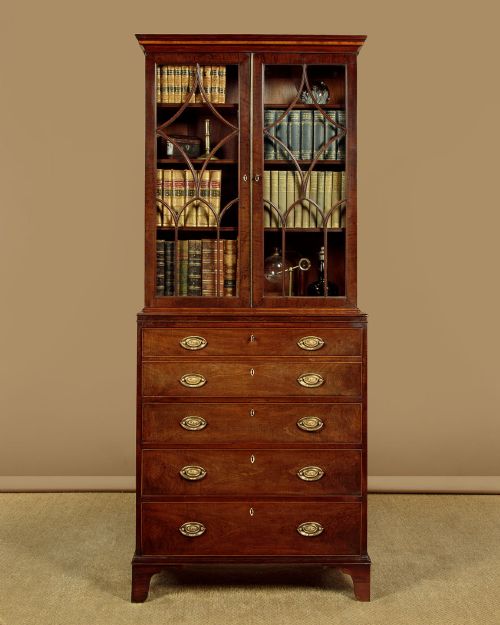
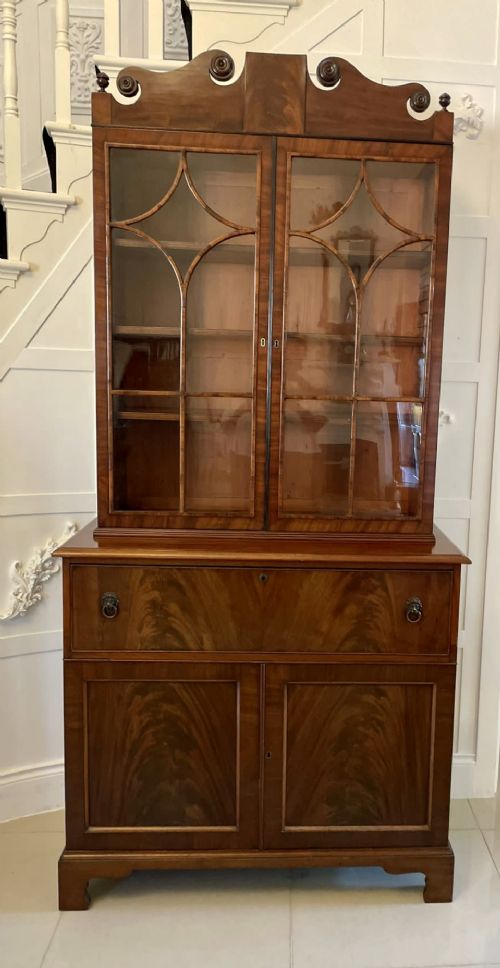
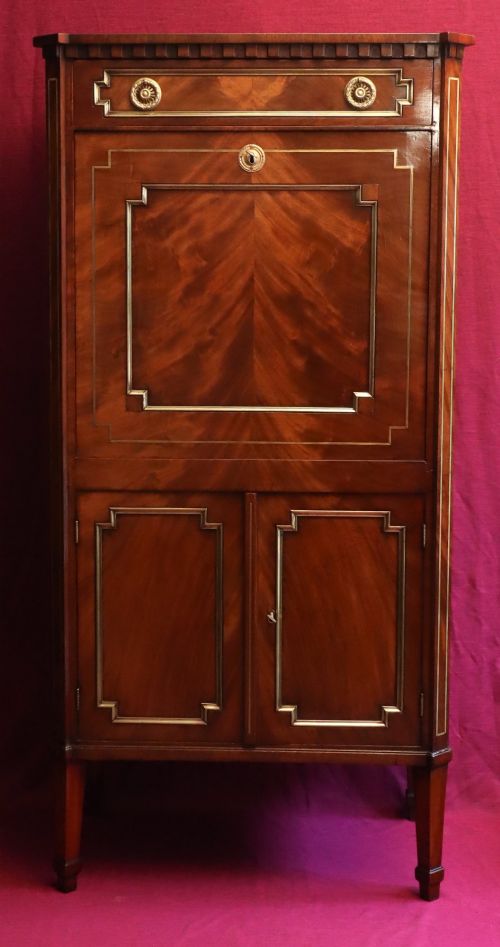
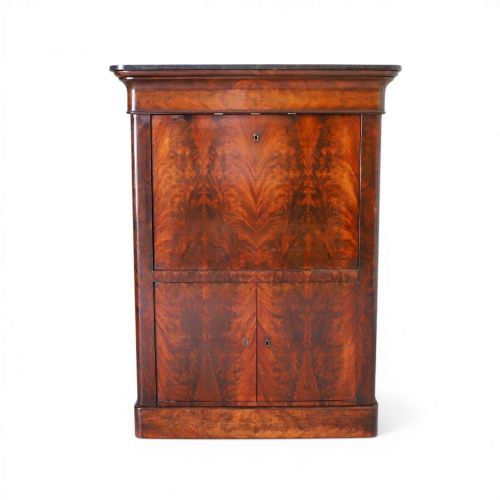
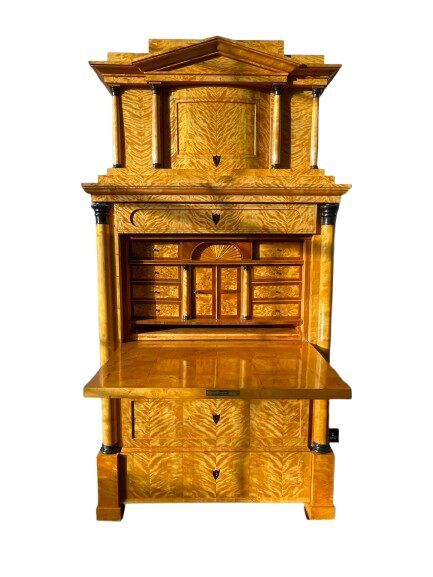
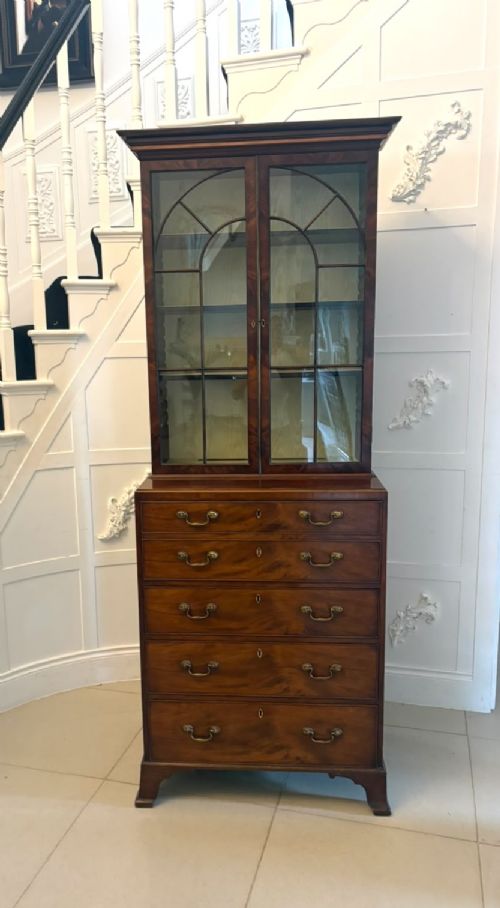
A vintage tall writing bureau appears in several distinct forms across this selection, ranging from substantial bureau bookcases with glazed upper sections to drop-front secretaire cabinets and tallboys. These imposing items combine a dedicated writing surface with concealed drawers and shelving, serving both workspace and display functions.
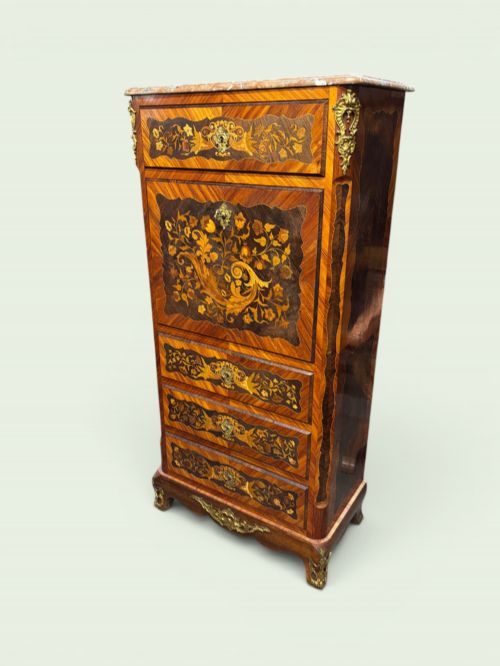
The pieces span multiple periods from the eighteenth century through to the early twentieth century, taking in Georgian, Regency, Biedermeier, and French styles. Mahogany and walnut dominate the structural choices, alongside oak, elm, kingwood, and yew wood, often enhanced by decorative marquetry or marble tops.
Buyers frequently encounter fall-front writing desks and escritoires alongside monumental library cabinets fitted with astragal glazing. Each variant offers a vertical footprint that makes efficient use of floor space while providing significant capacity for storage and correspondence.
What varies in quality
The standard of a vintage tall writing bureau rests upon the selection of timber figure, the crispness of any marquetry or carved detail, and the integrity of the original hardware. Superior examples display seamless veneer matching, finely dovetailed internal compartments, and balanced proportions that integrate the writing surface smoothly into the vertical carcase.
Several pieces conceal tiny secret drawers behind pigeonholes, designed for hiding love letters and family fortunes from prying eyes.
Gillows
The Vintage Tall Writing Bureau Glossary
- Secretaire
- A desk or cabinet featuring a pull-out or drop-down writing flap that conceals small drawers and pigeonholes. This form allows a tall piece of furniture to function as a compact workspace.
- Escritoire
- A writing cabinet, typically tall, originating from French cabinetmaking traditions and often featuring a fall-front panel. It provides vertical storage alongside a dedicated writing surface.
- Ormolu
- Gilded bronze mounts applied as decorative ornaments to French and continental furniture. The technique adds metallic contrast and richness to walnut and kingwood surfaces.
- Astragal
- A small moulding used to divide glass panes within a cabinet door. Fine astragal glazing is characteristic of eighteenth and nineteenth-century library bookcases.
- Marquetry
- The art of applying pieces of veneer in geometric or pictorial patterns to a structure. This technique highlights the grain and colour of exotic woods on cabinet fronts.
Vintage Tall Writing Bureau: Frequently Asked Questions
How do I use a bureau daily?
The drop-front or pull-out flap provides a sturdy surface for writing or laptop use, while internal pigeonholes and small drawers organise stationery and correspondence.
Enclosed upper shelving keeps books and display items tidy, while the lower drawers handle bulkier storage needs.
Where should I place a tall bureau?
These imposing items require solid wall placement and adequate clearance in front for the drop-front writing flap to open fully.
Keep them away from direct heat sources and strong sunlight to protect vulnerable wood veneers and antique polishes.
How do I distinguish Georgian from French pieces?
Georgian examples tend to use solid mahogany or oak with architectural proportions, often featuring astragal-glazed bookcases and restrained bracket feet.
French pieces frequently employ kingwood or walnut veneers with marquetry, marble tops, and decorative ormolu mounts.
What is a secretaire tallboy?
A secretaire tallboy combines the stacked drawers of a chest on chest with a dedicated middle drawer that pulls down to reveal a writing desk.
This hybrid form maximises vertical storage capacity while offering a hidden workspace that closes away when not in use.