

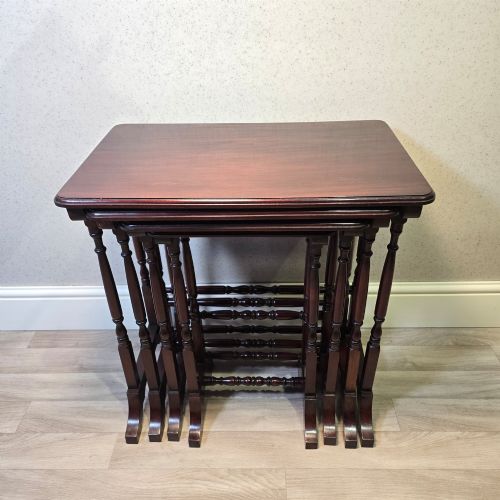
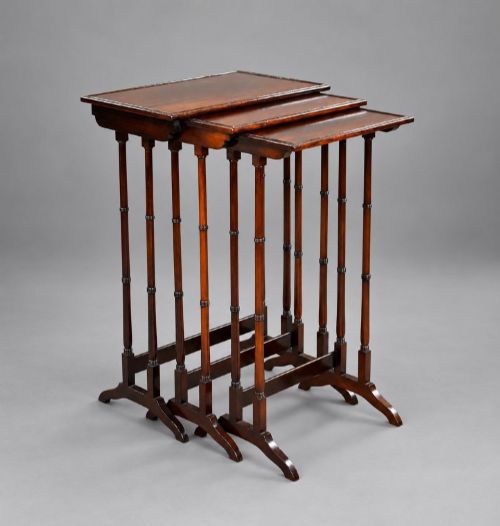
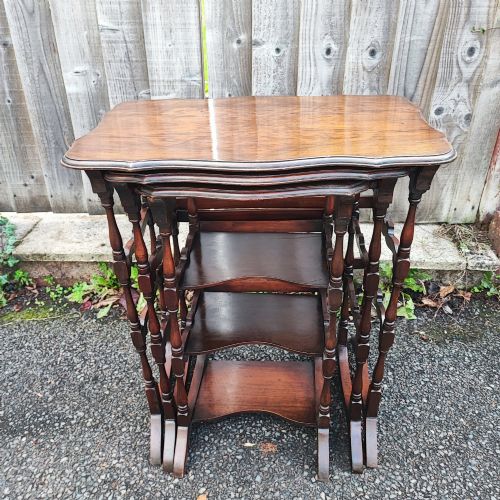
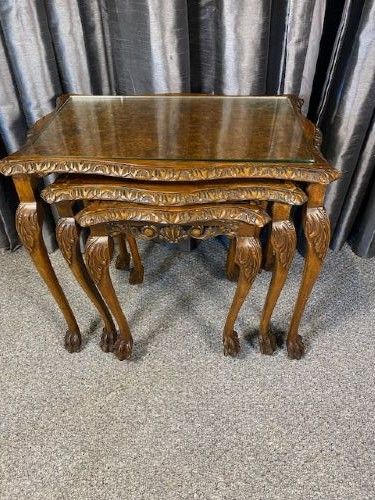
Vintage Table Stack
A vintage table stack offers a clever grouping of surfaces that slide neatly together when floor space matters.
Vintage Table Stack
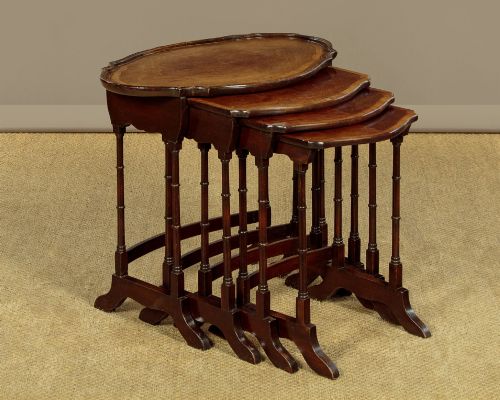
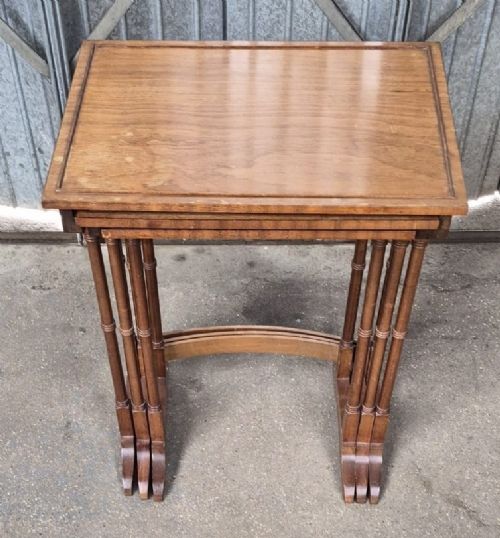
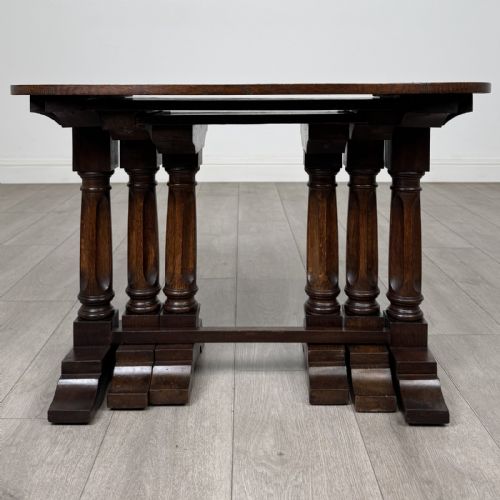
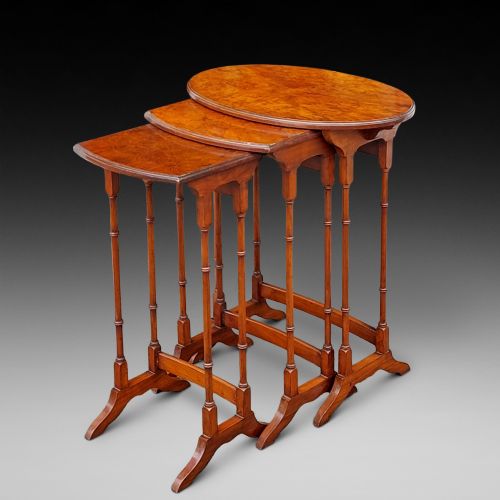
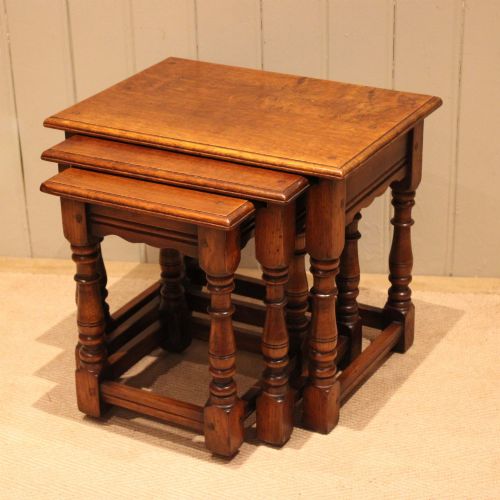
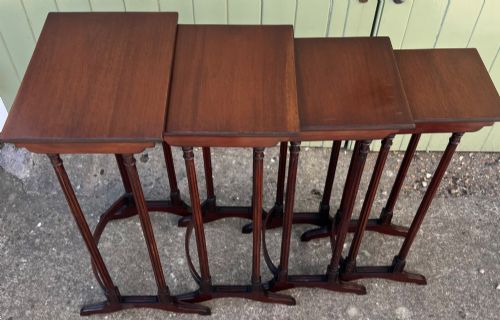
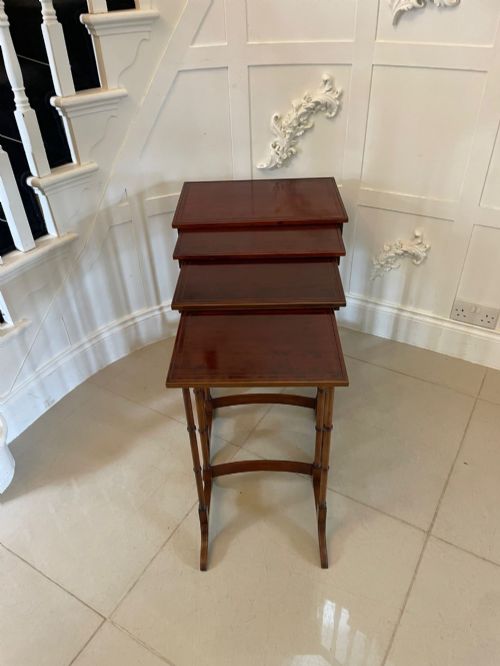
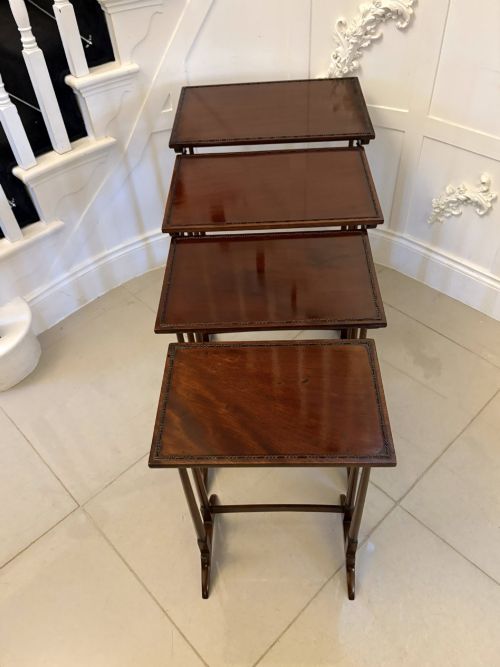
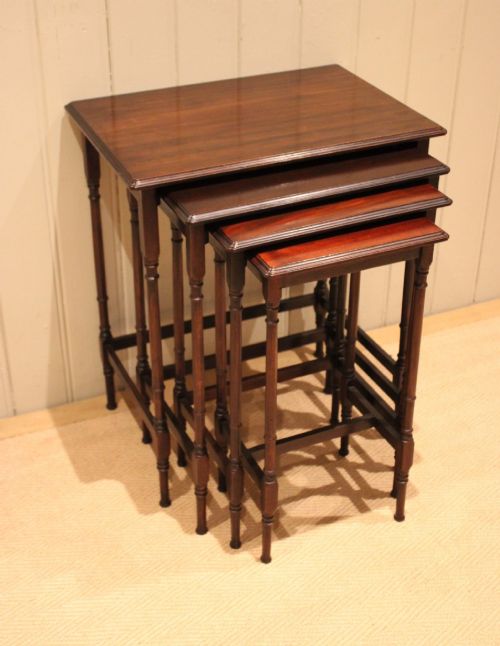
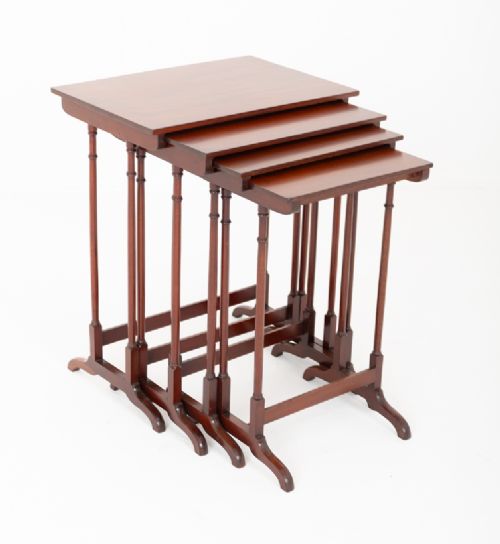
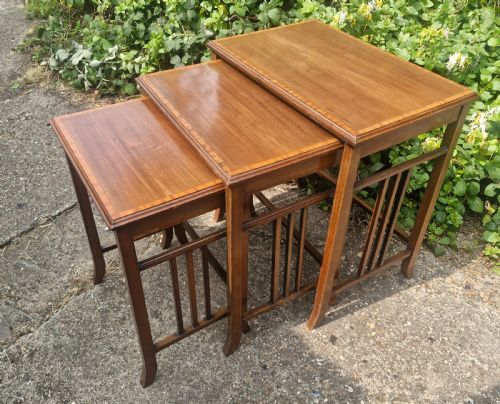
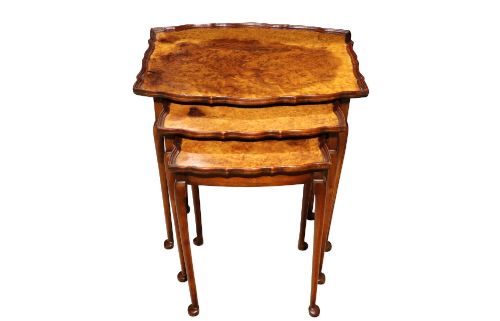
A vintage table stack, commonly found as a nest of tables, provides multiple matching surfaces designed to deploy across a room for tea or lamps and slide back into a single footprint when not in use. You are most likely to meet Edwardian and 1920s examples built in sets of three or four, though circular arrangements and sets of five also appear.
The materials span mahogany, walnut, oak, satinwood, rosewood, and teak, reflecting the preferences of makers working through the Victorian, Edwardian, and Art Deco periods. Forms range from simple rectangular tops to oval shapes and low quartetto designs suited to modern living.
Makers applied decorative techniques such as inlay, Chinoiserie decoration, and embossed leather tops to elevate these practical items. These tables bridge the gap between utility and display, remaining useful additions to sitting rooms and libraries.
How they were made
Craftsmen utilised solid hardwoods and decorative veneers like burr walnut, satinwood, and rosewood over secondary timbers, shaping tops to fit sequentially beneath one another. Joints were constructed to withstand the friction of constant withdrawal and replacement.
Surface ornamentation involved fine stringing, marquetry inlay, painted Chinoiserie motifs, and occasionally embossed leather inserts. Frames were finished with polishes that highlighted the natural grain of the wood.
Vintage Table Stack Retail Price Guide 2026
Typical asking prices for vintage table stack among the pieces listed under this phrase on Sellingantiques today, from the lower quarter to the upper quarter. They describe what is for sale here now, not the wider market.
Some Edwardian sets expand up to five tables deep, proving that Victorians and their successors took tea-time logistics very seriously indeed.
What varies in quality
The distinction between standard utility items and finer examples lies in the selection of timber veneers and the precision of the graduated sizing. Superior pieces employ figured burr walnut, satinwood, or rosewood with matched grain patterns across the set.
Detailing such as hand-cut inlay, carved mouldings, and stable structural joints separate high-grade workshop production from simpler commercial outputs. The smoothness with which each smaller table slides into its designated slot indicates the care taken during initial construction.
Émile Gallé·Heal's
The Vintage Table Stack Glossary
- Quartetto
- A set of four small tables designed to fit inside one another. This term appears frequently in Edwardian and early twentieth-century descriptions.
- Inlay
- A technique where pieces of contrasting wood or other materials are inserted into depressions in the base wood to form a pattern. It defines many Edwardian mahogany pieces.
- Chinoiserie
- European imitation of Chinese artistic motifs, often featuring painted or lacquered figures and landscapes. It marks more decorative occasional sets.
- Veneer
- A thin slice of figured wood applied to a more stable underlying timber to provide a decorative surface. Burr walnut and rosewood sets rely on this method.
- Nesting tables
- A group of graduated tables that stack into the space occupied by the largest. They provide flexible surface area for entertaining.
Vintage Table Stack: Frequently Asked Questions
How were nesting tables used historically?
Historically, these tables remained stacked against a wall or beside a chair until guests arrived. They were then separated to hold teacups, books, or lamps around the room.
Once the gathering ended, the smaller tables slid back into the primary frame, preserving floor space in smaller sitting rooms.
How do I date a table stack?
Dating relies on timber choices, decorative styles, and construction methods characteristic of different eras. Victorian and Edwardian examples often feature mahogany with string inlay, while 1920s and 1930s sets incorporate Art Deco lines or Indian rosewood.
Proportions and edge profiles also shift from the turned legs of the nineteenth century to cleaner geometric forms of the interwar period.
Where should I place nesting tables?
These tables fit well beside sofas or armchairs where surface space is needed intermittently. Keeping them stacked in a corner or beside a fireplace maintains clear walking paths until extra tables are required.
Their compact footprint makes them suitable for smaller rooms where permanent side tables would crowd the floor.