
Vintage Table Oil Lamp
When you handle a vintage table oil lamp, you hold a heavy piece of Victorian or Edwardian engineering designed to burn paraffin with steady brilliance.
Vintage Table Oil Lamp
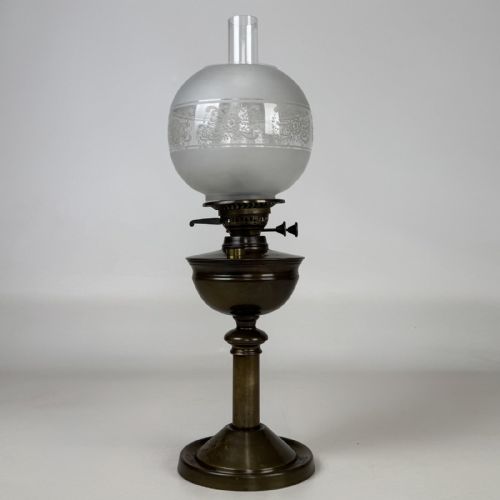
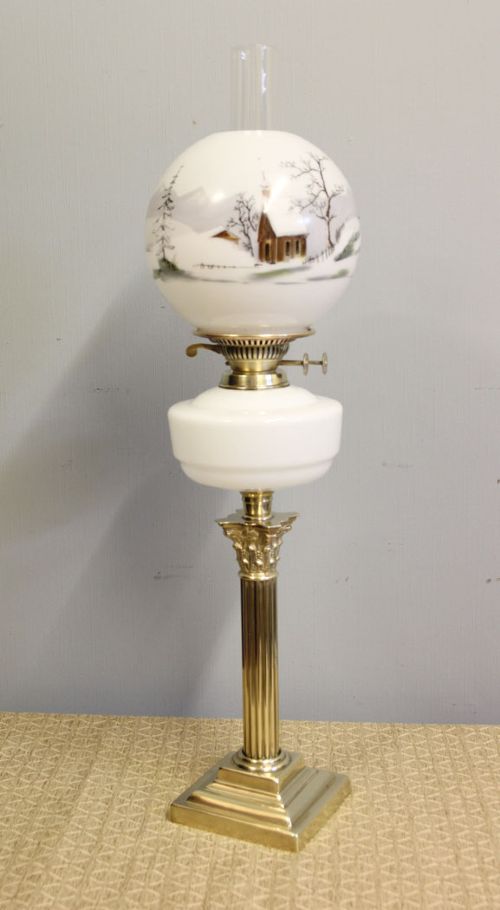
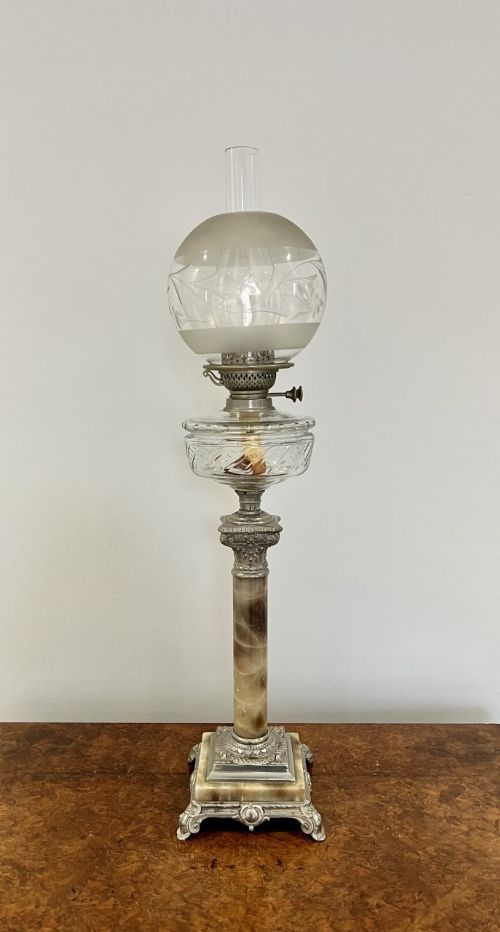
A vintage table oil lamp is a functional domestic lighting fixture designed to sit upon a surface, drawing fuel through a wick to feed a flame protected by a glass chimney and shade. The pieces you meet here span from the mid nineteenth century through the Edwardian era, with Victorian brass and ceramic column examples appearing most frequently.
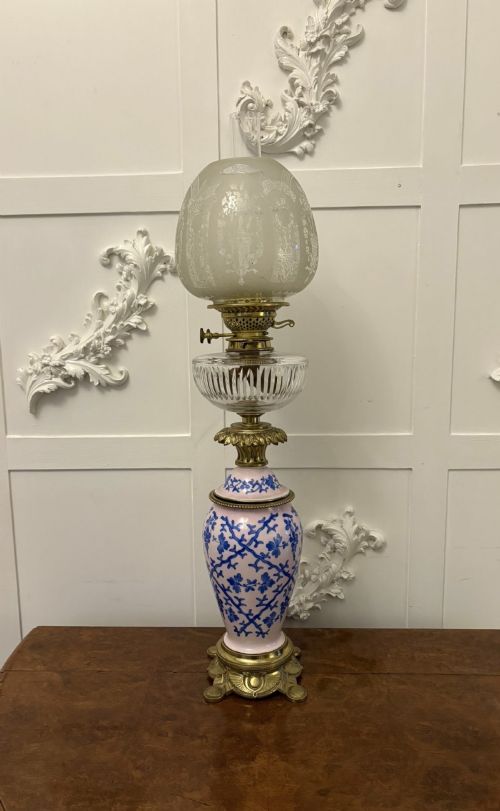
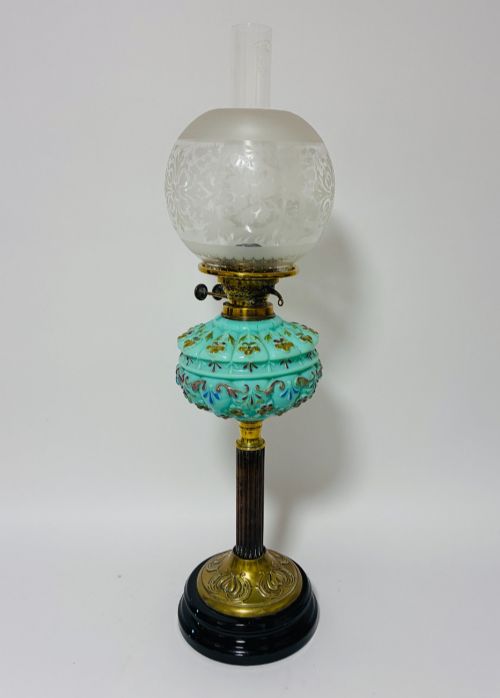
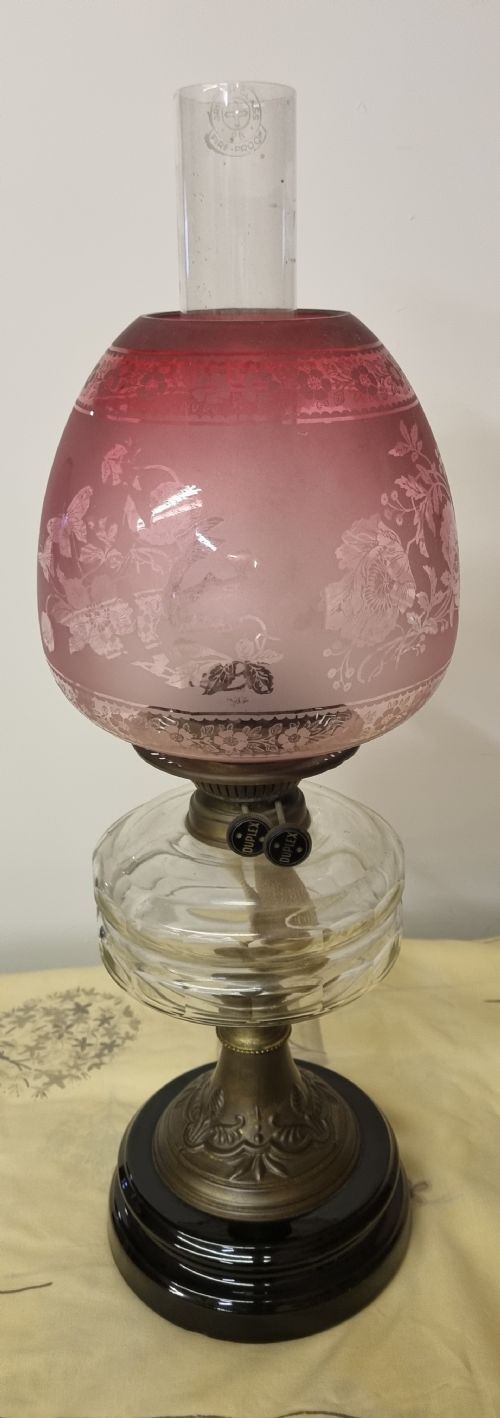
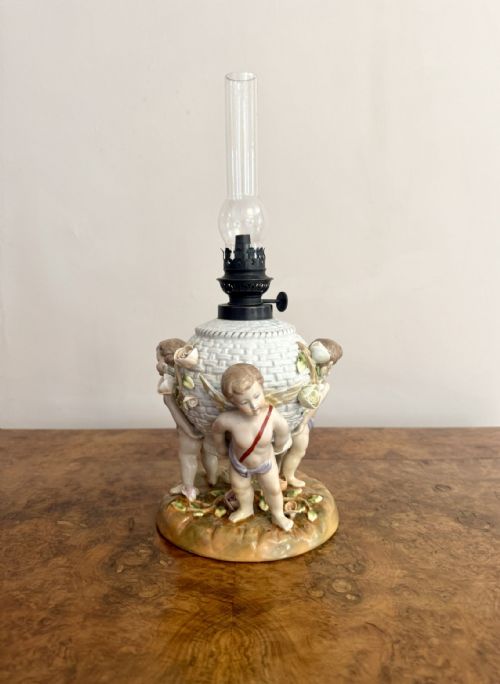
The materials and designs shift from straightforward utilitarian brass designs to decorative objects featuring hand-painted floral motifs, figural elements, and tinted glass fonts. You will encounter forms ranging from modest brass wells to tall double-burner lamps outfitted with coloured shades.
How they were made
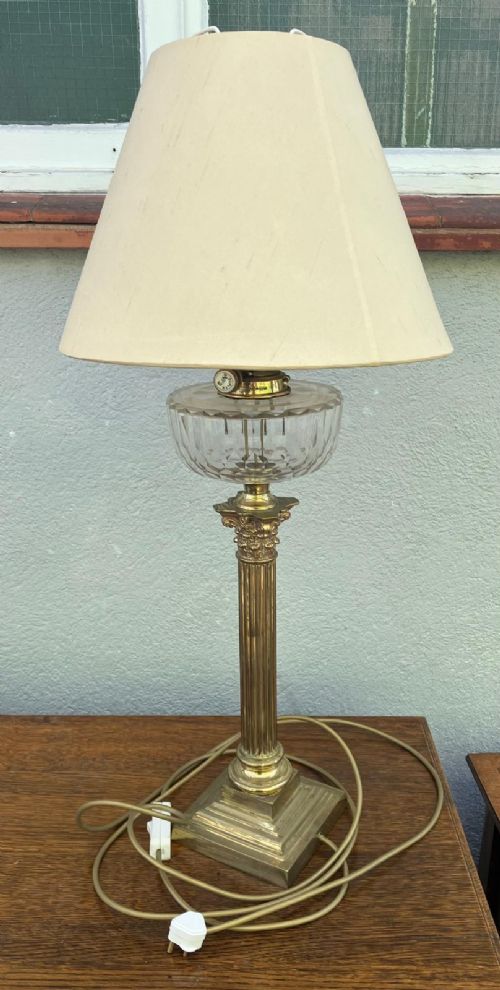
Makers constructed the structural components of these lamps from cast and spun brass, often combining heavy metal columns with ceramic, porcelain, or glass reservoirs. Brass elements were frequently polished to a bright finish or patinated, while columns utilised classical architectural proportions.
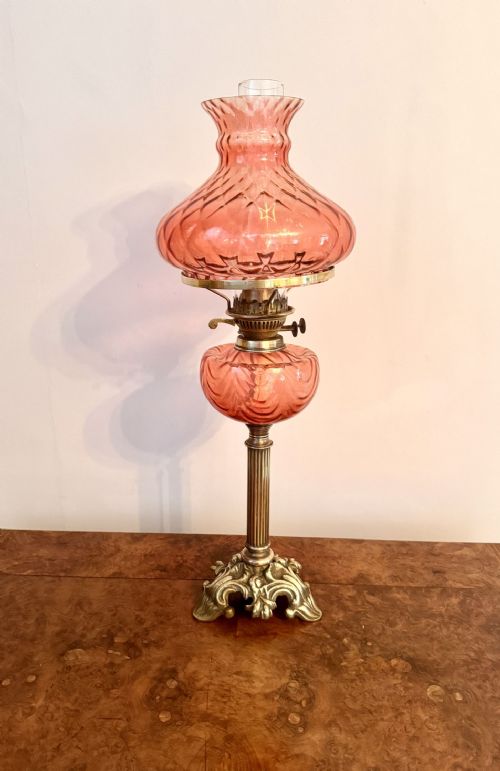
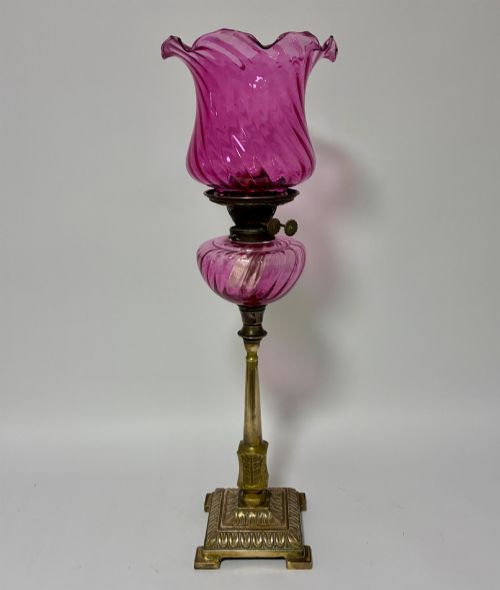
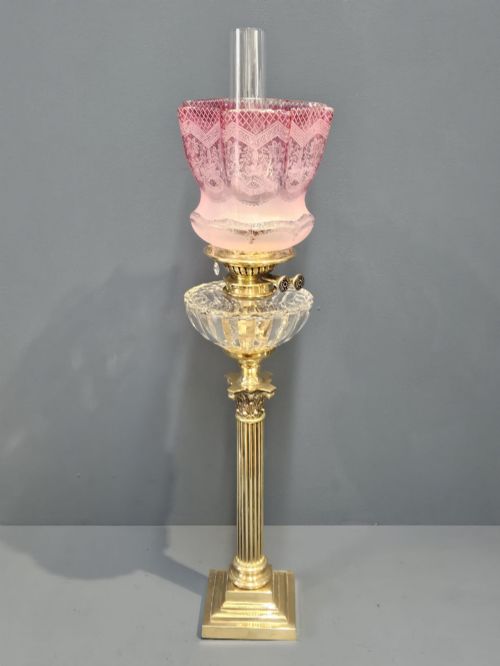
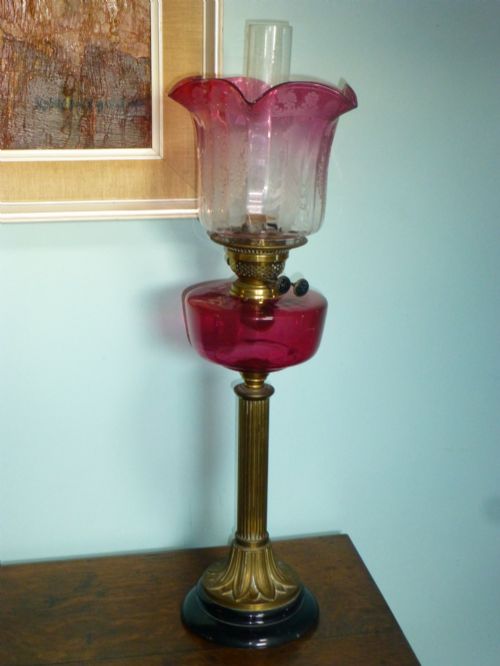
Glass production played a central role, yielding transparent crystal, opaque opaline glass, and rich cranberry glass for both fonts and shades. Artisans shaped these glass components through hand-blowing and mould-pressing, sometimes adding etched patterns, hand-painted botanical scenes, or gilt decoration.
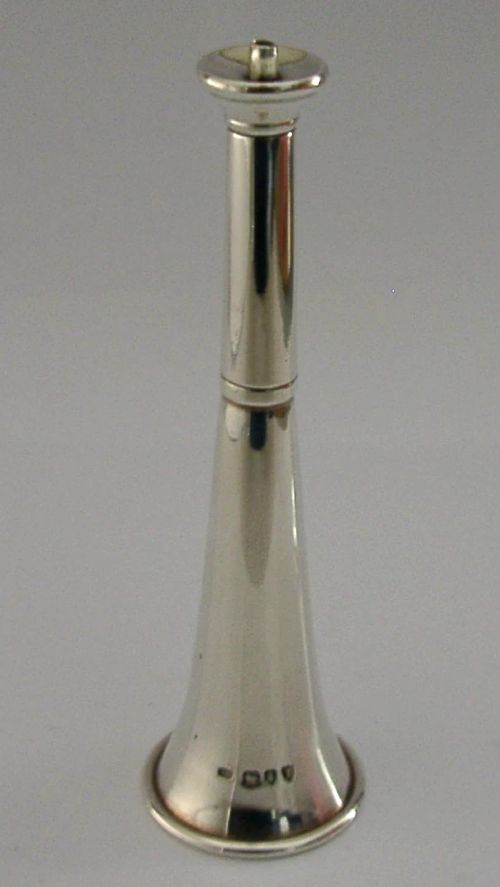
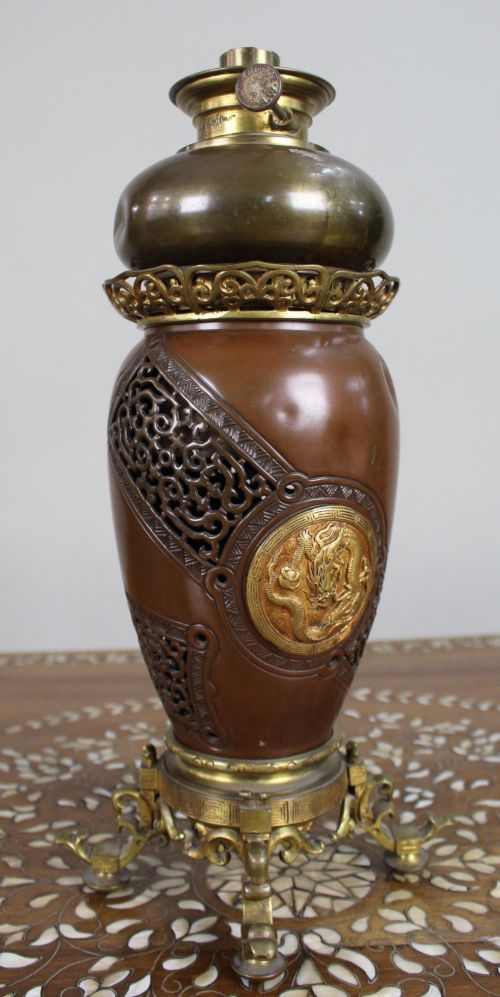
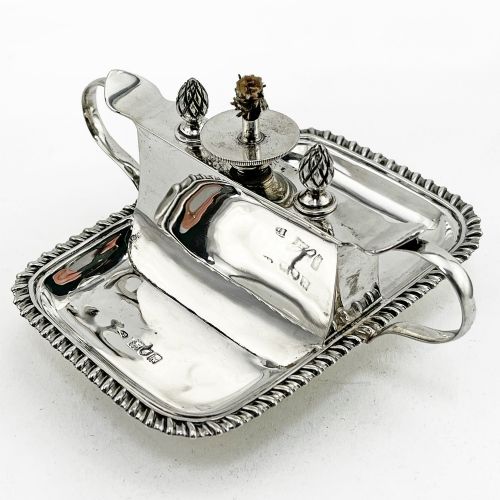
Mechanisms such as duplex twin burners and specialised patents controlled the fuel feed and air supply to ensure a stable flame. Metalworkers incorporated specialised fittings in sterling silver, copper, and bronze for upscale desk pieces and table lighters.
The listings on this site combine heavy Victorian brass columns with delicate opaline, cranberry glass, and porcelain components.
What varies in quality
The calibre of a vintage table oil lamp rests upon the weight of its cast metal components and the crispness of its detailing. Heavier brass columns and substantial weighted bases provide structural stability that lighter, thinner assemblies lack.
Artistic execution divides standard production ware from superior examples. Hand-painted glass fonts with delicate botanical details, finely etched cranberry shades, and intricate figural porcelain work demonstrate a higher level of artisanal skill.
The sophistication of the burner mechanism distinguishes finer pieces. Branded burners from known makers with working thumb-turns and robust galleries represent superior manufacturing standards compared to unmarked utility replacements.
Braham·Gustave Serrurier Bovy·Hinks·Sitzendorf·Wild and Wessel
The Vintage Table Oil Lamp Glossary
- Duplex burner
- A double-wick burner assembly that produces a significantly brighter light than a single flat wick. This mechanism was widely adopted for large parlor lamps.
- Font
- The oil reservoir portion of the lamp, typically positioned above the base and beneath the burner. Fonts are commonly found in glass, porcelain, or brass.
- Chimney
- The tall, narrow glass tube placed directly over the burner flame to create a draught and stabilize combustion. It protects the flame from drafts.
- Corinthian column
- An architectural column style featuring an ornate capital decorated with acanthus leaves. This form was frequently used for the stems of Victorian brass lamps.
- Opaline glass
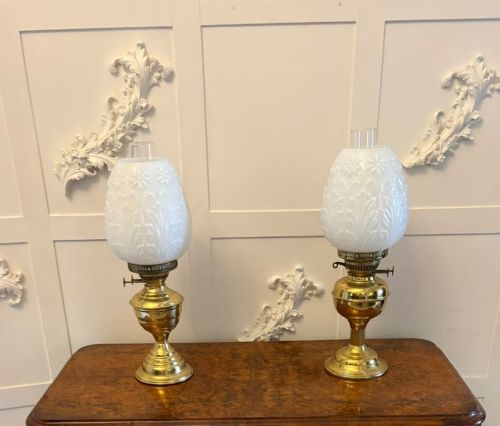
- An opaque, milky-white glass popular in the nineteenth century for shades and bodies. It diffuses light softly without total transparency.
Vintage Table Oil Lamp: Frequently Asked Questions
How do I operate a vintage oil lamp?
You fill the reservoir with a suitable lamp oil, allow the wick to saturate thoroughly, and then raise the wick slightly via the thumb wheel to light it. Place the glass chimney back onto the gallery before striking a match.
Keep the flame adjusted to a moderate height to prevent soot from smoking up the glass shade. Extinguish the flame by turning the wick down until the fire starves for air.
Can I still burn oil in these lamps?
Many people continue to burn paraffin or specialised lamp oil in these fixtures provided the font and seals remain sound. You should inspect the internal reservoir for hairline cracks or corrosion before introducing any liquid fuel.
If you prefer not to burn oil, many owners convert these lamps for electric use by running a cord through the centre. This conversion preserves the decorative appearance while removing the maintenance of liquid fuel.
How do I clean the glass shades safely?
Remove the glass shade and chimney from the metal mount before cleaning to avoid accidental chips against the brass gallery. Wash them gently in warm soapy water using a soft cloth, avoiding harsh abrasives that might damage painted decoration.
Take special care with hand-painted or gilt glass pieces, as vigorous scrubbing can remove historical surface decoration. Dry each piece completely with a lint-free towel before reassembly.