
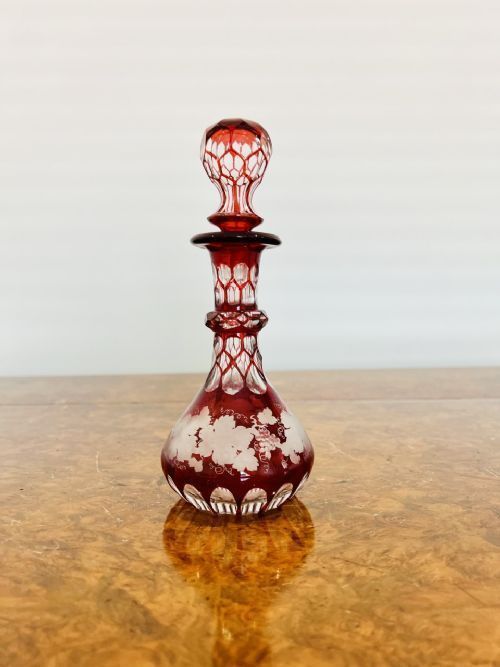
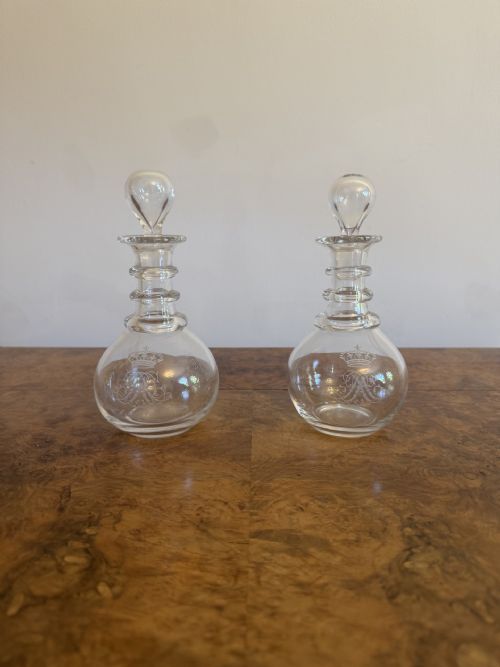


Vintage Table Glass Decanters
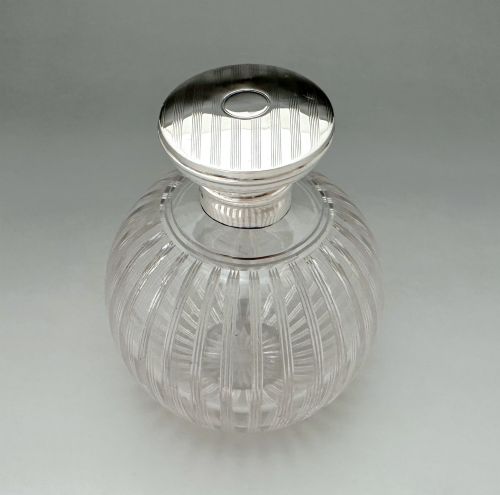
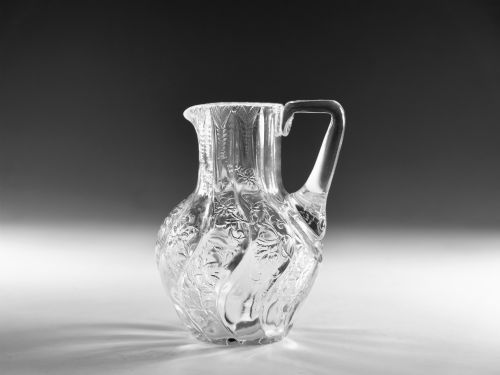
These vintage table glass decanters bring together cut glass, crystal and silver mounts from the Victorian, Edwardian and Georgian eras.
Vintage Table Glass Decanters
When you search for vintage table glass decanters, you encounter a selection spanning the Georgian, Victorian, Edwardian and Art Deco periods. These vessels encompass wine decanters, claret jugs, spirit bottles and cruet sets, often fitted with silver collars or silver-plated mountings.
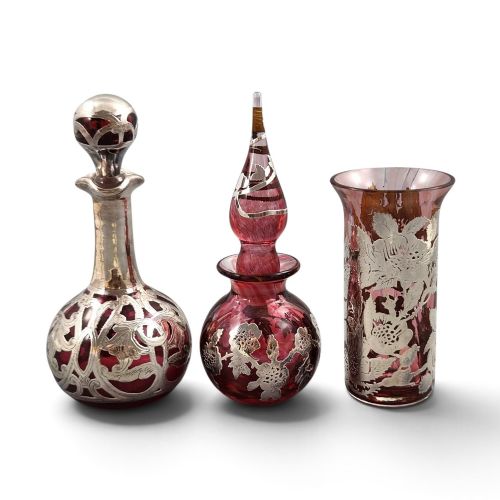
You are most likely to meet Edwardian and Victorian examples on this page, alongside earlier Georgian cruet sets and French cider decanters. The forms range from pairs of table decanters to single ewers and amber or cranberry glass vessels.
How they were made
Makers utilised cut glass, lead crystal and coloured glass such as ruby, green and amber, shaping bodies through blowing and wheel-cutting. Metal components incorporate sterling silver and silver plate, frequently bearing mounts, stoppers and scroll designs.
Makers integrated glass bodies with silver collars and stoppers, employing techniques seen in items originating from English workshops and continental makers.
Listings incorporate items from the Victorian, Edwardian and Georgian eras, alongside 19th-century French production and Art Deco pieces.
What varies in quality
The standard of the glass cutting and the clarity of the lead crystal separate pieces, alongside the weight and presence of the silver mounts. Finer examples display crisp facet cutting and well-fitted original stoppers that match the body.
The substance of the silver plating or the hallmark credentials on sterling silver collars also distinguish the range, as do unusual coloured glass bodies like cranberry or amber.
Stevens and Williams·Gorham·Karl Palda·Barnsley and Co·Wade Wingfield Wilkins
The Vintage Table Glass Decanters Glossary
- Cut Glass
- Glass shaped and patterned by abrasive wheels, creating sharp facets and geometric designs. This technique gives vintage decanters their weight and sparkle under candlelight.
- Silver Plate
- A base metal coated with a thin layer of silver, commonly utilised for the handles, frames and mounts of cruet sets and claret jugs. It provided a silver appearance at a lower cost than solid sterling silver.
- Lead Crystal
- Glass containing metallic oxide to increase weight, brilliance and refractive index. It allows for deeper cutting and sharper edges than standard container glass.
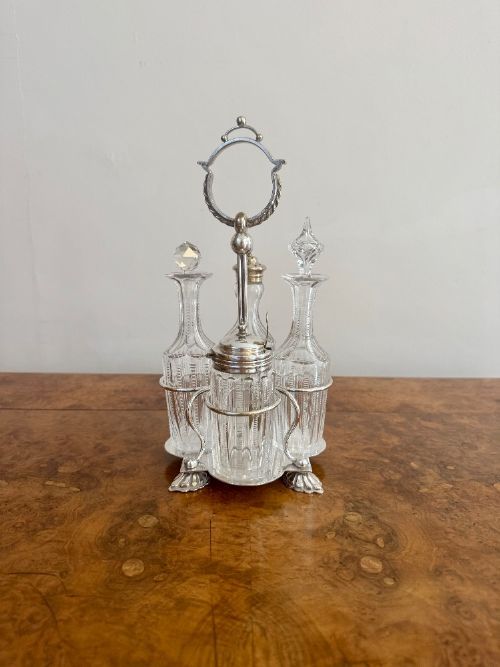
- Cruet Set
- A frame holding multiple glass bottles or decanters for condiments, oil, vinegar or spirits. These sets frequently feature silver-plated or sterling silver stands.
- Claret Jug
- A specialised pouring vessel designed for red wine, combining a glass body with a handle, spout and hinged silver mount. They date across Victorian and Edwardian production.
Vintage Table Glass Decanters: Frequently Asked Questions
How do I clean an old decanter?
Wash the glass gently by hand using warm water and mild detergent, avoiding harsh abrasives that might scratch the surface. Ensure silver mounts remain dry and do not submerge silver-plated frames for extended periods.
For internal residue, use specialist cleaning beads with water rather than harsh chemicals which can damage vintage glass or historic stoppers.
Are these decanters safe for modern wine?
Most glass decanters from the Victorian and Edwardian periods remain entirely suitable for holding and serving wine today. Inspect the interior first to ensure no stubborn staining or residue remains from previous contents.
Note that older lead crystal can leach minute amounts of lead if liquid is stored in it for weeks, but serving wine for a dinner party presents no practical risk.
How do I match a stopper to a decanter?
Matching a loose stopper involves checking the ground glass portion of the neck and the peg to ensure the taper and diameter align. Original stoppers often bear a matching number scratched or cut into the base.
If a stopper sits too high or wobbles, it likely belongs to a different vessel, as makers ground each stopper individually to fit its specific decanter.