

Vintage Table Condiments
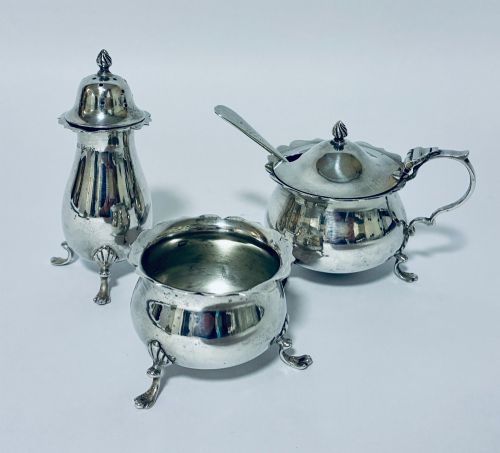
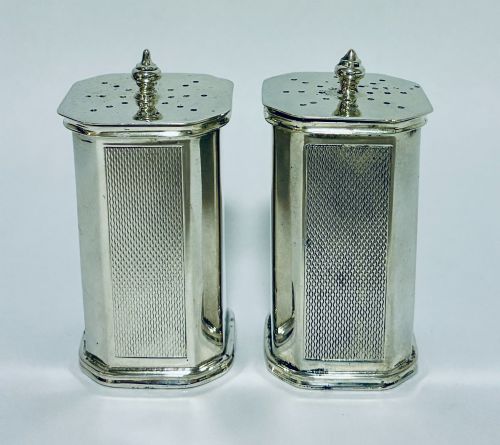
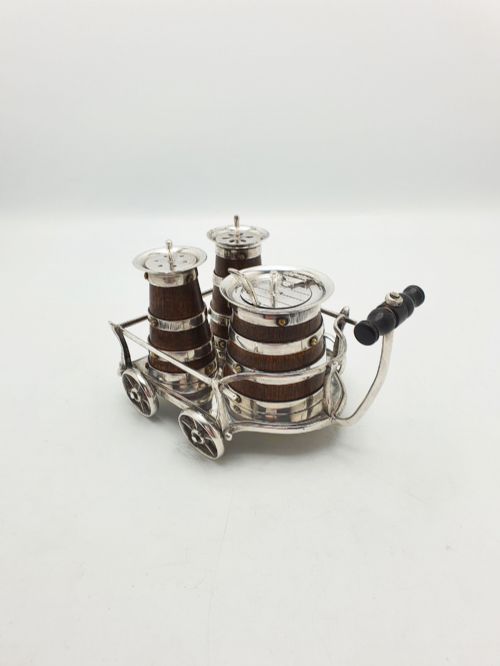
These vintage table condiments bring silver, glass and polished oak to the dining table in the form of cruet sets, pepper grinders and sauce boats.
Vintage Table Condiments
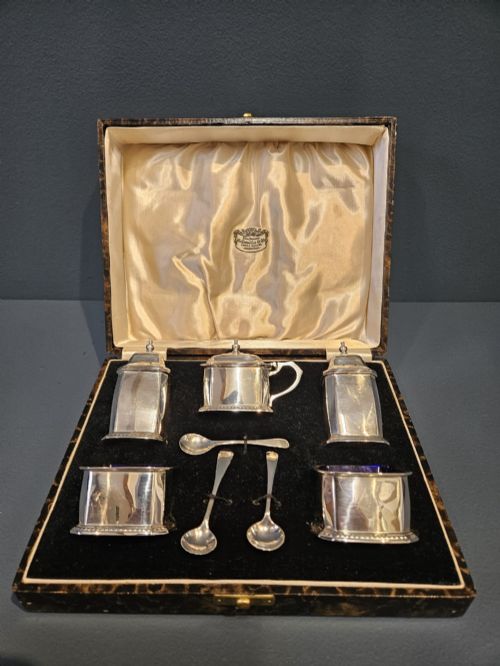
When you search for vintage table condiments, you encounter dining table accessories designed to hold salt, pepper, mustard, oil and vinegar during meals. The selection centres on cruet sets, condiment sets, sauce boats and individual pepper pots spanning the Victorian, Edwardian, Art Deco and later periods.
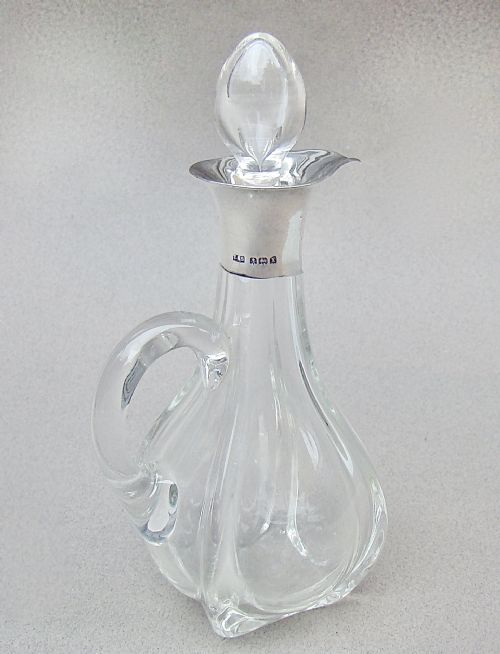
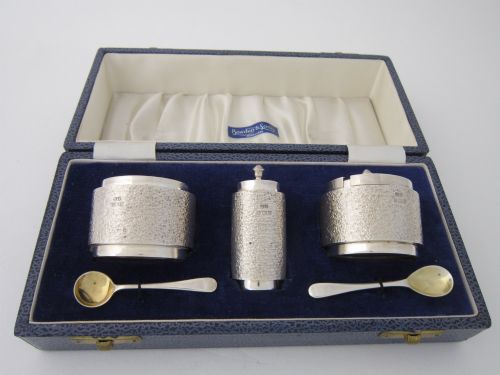
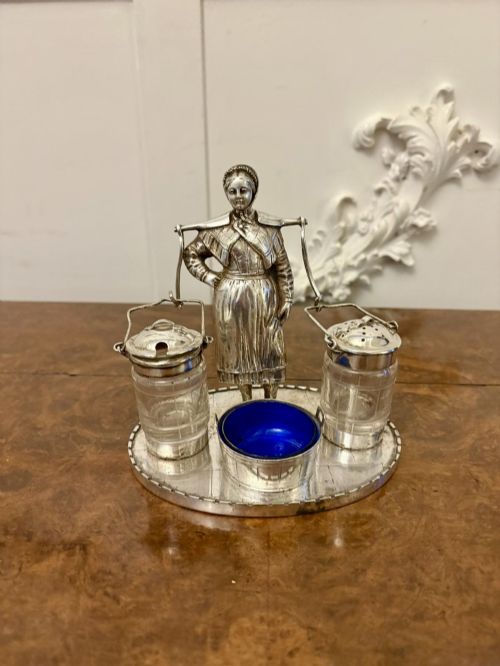
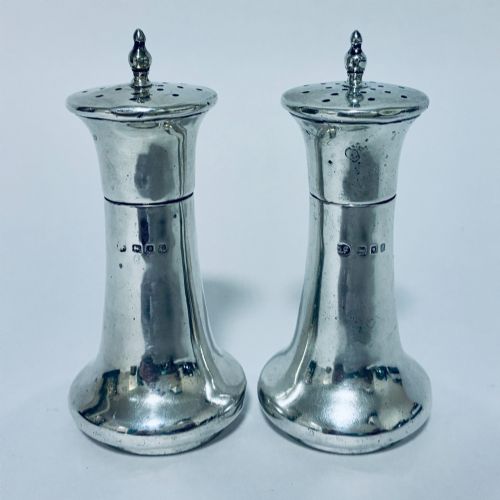
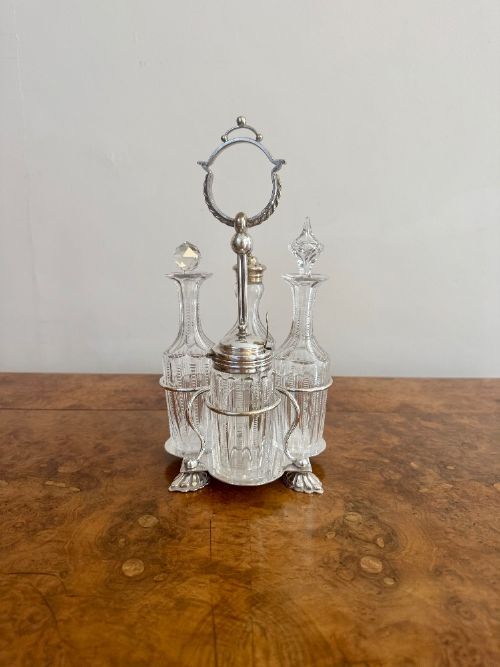
Cruet sets dominate the material evidence, ranging from compact three-piece configurations to elaborate multijug frames holding up to eight bottles. Alongside these stands, individual sauce boats, mustard pots and novelty pepper shakers appear frequently in silver and silver plate.
Origins stretch from nineteenth-century Victorian workshops through Edwardian and Art Deco decades up to mid-century modern pieces. The forms reflect formal dining traditions where condiments required dedicated silver mounts, cut glass liners and specialised spoons.
Materials and Technique
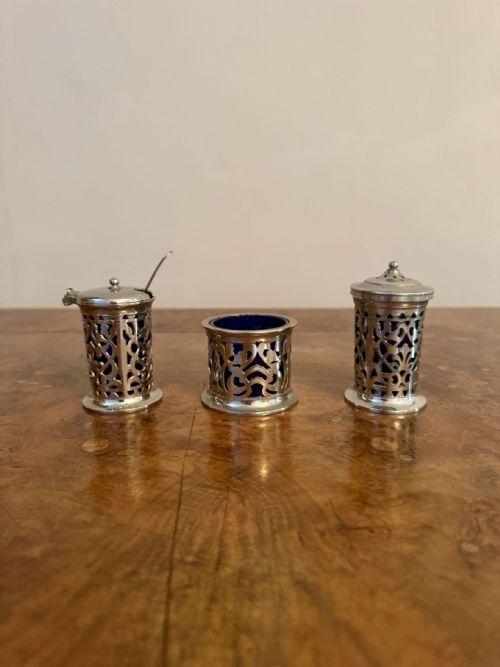
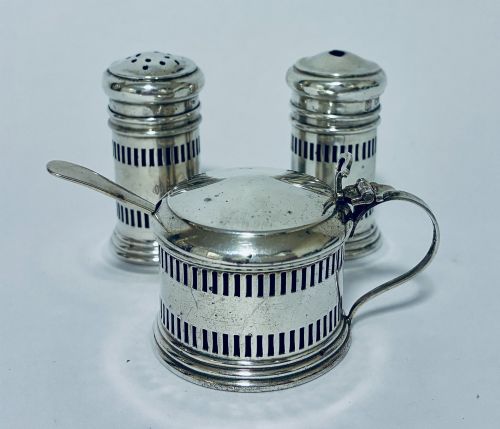
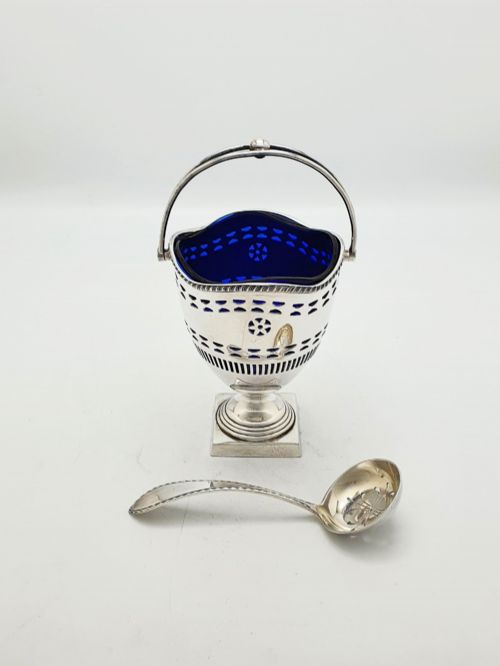
Makers combined sterling silver or silver plate with heavy cut glass, moulding the glass into liners, bottles and grinder bodies to hold liquids and dry seasonings. Pierced silver metalwork provides outer frames and galleries, often fitted with swing handles or supporting cobalt and cranberry glass inserts.
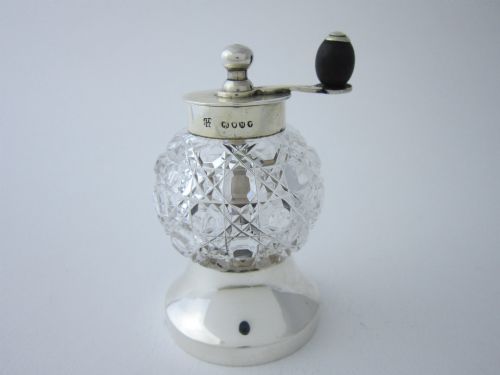
Specialist construction appears in items like pepper grinders with internal steel mechanisms mounted in silver, alongside turned oak barrel frames banded in silver plate. Soldering, piercing and glass-cutting represent the primary techniques employed by silversmiths and glasshouses across the listed eras.
Vintage Table Condiments Retail Price Guide 2026
Typical asking prices for vintage table condiments among the pieces listed under this phrase on Sellingantiques today, from the lower quarter to the upper quarter. They describe what is for sale here now, not the wider market.
The listings span eight distinct periods, from Georgian examples through Victorian and Edwardian items to mid-century modern designs.
Assessing Quality
Quality rests in the weight of the metal, the clarity and depth of the glass cutting, and the integrity of the fitted frames. Substantial sterling silver mounts and heavy-gauge silver plating distinguish superior sets from lighter, mass-produced commercial alternatives.
Detailing on mounts, such as cast rims, crisp piercing and well-preserved glass liners without chips, elevates a piece. Complete sets retaining their original matched bottles and shaker tops carry greater consistency than assembled groups.
Levi & Salaman·Josiah Williams & Co·Bricks & Sons·Goldsmith & Silversmith's
The Vintage Table Condiments Glossary
- Cruet set
- A fitted stand holding multiple bottles, cruets or shakers for oil, vinegar, salt and mustard. These assemblies often sit in silver-plated or sterling silver frames.
- Sauce boat
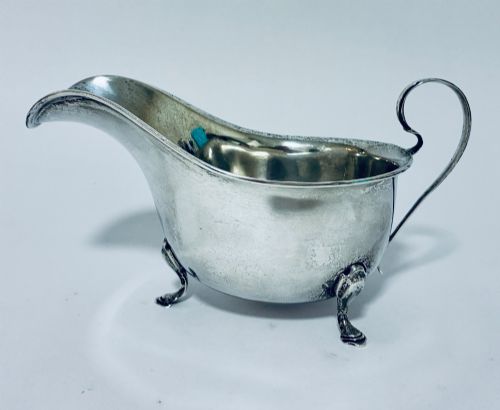
- An open vessel with a lip and handle used for serving gravies or sauces at the table. They frequently stand on three small feet or an integrated oval base.
- Salt cellar
- A small open bowl or closed pot used to hold salt before modern shaker holes became standard. Open salts are often paired with small spoons and feature cobalt glass liners.
- Silver plate
- A base metal, such as copper or Britannia metal, coated with a thin layer of silver. This technique allowed makers to produce durable tableware at a lower cost than solid sterling silver.
- Cobalt glass
- Deep blue glass frequently used for removable liners inside pierced silver sugar bowls and salt cellars. The intense colour provides a visual contrast against bright silver metalwork.
Vintage Table Condiments: Frequently Asked Questions
What is a cruet set?
A cruet set is a matched collection of condiment bottles and shakers held within a dedicated metal frame or stand. These sets typically served oil, vinegar, salt and pepper during formal meals.
In period dining, the stand allowed servants or diners to pass condiments around the table easily. Most surviving examples use silver plate or sterling silver alongside cut glass.
How do I date silver condiments?
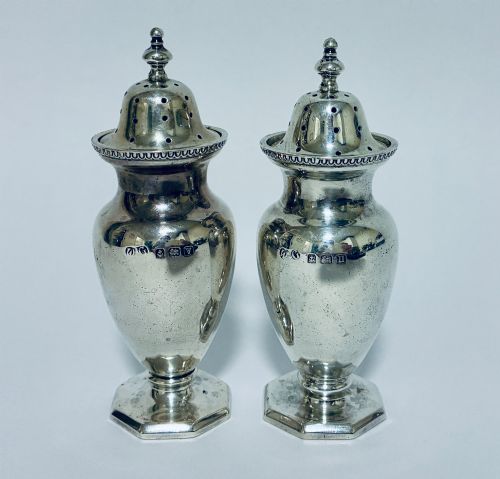
Dating relies heavily on hallmarks stamped onto the silver components, which indicate the assay office, year letter and maker. Stylistic clues also help distinguish Victorian pieces from Edwardian or Art Deco designs.
For silver-plated items without full hallmarks, forms and manufacturing techniques provide a broader chronological window. Edwardian sets often feature ornate pierced work, while Art Deco pieces favour geometric lines.
Can I use these items daily?
Many vintage condiment pots, sauce boats and pepper mills remain fully functional for modern dining. Glass liners hold sauces safely, and pepper grinders operate with standard peppercorns.
Careful hand washing preserves the silver plating and glass, avoiding harsh dishwashers that damage antique finishes. Silver components benefit from occasional polishing to maintain their lustre.
What are novelty pepper pots?
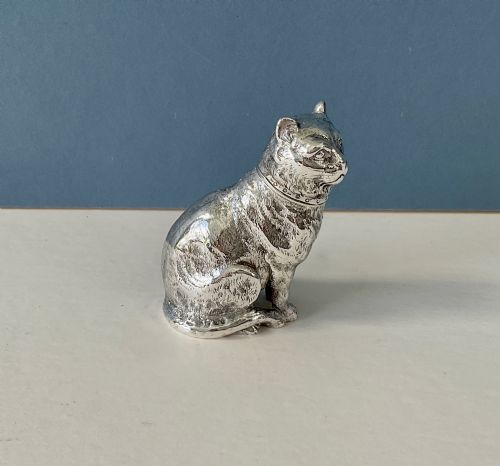
Novelty pepper pots are condiment containers modelled in humorous or distinct shapes, such as animals, birds or barrels. Victorian and Edwardian silversmiths produced these in small batches to amuse diners.
These pieces function as miniature sculptures while retaining their dispensing role through a removable base or head. Collectors prize them for their sculptural detail and imaginative designs.