
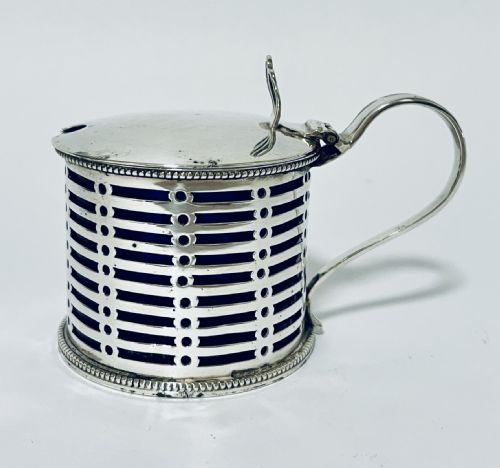


Vintage Table Condiment Holder
A vintage table condiment holder is a proper dining table centrepiece designed to keep seasonings organised and close at hand.
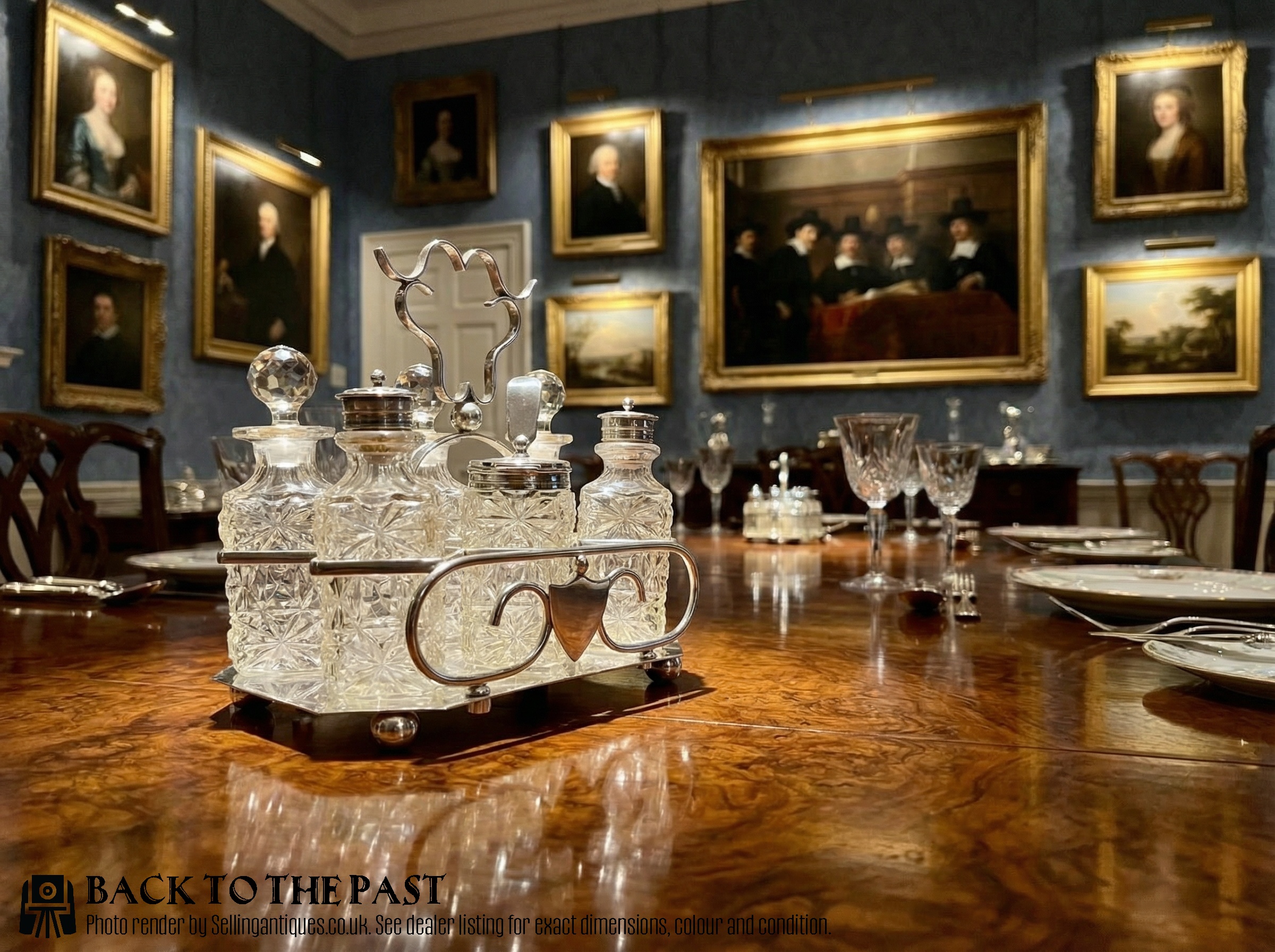
Vintage Table Condiment Holder
When you search for a vintage table condiment holder, you encounter cruet sets, condiment sets, cruet stands, and decorative baskets designed for the dining table. These items serve to hold various bottles, pots, and jars for everyday dining or formal service.
The pieces available span from the Georgian period through the Victorian and Edwardian eras up to the 1920s. You will frequently meet Edwardian silver plated cruet sets holding multiple bottles alongside earlier George III ebonised stands.
The forms range from six-bottle cruet frames with silver plating to silver mustard pots and open baskets. Each example reflects the dining customs of its specific period, from 18th-century stands to 20th-century tablewares.
How they were made
Maker workshops combined silver or silver plate with cut glass, cobalt glass, and ebonised wood. Frames were shaped and soldered from metal, while bottle components relied on heavy glass-cutting techniques.
Silver mounted glass bottles were fitted directly into carved ebonised wood stands or fitted metal frames. The integration of metalwork and glass required precise engineering to ensure the condiment bottles sat securely in their stands.
Listings span four distinct periods: 18th Century, 19th Century, Edwardian, and the 1920s.
What varies in quality
The distinction between standard examples and superior ones lies in the completeness of the set and the crispness of the glass cutting. Six-bottle sets with matching cut glass bottles demonstrate a higher grade of manufacture than simpler single-pot vessels.
The quality of the silver plating and the weight of the ebonised wood or metal frame dictate the overall substance of the piece. Heavier frames with intact original silver mounts and unblemished glass represent the upper end of what is available.
Wade Wingfield Wilkins
The Vintage Table Condiment Holder Glossary
- Cruet set
- A matched collection of small bottles or jars for holding condiments like oil, vinegar, salt, and mustard. These sets sit within a dedicated stand for table service.
- Silver plate
- A base metal coated with a thin layer of silver through electroplating or older processes. This technique allowed makers to produce bright, silver-appearance tableware at a lower cost than solid silver.
- Cut glass
- Glass decorated by cutting facets or patterns into the surface using a rotating wheel. This method creates brilliant light refraction and heavy, tactile vessels.
- Ebonised wood
- Timber treated to resemble ebony, typically through a staining and polishing process. It provides a dark, contrasting backdrop for bright silver mounts and clear glass.
- Cobalt glass
- Deep blue glass produced by adding cobalt oxide to the molten batch. It frequently appears in small condiment liners and decorative bottles.
Vintage Table Condiment Holder: Frequently Asked Questions
What is a cruet set?
A cruet set is a collection of glass bottles or pots housed in a dedicated metal or wooden stand for table service.
These pieces held liquids and seasonings such as oil, vinegar, pepper, and mustard during formal meals.
How do I date a condiment holder?
Dating relies on stylistic clues, materials, and manufacturing marks found on the metal frames and glass components.
Georgian pieces often feature ebonised wood and simple mounts, whereas Edwardian and 1920s examples lean towards extensive silver plating and complex bottle configurations.
Are all bottles original to the stands?
Many sets retain their original cut glass or cobalt glass bottles, though replacements do occur due to breakages over the centuries.
Matching glass patterns and correct fit within the frame help determine if the bottles belong to the original stand.
How should I clean silver plated stands?
Cleaning requires gentle silver polish and a soft cloth to protect the plated surface from excessive wear.
Harsh abrasives can strip the thin silver layer entirely, exposing the base metal underneath.