

Vintage Swivelling Chair
A vintage swivelling chair offers active adjustment and sturdy timber construction for daily seating.
Vintage Swivelling Chair
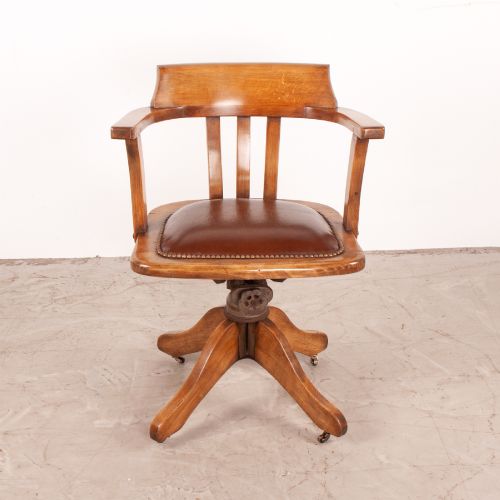
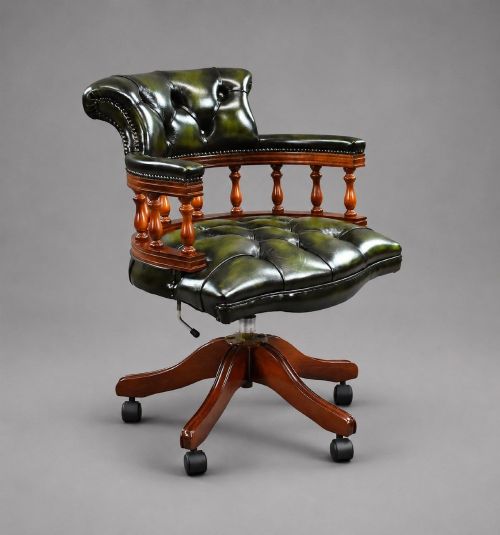
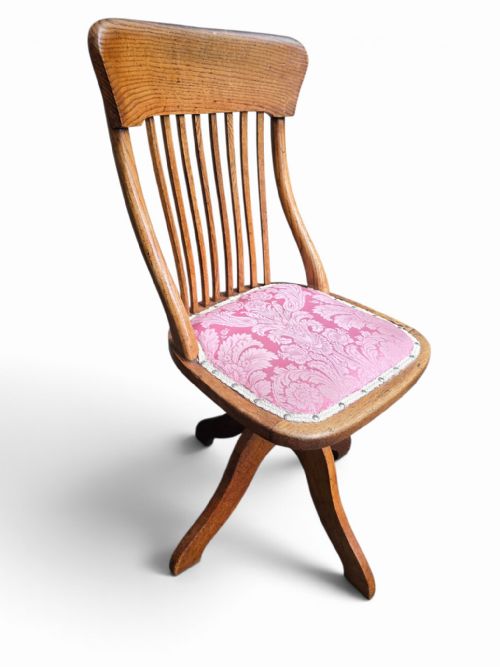
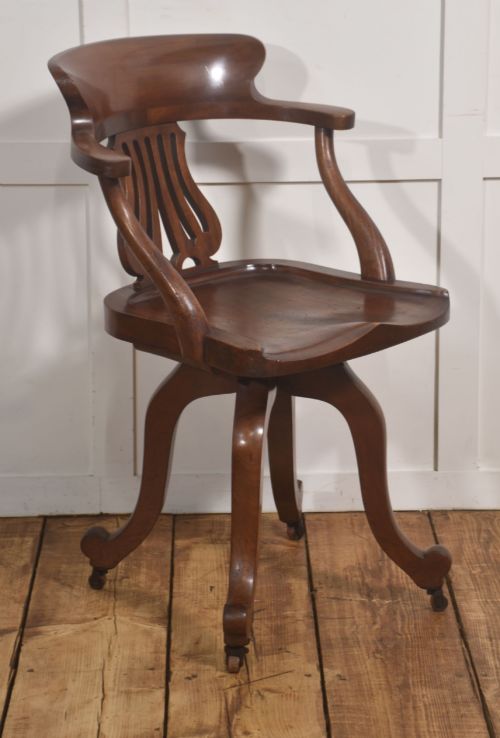
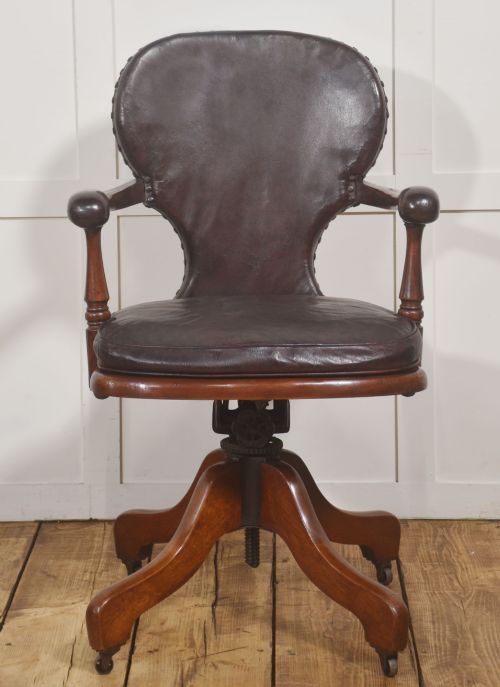
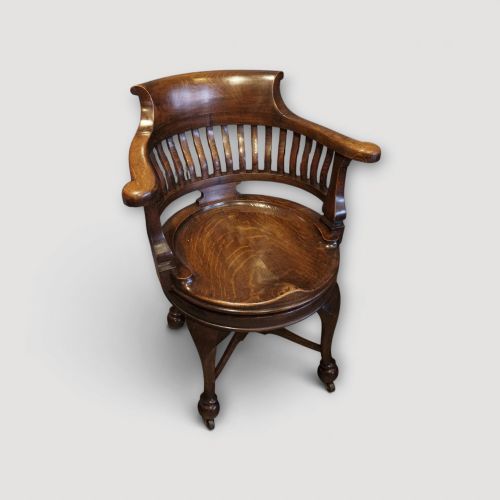
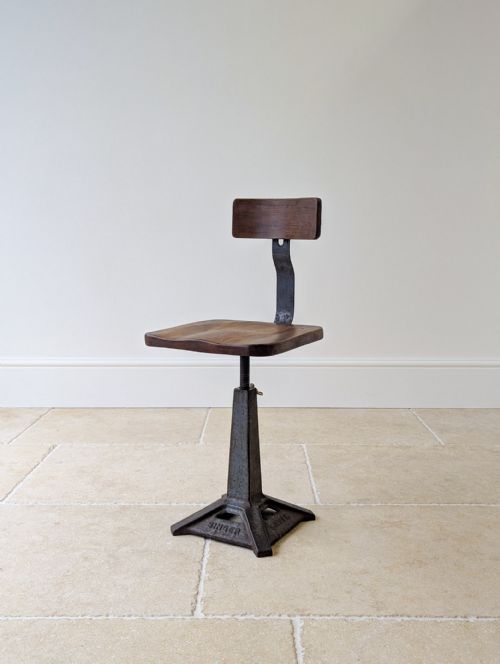
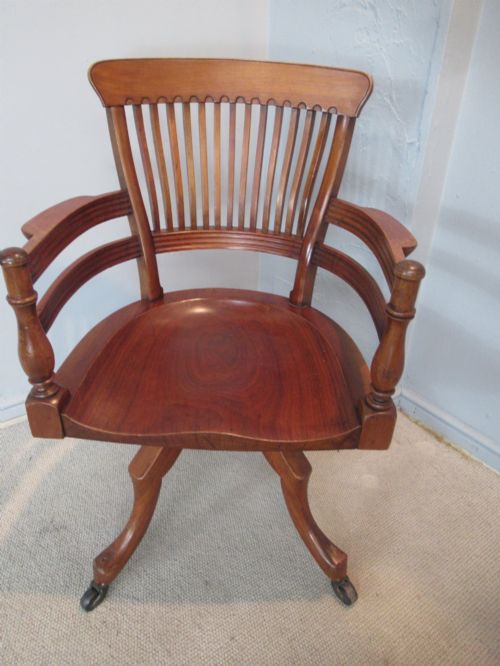
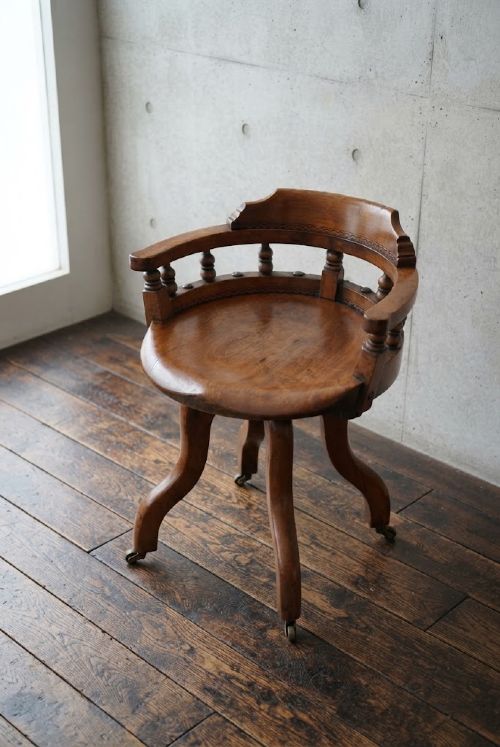
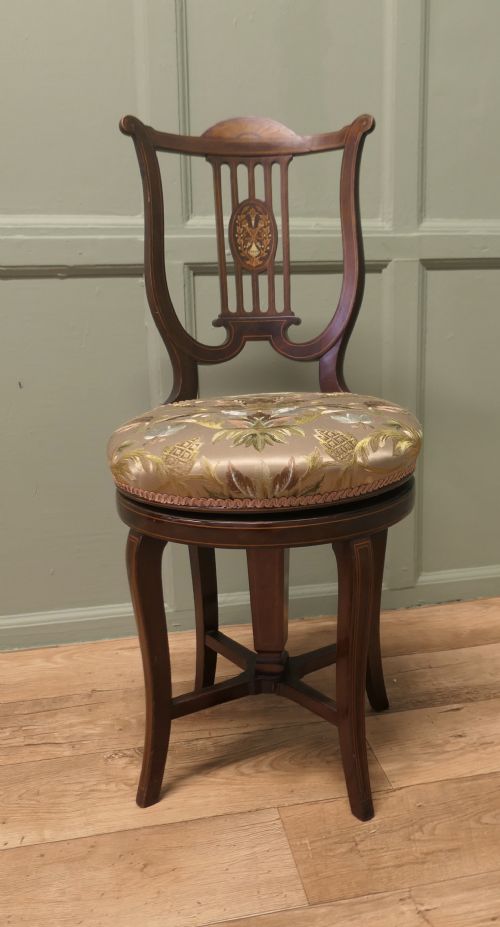
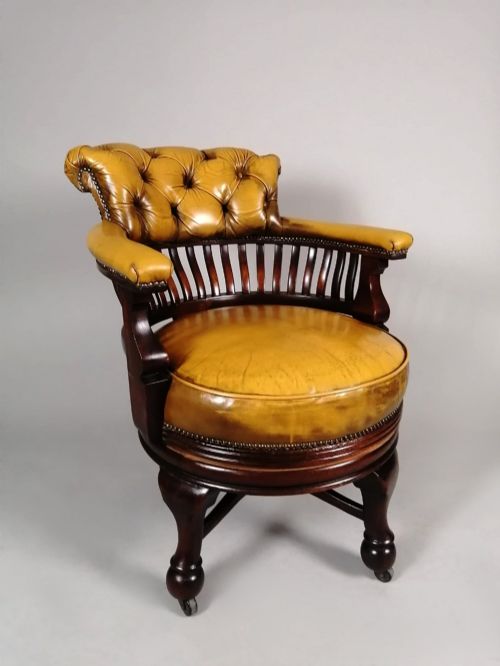
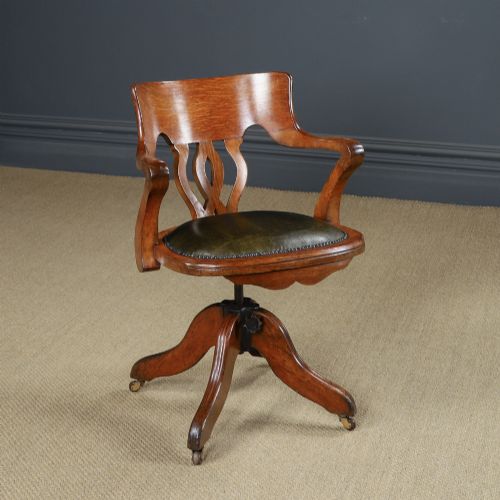
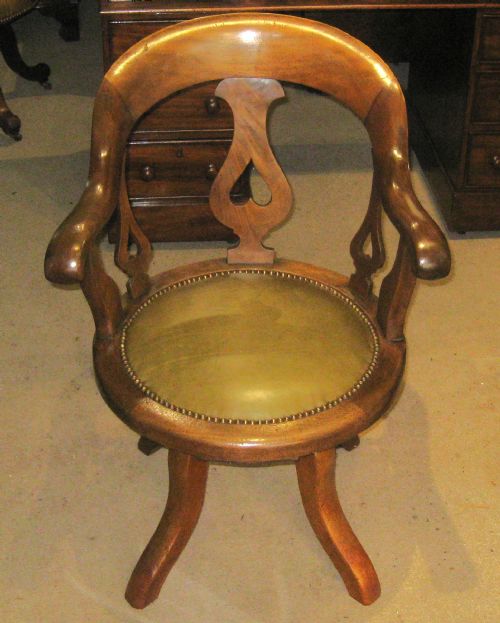
A vintage swivelling chair brings mechanical motion to traditional seating formats, spanning desk chairs, piano stools, and industrial workshop seats. These pieces range from nineteenth-century walnut and mahogany office models to early twentieth-century oak and cast iron variants.
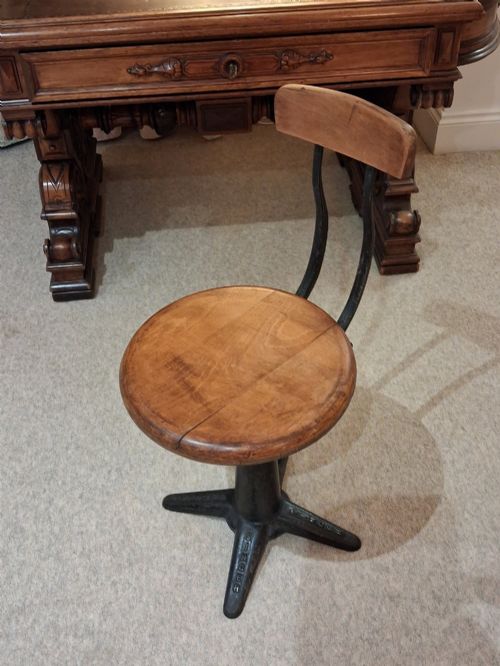
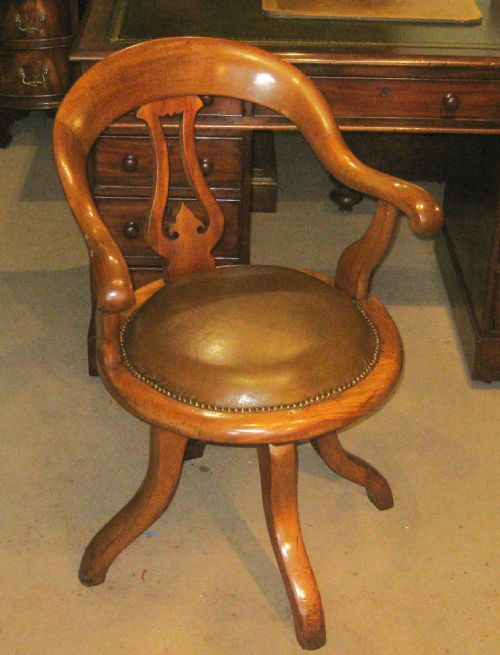
Buyers most frequently encounter revolving desk chairs from the Victorian and Edwardian eras alongside industrial machinist stools. The selection also includes piano stools and music chairs featuring adjustable heights and swivelling mechanisms.
Materials and construction
Carpenters and makers utilised solid hardwoods including mahogany, oak, walnut, and rosewood for the frames, office chairs, and piano stools. Metal components such as cast iron and brass formed the central revolving spindles, adjustable screws, and support bases.
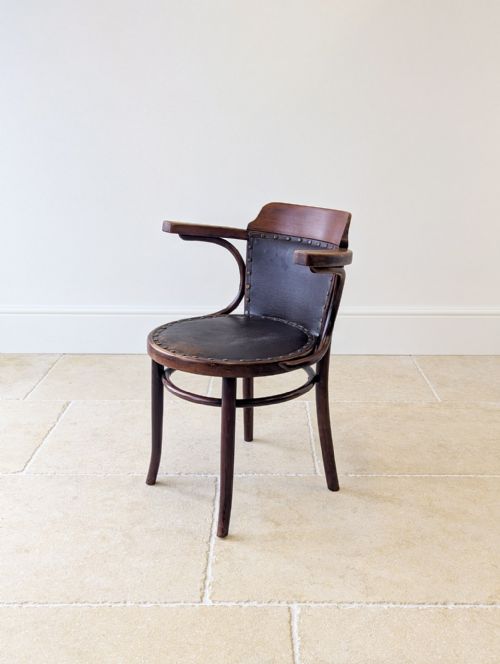
Upholstery materials typically involved leather or green leather seats fitted to revolving desk chairs and armchairs. Bentwood techniques also appeared in specific Victorian and Edwardian examples.
Vintage Swivelling Chair Retail Price Guide 2026
Typical asking prices for vintage swivelling chair among the pieces listed under this phrase on Sellingantiques today, from the lower quarter to the upper quarter. They describe what is for sale here now, not the wider market.
Musicians relied on revolving harpist chairs to spin freely during complex orchestral movements.
Evaluating construction and finish
The sophistication of the swivel and tilt mechanism dictates the mechanical performance of each chair. Solid timber frames joined with traditional methods hold greater structural integrity than lesser assembled joints.
The selection of timber grain, such as golden mahogany or figured walnut, distinguishes standard office models from finer library and desk seating.
Gillows·P and O·Evertaut·Thonet·Singer
The Vintage Swivelling Chair Glossary
- Revolving
- Describing a seat fitted with a spindle mechanism that allows full rotation. This function appears on office chairs and piano stools.
- Swivel and tilt
- A mechanical function allowing the upper seat portion to rotate and tilt backward on a spring or pivot. This feature is common in Edwardian desk chairs.
- Bentwood
- Wood steamed and bent into curved structural shapes. This technique appears in Victorian and Edwardian seating.
- Rise and fall
- An adjustable height mechanism operated by a screw thread or winding handle. This adjustment is standard on piano stools and music chairs.
- Machinist stool
- An industrial seating form constructed with a cast iron base and a wooden top. These pieces date from the early twentieth century.
Vintage Swivelling Chair: Frequently Asked Questions
How do I identify a vintage swivelling chair?
Examine the under-seat mechanism for cast iron spindles, threaded height adjusters, and timber construction methods typical of the nineteenth and early twentieth centuries.
Check for period specific wood choices like mahogany, walnut, and oak alongside traditional leather upholstery.
Were these chairs used only for desks?
While many examples served as office and desk chairs, the category includes piano stools, music chairs, and industrial machinist seating.
Music chairs often featured specialised revolving mechanisms for harpists and cellists.
How do I care for the leather seat?
Clean leather surfaces gently with a damp cloth and apply a neutral leather conditioner to maintain suppleness over time.
Avoid placing the chair near direct heat sources that can dry out the original hide.
How do the swivel mechanisms operate?
Most office chairs utilise a central iron spindle that permits rotation, sometimes combined with a tilt mechanism.
Piano stools typically rely on a central wooden or metal screw thread that raises and lowers the seat when turned.