





Vintage Swedish Side Table
A vintage swedish side table brings practical surface space and restrained Scandinavian character to a room through painted pine and native birch.
Vintage Swedish Side Table
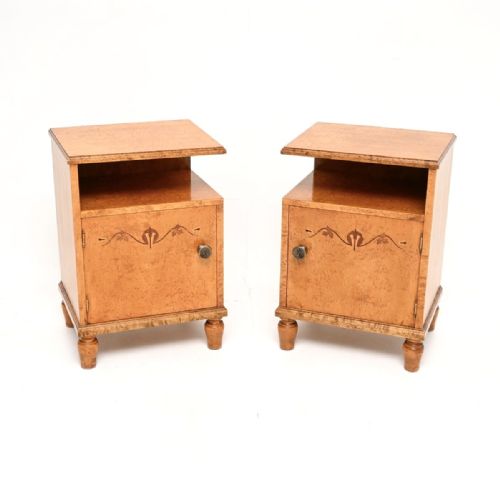
A vintage swedish side table encompasses practical furniture forms including lamp tables, occasional tables, and demi-lune console tables spanning the eighteenth century through the early twentieth century. Buyers seeking this phrase encounter pieces shaped by Scandinavian country traditions, Gustavian restraint, and later Art Deco lines.
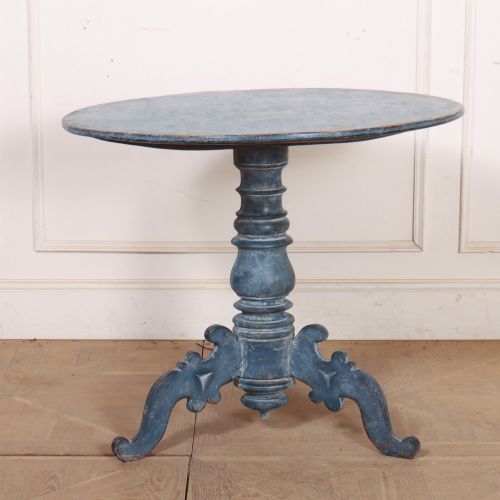
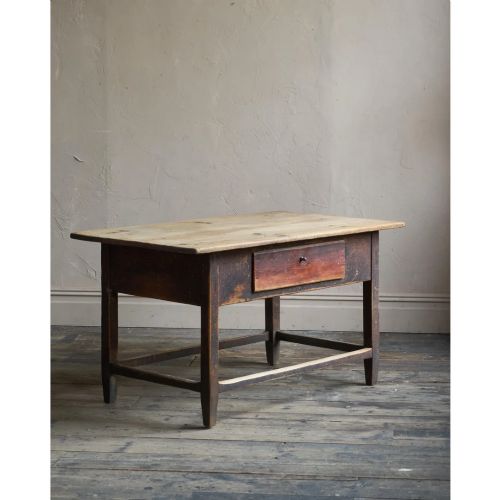
The version most frequently met on this page is the painted pine side table from the nineteenth century, often finished with box stretchers or ragwork surfaces. These functional pieces range from simple kitchen and bakers tables to compact bedside furniture.
Materials and construction
Makers utilised native softwoods and hardwoods such as pine, birch, elm, and alder root, frequently applying distinctive paint finishes like Falu red or original decorative layers directly to the timber. Construction methods prioritize straightforward utility, employing box stretchers for stability on occasional and console tables.
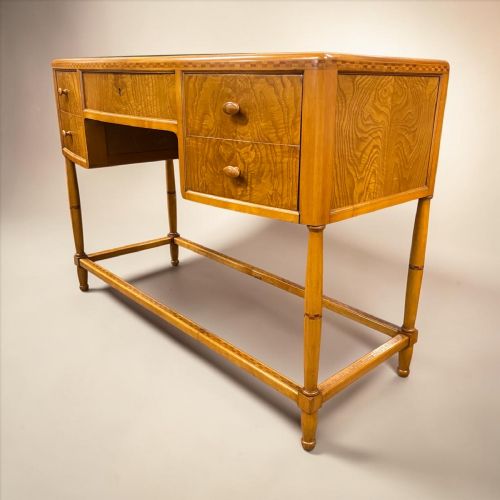
Higher-status pieces incorporate figured veneers including satin birch, karelian birch, and burr birch, alongside mahogany, reflecting the clean geometric priorities of the Art Deco period or the refined curves of Rococo revival pieces.
Distinctions in quality
Quality rests upon the preservation of original surface treatments and the choice of timber. Pieces retaining untouched Falu paint or historic ragwork finishes stand apart from later repainted surfaces.
The selection of materials marks further division, moving from utilitarian rustic pine to finely figured karelian birch or satin birch veneers shaped into geometric Art Deco forms.
The Vintage Swedish Side Table Glossary
- Demi-lune
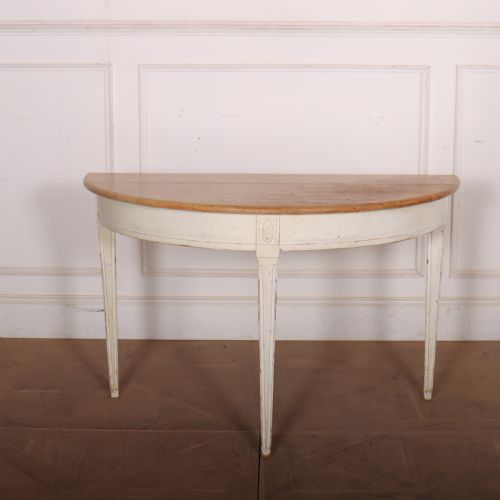
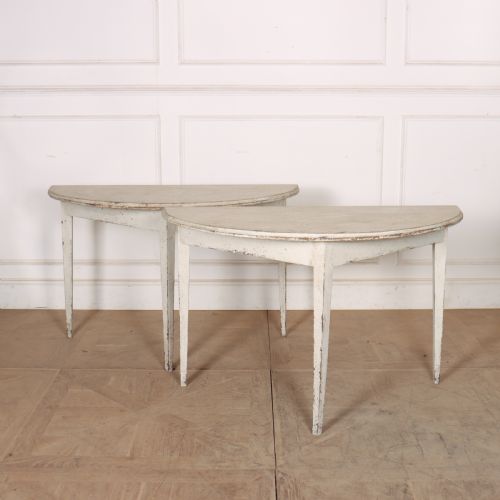
- A half-moon shaped table designed to stand flat against a wall. These console tables appear frequently in pairs.
- Falu paint
- A traditional deep red paint originating from copper mines in Falun, Sweden, used widely on rustic furniture and buildings. It provides a matte, protective finish.
- Ragwork
- A decorative paint technique applied with rags to create mottled or textured patterns on furniture surfaces. This finish appears on nineteenth-century folding tables.
- Box stretcher
- An interconnecting framework of wooden rails near the base of a table that joins all four legs for added rigidity. They are common on functional nineteenth-century forms.
Vintage Swedish Side Table: Frequently Asked Questions
How do I use a vintage swedish side table?
These tables adapt easily to various rooms as lamp tables, bedside surfaces, or small desks. Their modest footprints suit tight corners and hallways.
Larger demi-lune and console versions work well against living room walls to hold lamps or display objects, while kitchen and bakers tables provide extra workspace.
Are these tables painted or polished wood?
Both finishes appear frequently across the selection. Painted pine and softwood predominate in rustic and country categories.
Birch, elm, and mahogany versions showcase the natural grain through polished or clear finishes, particularly in Art Deco examples.
How do I identify a nineteenth-century piece?
Nineteenth-century pieces show construction details typical of hand-tool work and period timber usage. Pine and birch form the primary structure for these utilitarian and decorative items.
Design traits range from traditional rustic paint to Rococo revival curves and simpler box stretcher frames.