


Vintage Suzani Throw
These vintage suzani throw textiles bring vibrant Central Asian needlework into modern rooms as striking bed covers and wall hangings.
Vintage Suzani Throw
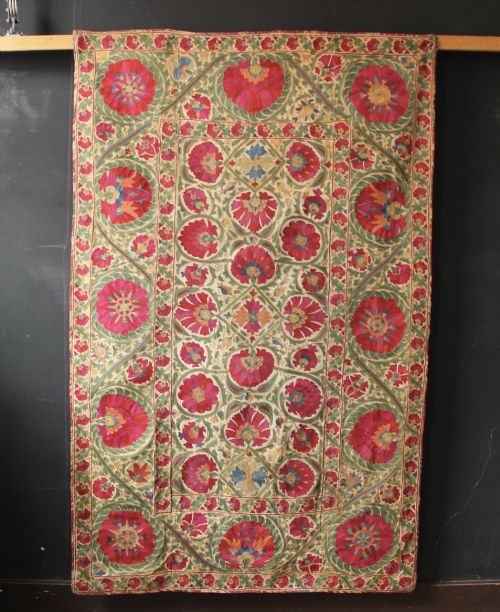
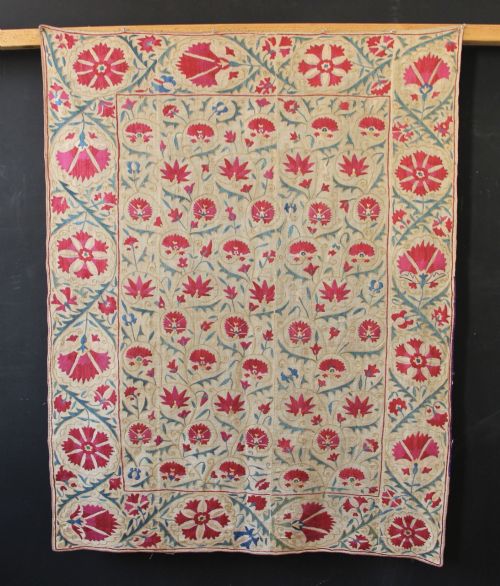
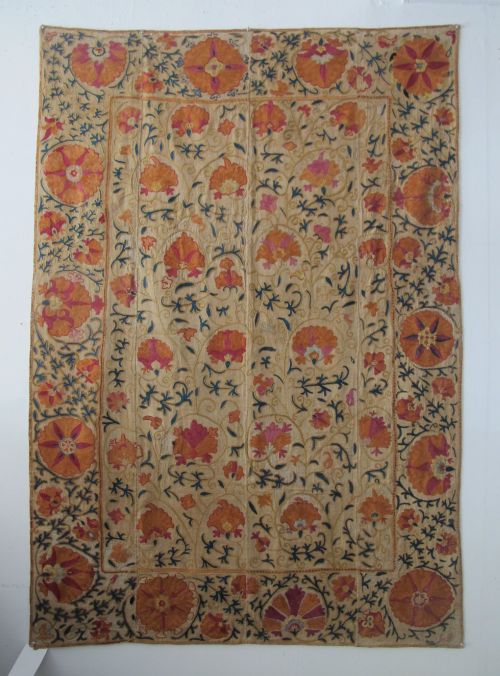
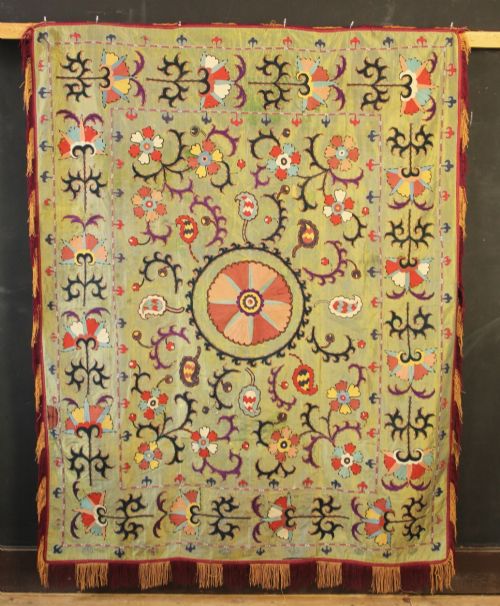
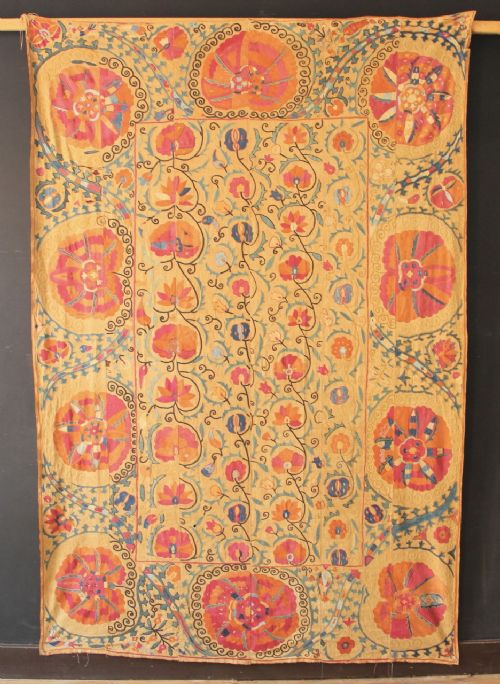
A vintage suzani throw is a traditional embroidered textile originating from Central Asia, including regions such as Uzbekistan, Bokhara, Tashkent, and Samarkand. These pieces function primarily as large decorative covers, bed spreads, and wall hangings.
The selections encountered here span periods from the mid-nineteenth century through to the early twentieth century. Makers worked within distinct regional traditions, producing forms ranging from full work covers to smaller nim suzani panels.
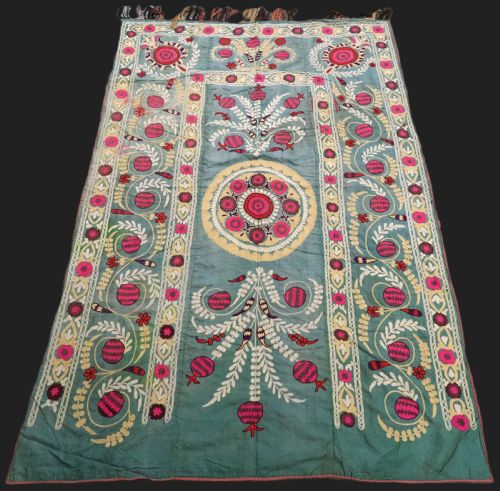
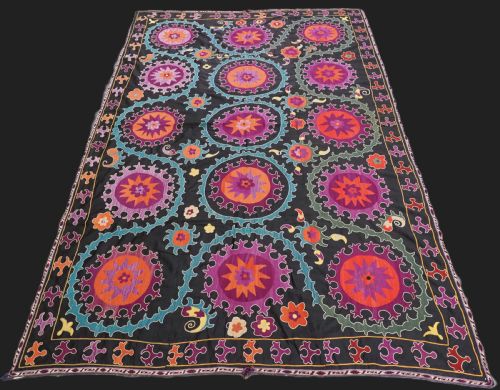
Designs incorporate bold floral patterns, central medallions, and traditional folk art motifs. Buyers find examples worked on various ground fabrics including cotton, silk, and wool.
Materials and construction
Artisans executed these embroideries predominantly using fine silk thread applied to a foundation ground of woven cotton, wool, velvet, or adras, which is a traditional silk and cotton mixture.
Needlework techniques involve intensive hand stitching that covers the ground fabric either partially or completely, creating dense textures and rich colour contrasts across the surface of each textile panel.
Factors of quality
Quality rests upon the density of the silk embroidery and the complexity of the regional design, with fully embroidered palak variants requiring substantially more labour than open floral layouts.
The visual impact depends significantly on the vibrancy of the dye colours and the preservation of the ground fabric, whether cotton, wool, or silk, over the decades.
The Vintage Suzani Throw Glossary
- Suzani
- A traditional embroidered textile from Central Asia, historically created as part of a bride's dowry. These pieces were utilised as wall hangings, bed covers, and decorative throws.
- Nim suzani
- A smaller version of the standard suzani textile, often measuring around half the scale. These compact panels offer versatility for interior display.
- Palak
- A specific type of suzani characterised by fully embroidered surfaces dominated by large central star or medallion motifs. The design covers the entire ground fabric.
- Adras
- A traditional indigenous fabric woven from a combination of silk and cotton yarns. It serves as a sturdy yet lustrous ground for silk embroidery.
- Bokhara
- A historic Central Asian city and major centre for textile production. Pieces associated with this region display distinct regional palette choices and precise needlework.
Vintage Suzani Throw: Frequently Asked Questions
How were suzanis originally used?
Historic Central Asian communities created these textiles primarily as ceremonial household furnishings for weddings and domestic life. Families used them as wall hangings, bed covers, and festive throws.
Over time, these embroidered cloths became central decorative elements within traditional homes, signifying status and artistic skill.
How do I care for a textile throw?
Protect antique silk embroidery from direct sunlight to prevent natural dye fading. Keep the fabric away from damp environments and handle the panels gently.
Professional textile conservation cleaning is recommended if the piece requires attention. Regular light vacuuming through a mesh screen helps remove dust.
What is a nim suzani?
A nim suzani is a smaller variant of the full-scale Central Asian embroidered panel. The Persian prefix nim translates to half.
These pieces provide greater flexibility for interior placement in modern homes compared to larger bed covers.
How do I identify regional suzani types?
Regional attribution relies on examining the embroidery style, motif structures, and ground materials. Tashkent pieces often feature dense palak designs, whilst Bokhara and Samarkand examples display distinctive medallion arrangements.
Lakai tribal pieces frequently employ robust wool grounds and playful geometric interpretations within the floral vocabulary.