



Vintage Sutherland Table
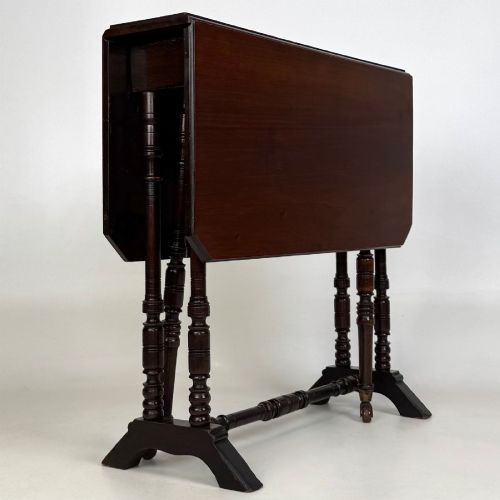
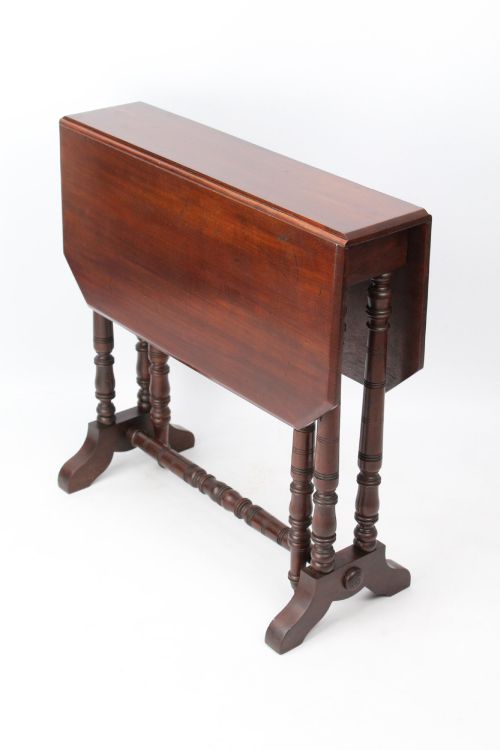
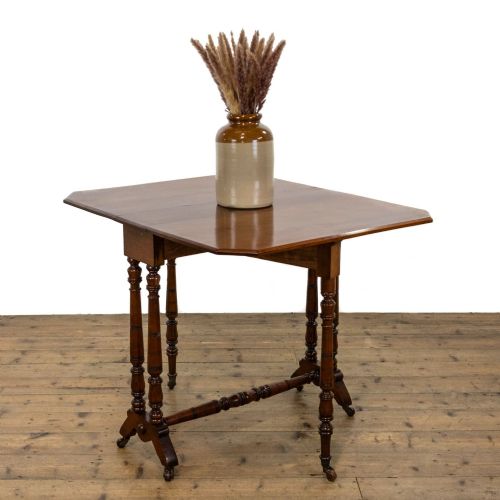
A vintage sutherland table provides clever folding utility through narrow drop leaves held by swinging gate legs, making it a practical antique for compact spaces.

Vintage Sutherland Table
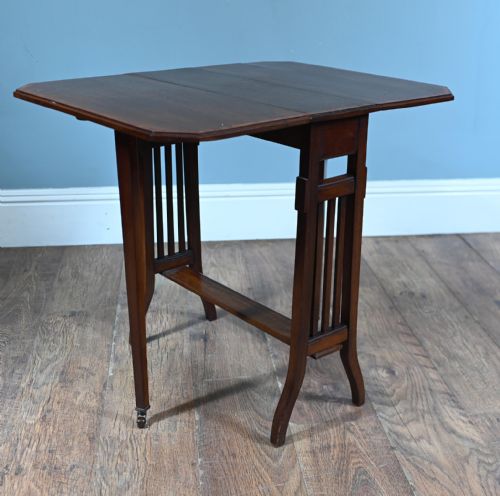
A vintage sutherland table is a specific form of drop leaf table distinguished by exceptionally narrow flaps supported by swinging gate legs, allowing the whole piece to fold into a remarkably slim profile against a wall. When searching for a vintage sutherland table, buyers encounter examples primarily spanning the Victorian and Edwardian periods, alongside pieces from the early twentieth century.
Originating as versatile pieces for nineteenth-century drawing rooms, these folding tables suit modern interiors just as well when placed beside a sofa or utilised as a lamp table. Their defining architectural feature remains the hinged framework that drops both leaves almost vertically, contrasting sharply with standard drop leaf dining tables that require bulkier undercarriages.
Materials and construction
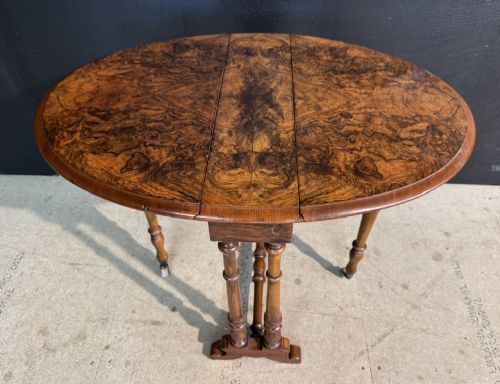
Cabinetmakers constructed these tables using dense hardwoods such as mahogany and walnut, frequently selecting burr veneers for the top leaves to showcase intricate natural grain patterns. Satinwood and boxwood provided contrasting stringing and marquetry details, adding linear precision to the curved edges of Edwardian and Victorian designs.
The defining structural mechanism relies on pivoted gate legs of brass and timber working in unison with fine knuckle joints to support the drop flaps. This clever engineering allows the narrow central framework to bear the weight of the extended leaves securely while folding completely flat when not in use.
A tiny folding table can vanish almost entirely against a living room wall, waiting patiently like a polite butler for tea time.
Judging quality in folding tables
Quality in these folding tables rests largely on the crispness of the timber selection and the precision of the joinery within the gate leg mechanism. Superior examples utilise figured burr walnut or finely polished mahogany with meticulous satinwood inlay that remains flush with the surrounding surface.
The stability of the table when fully extended indicates the integrity of the original hinges and pivoting wooden pivots. Pieces exhibiting smooth action in the drop leaves and solid brass fittings demonstrate superior workshop execution compared to stiffer, heavier alternatives.

Maple & Co·Morison of Edinburgh
The Vintage Sutherland Table Glossary
- Sutherland table
- A narrow drop leaf table featuring folding gate legs that support very slim hinged flaps on either side. This nineteenth-century invention maximises surface utility while occupying minimal floor space when closed.
- Gate leg
- A hinged table leg that swings outward on a pivot to support an open drop leaf. It provides crucial structural stability to tables with folding sections.
- Burr walnut
- Timber taken from the gnarled growth of a walnut tree, prized for its swirling, highly decorative grain patterns. Cabinetmakers applied it as a veneer to tabletop surfaces for visual impact.
- Satinwood inlay
- Decorative woodwork where contrasting light-coloured satinwood is embedded into recesses of a darker primary timber. This technique creates geometric borders and delicate floral motifs.
- Drop leaf
- A hinged tabletop panel that can be lowered when not in use to reduce the footprint of the furniture. These flaps are supported by swing-out legs or brackets.
Vintage Sutherland Table: Frequently Asked Questions
How do you fold a sutherland table?
To fold the table, lift each drop leaf slightly to relieve pressure on the supporting gate legs, then swing the wooden gates inward toward the narrow central frame. Once the legs are tucked flat, lower the leaves so they hang vertically at the sides.
This simple motion transforms a functional tea or coffee table into a slender screen that slides easily against a wall or into a hallway.
Where should I place a vintage sutherland table?
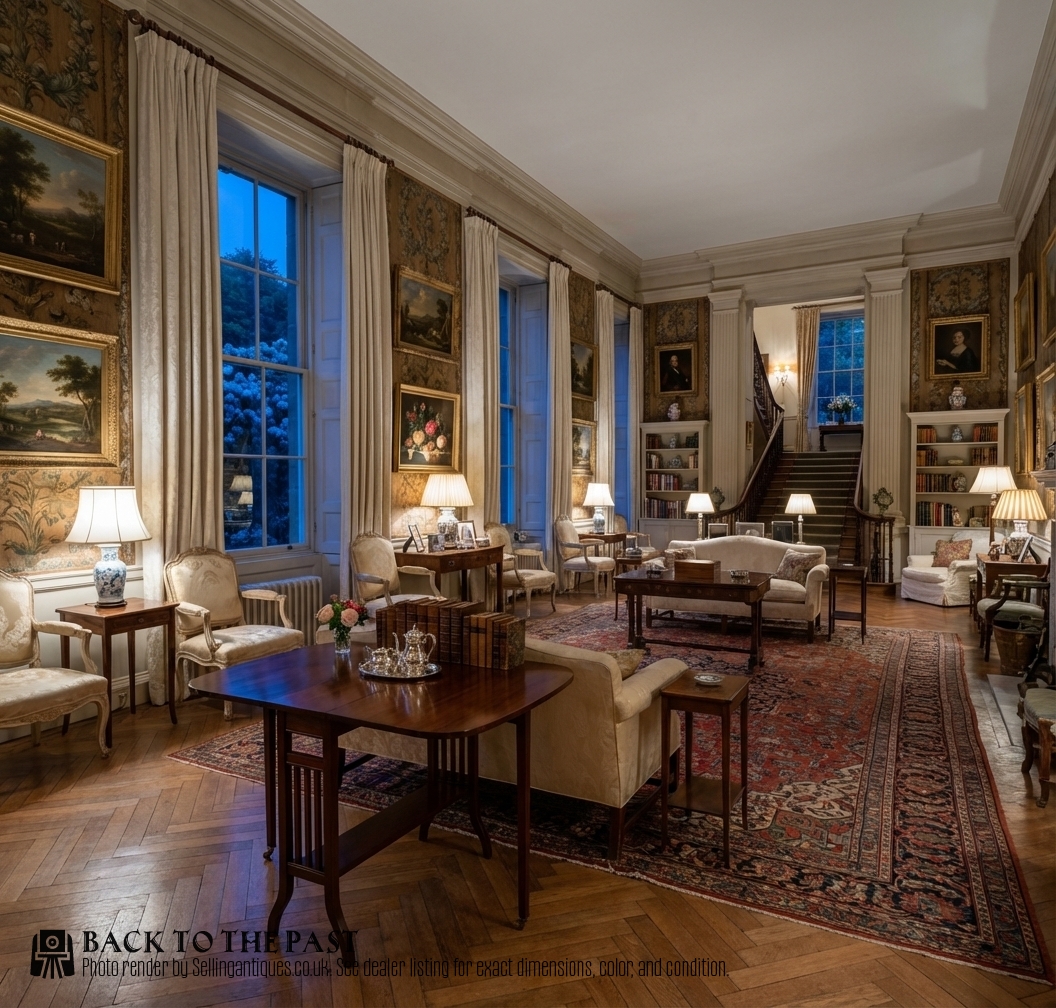
These versatile tables fit exceptionally well behind sofas, beside armchairs, or in narrow hallways where a full-sized occasional table would obstruct movement. Keeping one leaf down against a wall provides a convenient surface for a lamp or books without blocking the room.
When guests arrive, lifting both flaps creates an instant tea table or display surface that expands the usable area in seconds.
How do I distinguish Victorian from Edwardian pieces?
Victorian examples generally feature darker, heavier mahogany or richly figured burr walnut with deeper tones and robust turnings on the legs. Edwardian pieces often display lighter satinwood banding, delicate stringing, and tapered legs influenced by the Sheraton revival style.
Examining the overall lightness of the frame and the type of decorative veneer helps pinpoint whether a piece belongs to the late nineteenth or early twentieth century.
What is a baby sutherland table?
A baby sutherland table is a significantly scaled-down version of the standard design, built specifically for intimate spaces as an occasional lamp or coffee table. These miniature pieces retain the full working mechanism of folding gate legs and drop leaves despite their diminutive proportions.
Collectors prize them for their charming proportions and the high level of cabinetmaking skill required to construct miniature folding joints.