
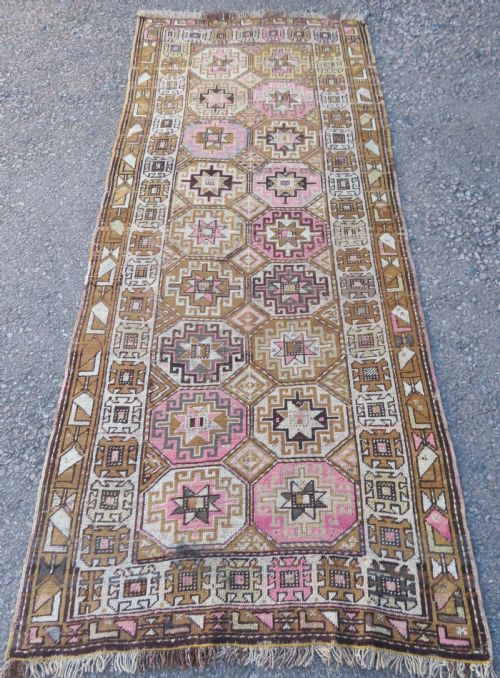


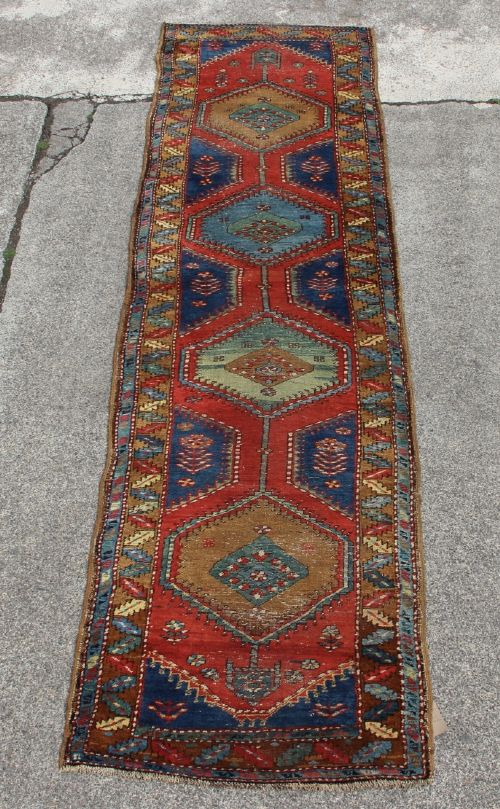

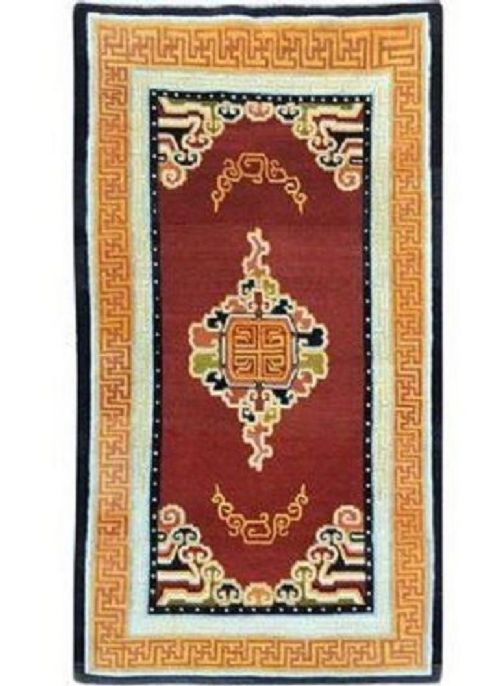
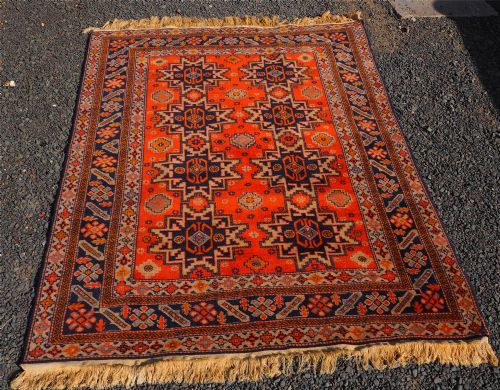
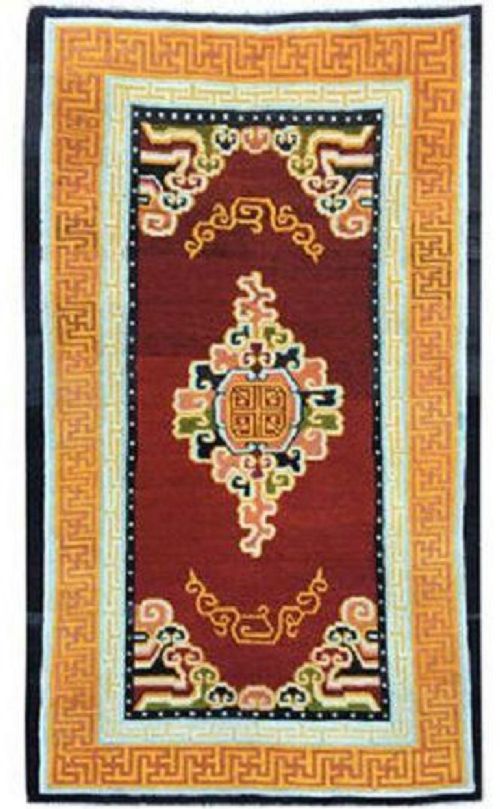
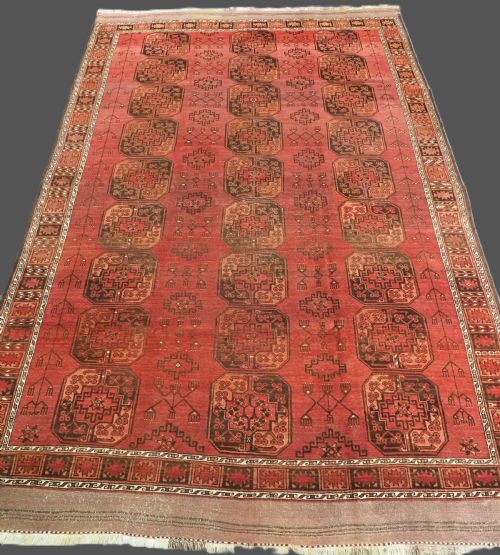
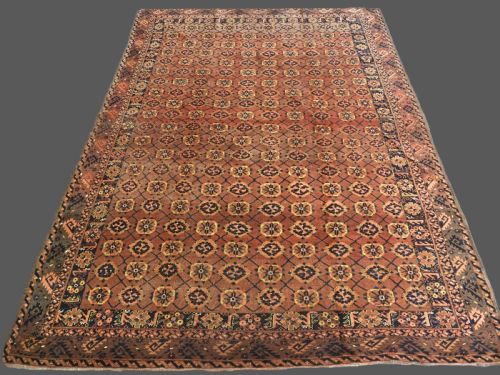
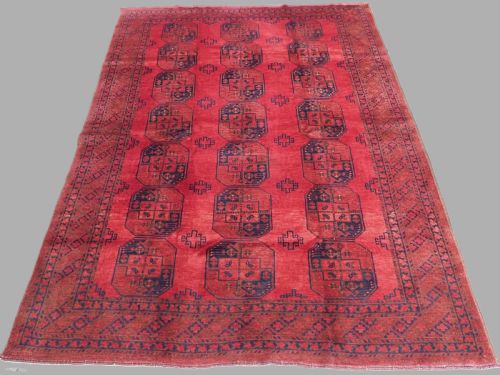

Vintage Style Oriental Rug
These vintage style oriental rug pieces bring rich heritage patterns and enduring floor coverings into modern rooms.
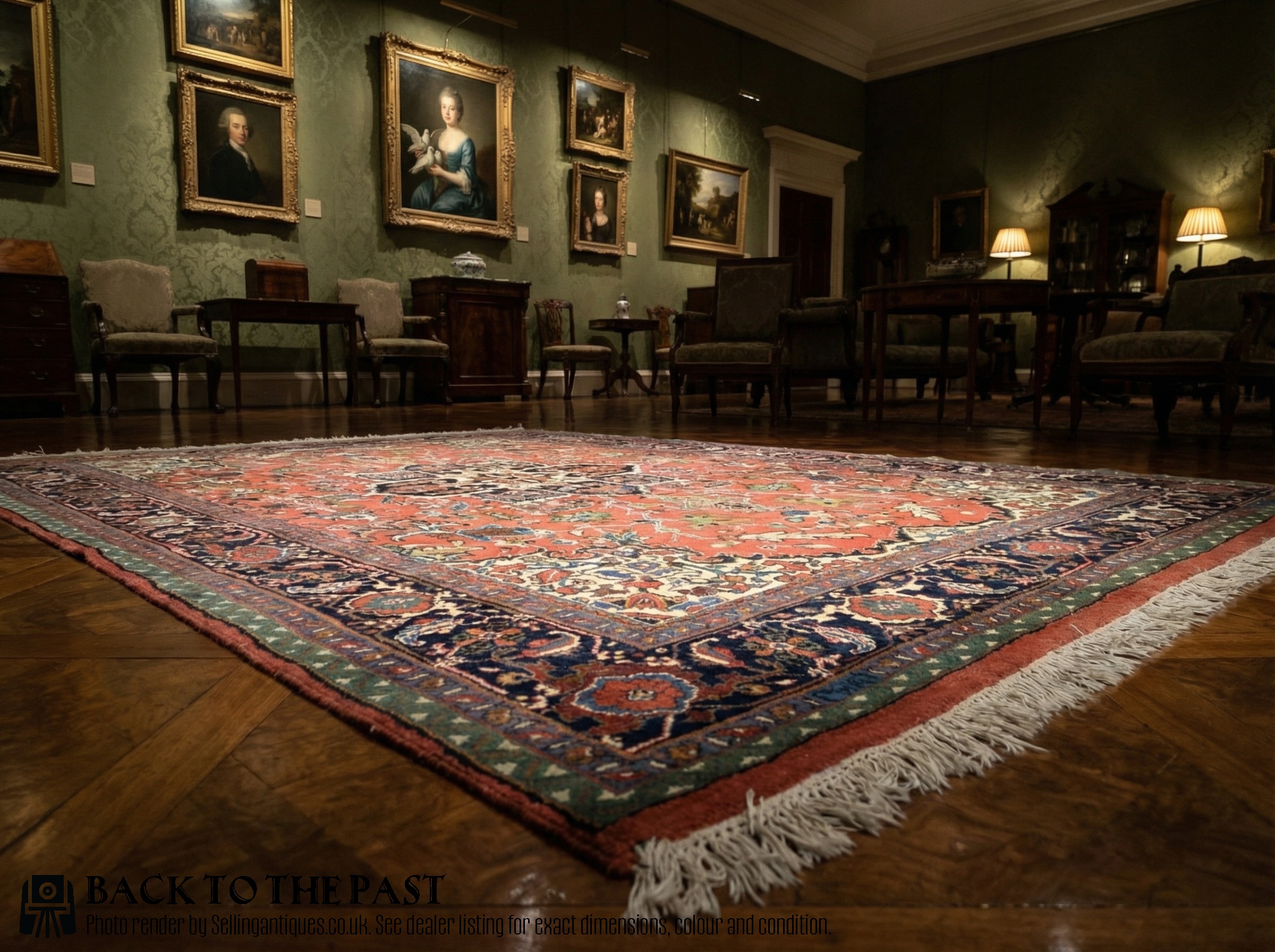
Vintage Style Oriental Rug
A vintage style oriental rug selection centres on hand-knotted carpets and runners originating from Persian, Caucasian, Anatolian, and Turkmen traditions. Buyers seeking this aesthetic encounter room-sized carpets, long runners, and compact area rugs dating from the late nineteenth century through the mid-twentieth century.
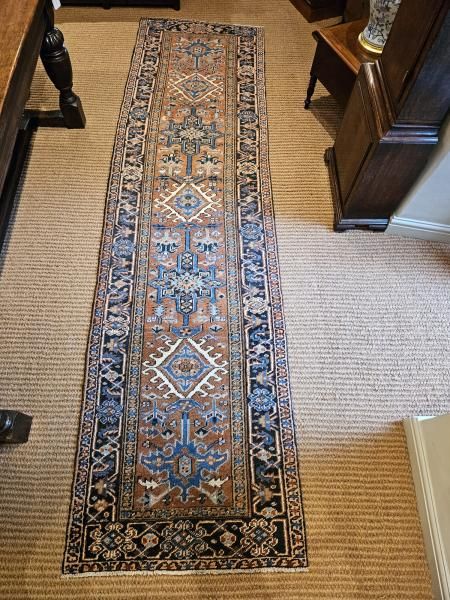
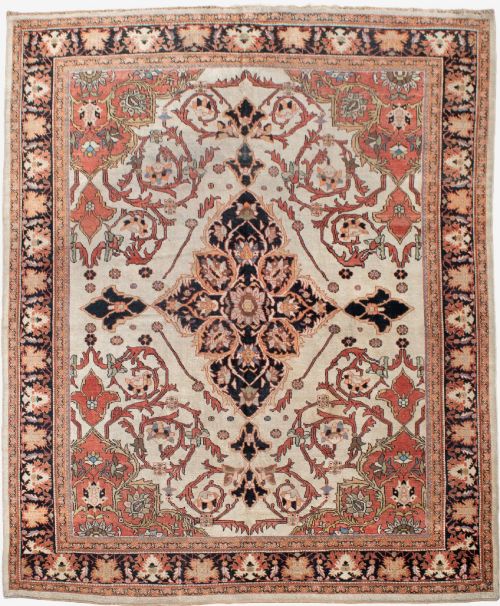
The inventory on this page draws heavily from distinct regional styles such as Heriz, Kazak, Oushak, and Shirvan. These pieces reflect traditional village and tribal weaving methods adapted to varied room dimensions and floor spaces.
How They Were Made
Weavers constructed these carpets predominantly using natural wool, cotton foundations, and occasional silk highlights. Hand-spun wool yarns provide durable pile surfaces that absorb dyes deeply and age with characteristic patina.
Traditional workshops and village households utilised hand-knotting techniques on upright looms. Artisans employed complex geometric, floral, and medallion designs passed down through generations.
Listings span from the 1880s to the 1940s, featuring wool, cotton, and silk materials.
What Varies in Quality
Knot density and structural tightness dictate the crispness of the woven motif and the overall longevity of the carpet. Finer execution in regional workshops yields sharper geometric lines and more resilient foundations.
The selection and saturation of natural or early synthetic dyes determine the depth of the colour palette. Consistent yarn preparation ensures harmonious fading across the wool pile over decades of wear.
The Vintage Style Oriental Rug Glossary
- Pile
- The vertical loop or cut yarn surface of a carpet that forms the visible and tactile layer. This textile face absorbs foot traffic and displays the woven design.
- Runner
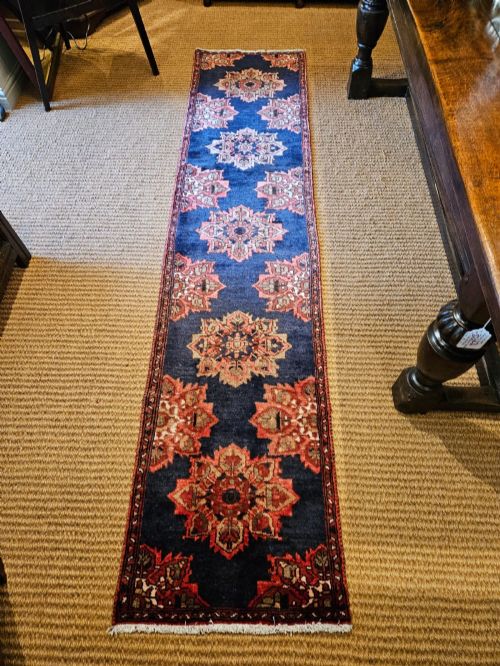
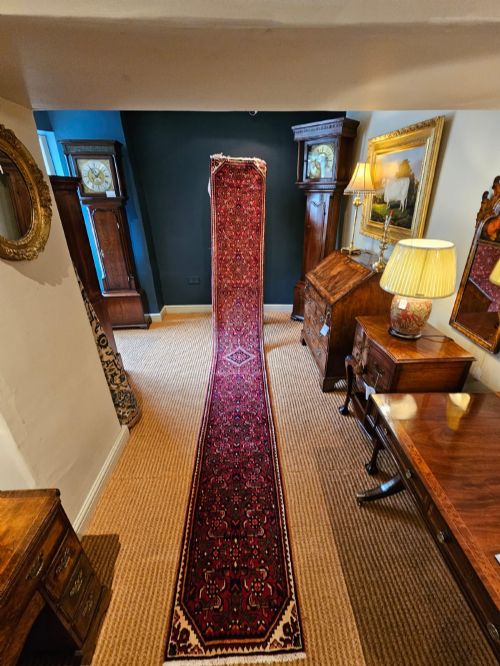
- A long, narrow carpet format designed primarily for hallways, staircases, and corridors. These rectangular pieces balance narrow floor spans.
- Medallion
- A central decorative motif placed symmetrically in the middle field of a carpet. This ornamental centrepiece often anchors the surrounding geometric or floral layout.
- Warp
- The vertical foundation threads stretched tightly on the loom before knotting begins. Weft threads intersect these structural strands to secure the knots in place.
- Weft
- The horizontal threads passed across the warp strands between rows of knots to tighten the textile structure. This technical element stabilizes the carpet width.
Vintage Style Oriental Rug: Frequently Asked Questions
How do I clean an old wool rug?
Gentle surface vacuuming without a beater bar removes loose dirt from the wool pile safely.
Professional specialist washing remains essential for deep cleaning to protect natural dyes and foundations.
Where should I place a long runner?
Narrow hallways and corridors provide ideal placements to protect wooden flooring while adding colour.
Kitchens and entryways also accommodate these elongated formats effectively under moderate foot traffic.
What defines a Heriz carpet?
Heriz carpets originate from north-west Persia and feature bold geometric medallion designs.
Sturdy cotton foundations and robust wool construction give these room-sized pieces exceptional durability.
How do I identify tribal designs?
Tribal rugs display repeating geometric patterns, hooked motifs, and stylized animal forms.
Weavers working in village or nomadic settings created these symbolic layouts from memory rather than exact cartoons.