






Vintage Stream Landscape Painting
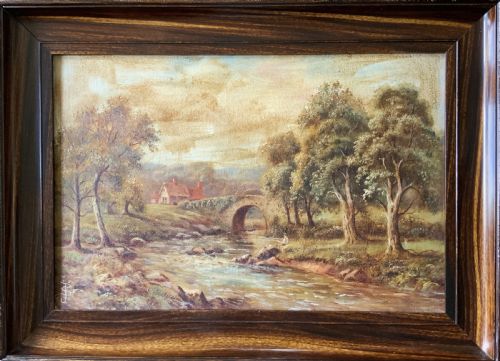
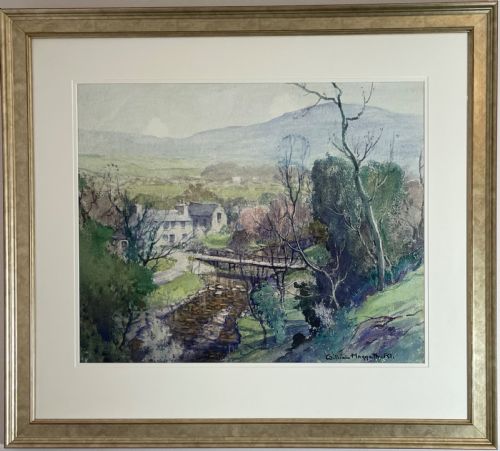
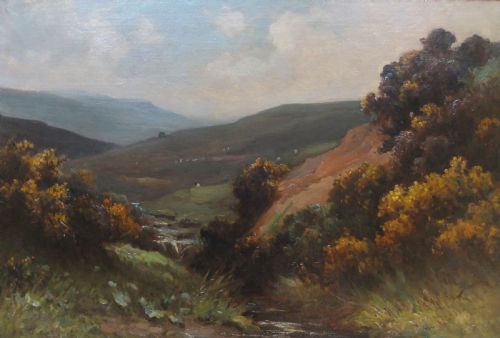
A vintage stream landscape painting captures rural waterways and country rivers through the brush of past artists.
Vintage Stream Landscape Painting
A vintage stream landscape painting depicts pastoral scenes, woodland waterways, and rural rivers originating across the nineteenth and twentieth centuries. These artworks emerge from distinct movements including British Impressionism, Victorian Pastoral, and Early 20th Century Fine Art.
Buyers commonly encounter oil on canvas, oil on board, and watercolour paintings on paper within this selection. The depicted subjects frequently incorporate rural cottages, moorland streams, cattle, and woodland areas beside flowing water.
The periods represented span from the Edwardian era and Victorian times through to the mid-twentieth century and the post-war years. Works range from detailed nineteenth-century realism to expressive early twentieth-century interpretations of English and Irish countryside.
Materials and construction
Artists painted primarily with oil paint or watercolour pigment upon prepared canvas, wooden board, or heavy paper supports. Canvases are frequently stretched over wooden frames, sometimes retaining gesso preparation layers beneath the pigment.
Watercolour works utilise pigment applied to paper surfaces, capturing light across rural streams and mountain waters. Oil paintings employ layered brushwork to build texture across pastoral landscapes, woodland scenes, and riverbanks.
Materials across these listings include canvas, paper, wood, oil paint, gesso, and watercolour pigment.
Assessing quality in landscape art
Quality rests upon the artist's handling of light, atmosphere, and the fluid movement of water within the composition. Masterful brushwork defines the distinction between standard topographical recording and evocative landscape painting.
The cohesion of the palette and the subtlety of tonal transitions across the stream banks and sky separate superior works from simpler decorative pieces. Provenance and secure attribution to recorded artists elevate the standing of an individual painting.
Sydney Yates Johnson·Ernest Higgins Rigg·Henry John Yeend King·William Hoggatt·David Watts·Sidney James Beer·Harry Sylvester Stannard·John Hobson Nicholson·Alfred Banner·Noel Harry Leaver·William Sidney Cooper·Robert Lesley Howey·Owen Bowen·William Greaves·Lewis Creighton·Brian Richardson
The Vintage Stream Landscape Painting Glossary
- British Impressionism
- A painting style focusing on light and spontaneous brushwork that developed in Britain during the late nineteenth and early twentieth centuries. Artists captured everyday rural views and natural waterways with visible, lively brush strokes.
- Gesso
- A traditional primer mixture of binder mixed with chalk or gypsum applied to canvas or wood panels. This preparation creates a smooth, stable surface for oil painting.
- Pastoral
- An artistic genre depicting rural life, shepherds, cattle, and tranquil country scenery in an idealized manner. These scenes emphasise the peaceful harmony of humanity and the natural countryside.
- Watercolour
- A painting method where water-soluble pigments are suspended in a water-based solution on paper. This technique allows for transparent washes of colour that evoke atmospheric light upon water.
Vintage Stream Landscape Painting: Frequently Asked Questions
What periods do these stream paintings cover?
The available artworks span from the nineteenth century through the Edwardian period and into the mid-twentieth century. This timeline covers diverse aesthetic movements from Victorian realism to post-war British painting.
Each era brings distinct stylistic approaches to depicting rural rivers, woodland streams, and pastoral countryside settings.
What mediums were used for these landscapes?
Artists utilised oil paint on canvas or wooden board alongside watercolour pigment on paper. These materials reflect traditional studio practices of the nineteenth and twentieth centuries.
Canvases provide rich textured surfaces for oils, while paper supports delicate watercolour washes for river scenes.
How should I hang a vintage stream painting?
Display paintings away from direct sunlight and excessive humidity to protect canvas, paper, and pigments. Adequate wall spacing helps preserve the integrity of both oil works and watercolours.
Ensure stable mounting suitable for the weight of framed canvases or glazed watercolours.
Are these paintings signed by the artists?
Many examples feature artist signatures or inscriptions detailing specific locations such as Yorkshire, the Lake District, or the Isle of Man. Attribution is established through visible signatures and historical records.
Signed works connect the buyer directly to the hand of the painter and the regional landscape depicted.