

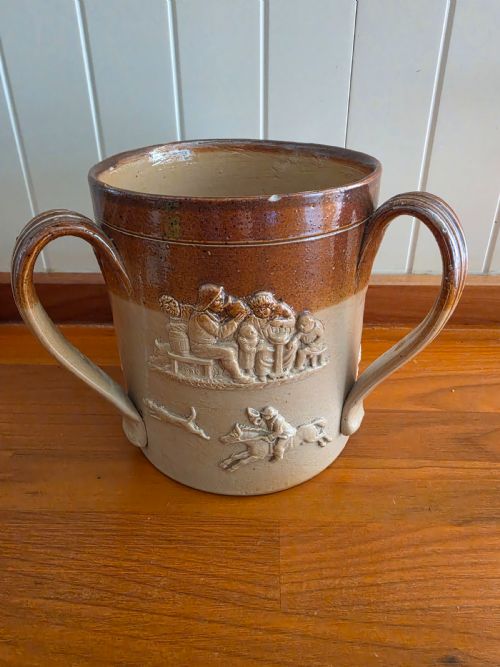


Vintage Stoneware Vessel
A vintage stoneware vessel brings dense weight and earthy character to a room, holding centuries of utilitarian and decorative craft.
Vintage Stoneware Vessel
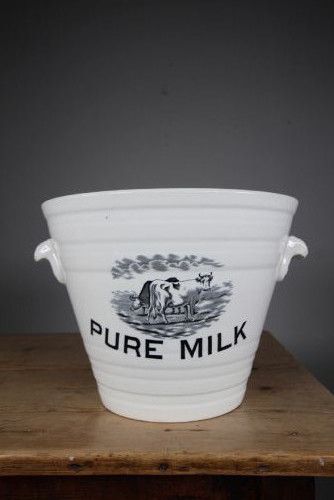
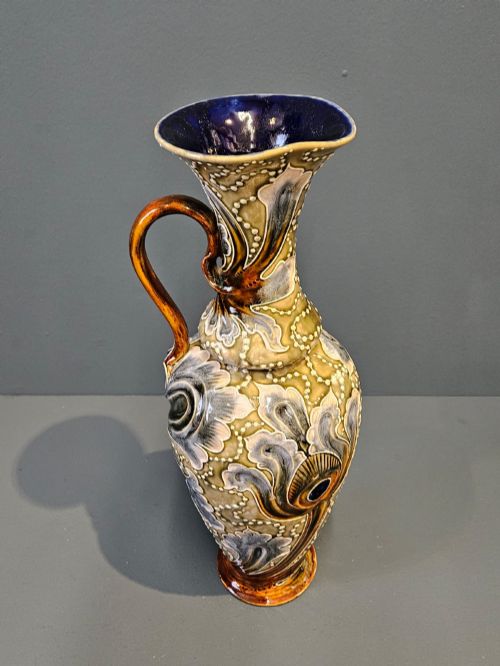
A vintage stoneware vessel encompasses utilitarian jars, heavy dairy ware, tavern jugs, and decorative vases originating across the nineteenth and early twentieth centuries. These pieces reflect enduring domestic and industrial functions, ranging from German salt-glazed bottles and English dairy pails to elaborate Victorian art pottery.
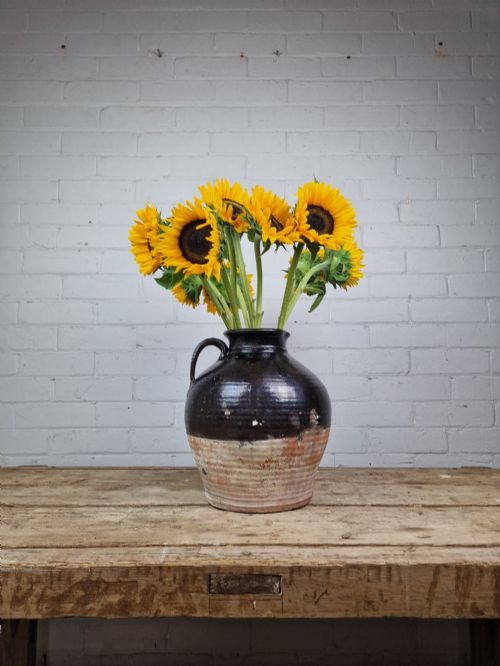
The selection on this page leans heavily toward robust Victorian and Edwardian examples, alongside French confit jars and early twentieth-century art pottery. Buyers encounter forms designed originally for storage, fermentation, and tavern service alongside pieces intended purely for display.
Origins stretch from English potteries and French provincial workshops to German kilns, showcasing the broad geographic spread of traditional ceramic production. Each item carries the marks of its specific regional utility or decorative movement, from Art Nouveau floral motifs to austere industrial salt glazes.
How they were made
Potters shaped dense clay bodies on the wheel or in moulds before firing them at high temperatures to achieve vitrification. This intense heat fused the material into a non-porous, durable substance capable of holding liquids without significant seepage.
Glazes applied before or during firing ranged from utilitarian salt glazes that produced an orange-peel texture to smooth slip coatings and rich green lead glazes on terracotta. Artisans also utilised applied sprigged decoration, relief moulding, and delicate enamel floral work to enrich the surfaces.
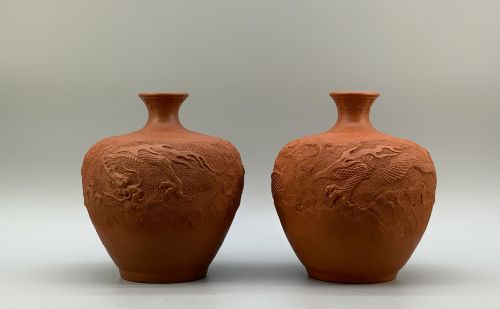
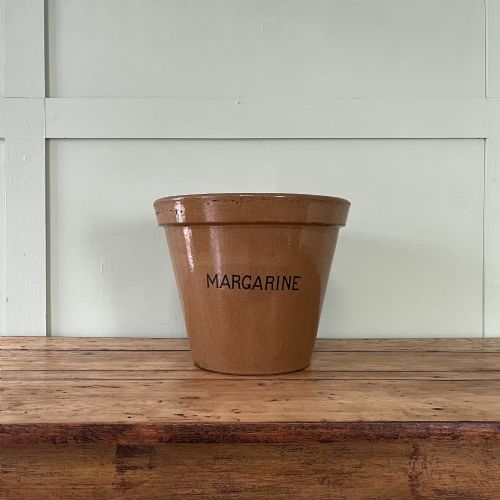
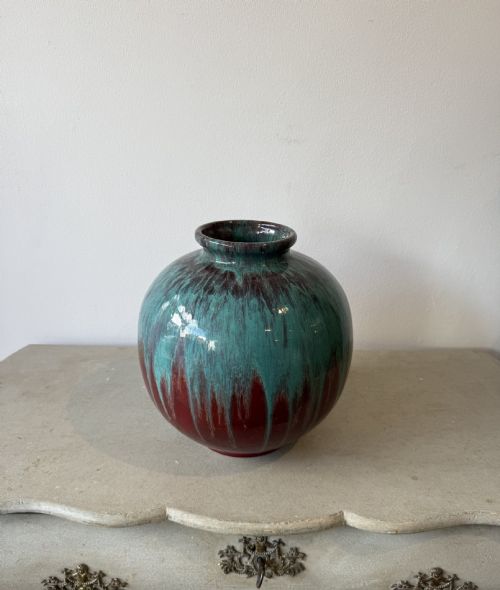
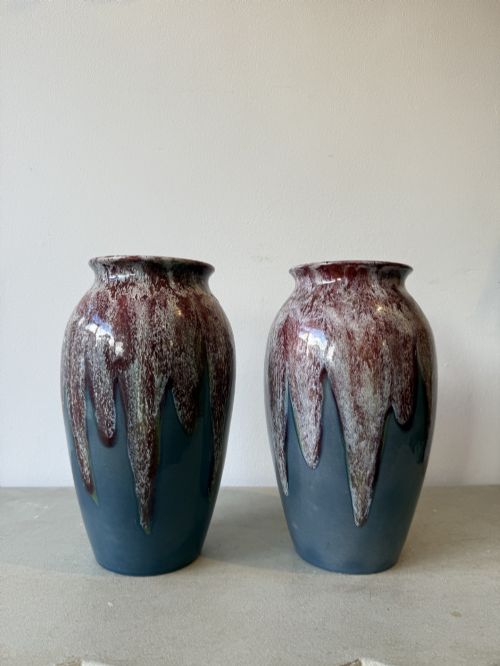
The selection includes utilitarian storage crocks, tavern jugs, and French confit jars alongside decorative Art Nouveau and Art Deco vases.
What varies in quality
Quality rests in the crispness of relief moulding, the evenness of the glaze application, and the overall balance of the thrown form. Superior pieces exhibit confident handling by known potteries, where decorative elements integrate harmoniously with the heavy ceramic body.
The distinction between standard utility ware and exhibition-grade pieces lies in the ambition of the design and the precision of the finishing. Finer examples display meticulous hand-painted enamel work, intricate incised patterns, and well-preserved surface textures that elevate mundane vessels into works of art.
Royal Doulton·Doulton Lambeth·Charles Meigh
The Vintage Stoneware Vessel Glossary
- Salt glaze
- A finish achieved by throwing common salt into the kiln during high-temperature firing, creating a distinctive textured surface resembling orange peel. This treatment rendered the dense ceramic body completely waterproof.
- Slipware
- Pottery decorated with slip, a liquid mixture of clay and water, trailed or brushed over the darker body before firing. It frequently creates tactile, contrasting linear patterns on utilitarian jugs and dishes.
- Tyg
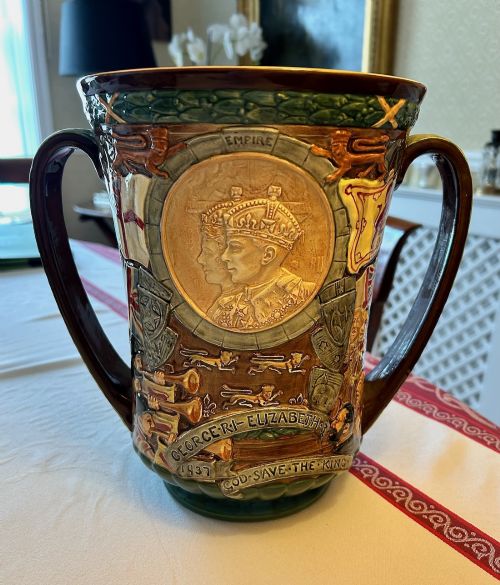
- A large drinking vessel featuring three or more handles, designed for communal passing around a tavern table. They date back centuries and often display robust stoneware or earthenware construction.
- Sprigged decoration
- Moulded clay reliefs applied to the unfired surface of a vessel before glazing and firing. This technique produced sharp, contrasting decorative motifs such as floral garlands or hunting scenes.
- Confit jar
- A French earthenware or terracotta pot traditionally used for preserving meats, usually partially glazed in rich earth tones. Their generous proportions and warm patinas make them popular for modern rustic interiors.
Vintage Stoneware Vessel: Frequently Asked Questions
How do I clean a vintage stoneware vessel safely?
Wash the piece gently in warm water using a mild, non-abrasive soap and a soft cloth. Avoid harsh scrubbing brushes or soaking porous unglazed areas.
Dry the vessel thoroughly with a lint-free towel to prevent moisture retention in older hairline cracks or historical chips.
Can I use these vessels for fresh flowers?
Many glazed interior vessels hold water reliably, but unglazed earthenware and older porous stoneware require caution. Place a small glass or plastic liner inside if you suspect the ceramic might weep moisture.
Check the base for historical hairline fractures before filling any antique vessel with water to protect your surfaces.
How do I distinguish salt glaze from other finishes?
Look closely at the surface texture under a bright light for the characteristic dimpled, orange-peel finish created by vaporised salt during firing. This unique glassy sheen feels slightly pebbled to the touch.
Smooth, glossy surfaces typically indicate dipped mineral glazes or lead coatings rather than traditional industrial salt glazing.
Where were most nineteenth-century stoneware items produced?
Production centred around major industrial pottery districts in Britain, particularly London and the Midlands, alongside established European hubs in France and Germany. Local clay availability dictated regional specialisations.
Large salt-glazed barrels and dairy wares often came from British salt-glaze works, while decorative art pottery emerged from specialised studios.