




Antique Ceramic Barrels
These antique ceramic barrels span biscuit barrels and garden seats from the eighteenth and nineteenth centuries, offering robust utility and decorative charm for the home.
Antique Ceramic Barrels
When you search for antique ceramic barrels, you encounter a diverse selection of vessels shaped for containment, including biscuit barrels, garden seats, and umbrella stands. These objects served functional household roles before transitioning into purely decorative pieces in modern interiors.
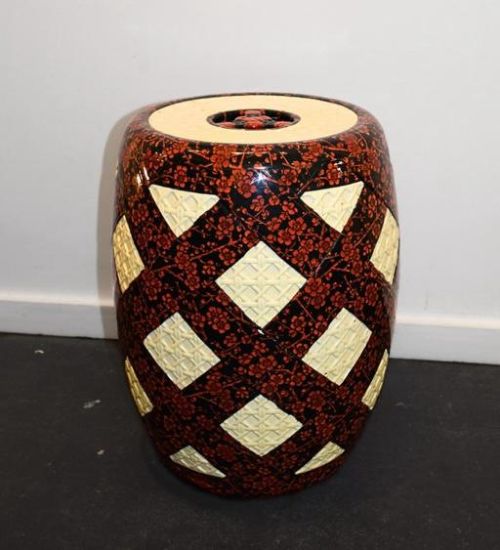
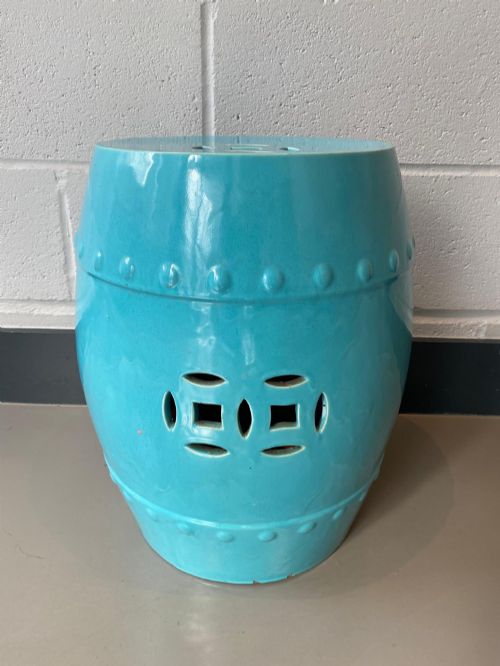
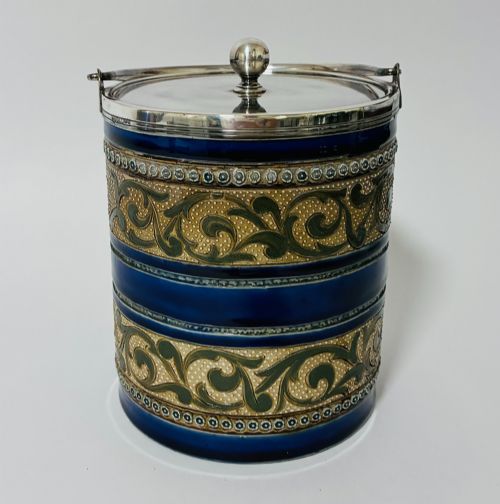
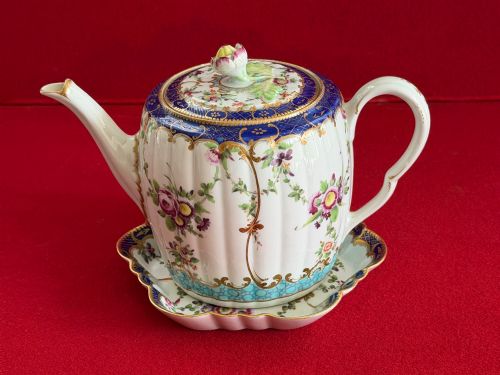
The versions most commonly met on this page are Victorian biscuit barrels fitted with silver plate mounts and nineteenth-century Chinese or English garden seats. Stoneware storage jars and porcelain tea wares also appear, reflecting the wide range of utilitarian and ornamental forms produced across the periods.
Origins stretch from English potteries such as Minton and Wedgwood to continental European workshops and Chinese export kilns. Buyers find items spanning the Georgian era through to the Edwardian period, capturing changing domestic tastes in ceramic design.
How they were made
Potters utilised stoneware, earthenware, porcelain, and ironstone to shape these barrels, often employing salt glazing or tin glazing to seal the porous ceramic bodies. Coloured slips, flow blue transfers, and enamel painting provided surface decoration before the final kiln firing.
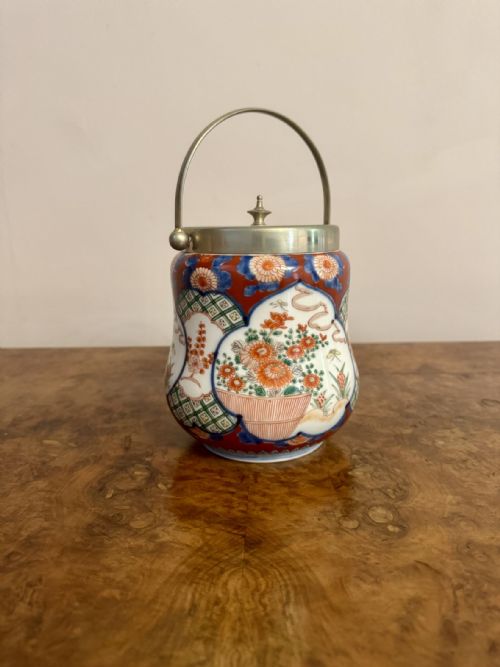
Metalworking accompanied ceramic production, particularly on biscuit barrels which received silver plated swing handles, rims, and hinged lids. These metal mounts required precise casting and soldering to fit snugly against the turned or moulded ceramic bodies.
Antique Ceramic Barrels Retail Price Guide 2026
Typical asking prices for ceramic barrels among the pieces listed under this phrase on Sellingantiques today, from the lower quarter to the upper quarter. They describe what is for sale here now, not the wider market.
A porcelain grape harvester girl holds her funnel and barrel tight while ignoring the nearby porcelain vines.
What varies in quality
The definition in the moulding separates standard production wares from superior examples, particularly in the crispness of relief work seen on Jasperware or majolica pieces. Sharp undercuts and clean detailing indicate skilled craftsmanship and careful upkeep of the original moulds.
The integration of metal hardware with ceramic bodies marks a clear distinction in manufacturing standards. Solid silver plating that matches the contours of the barrel without excessive wear denotes a higher tier of domestic vessel.
Minton·Doulton Lambeth·Crown Devon·Carlton Ware·Wedgwood·L. Lumley·Meissen
The Antique Ceramic Barrels Glossary
- Biscuit barrel
- A covered ceramic container used for storing dry biscuits or crackers at the dining table. These vessels typically feature a fitted metal lid and handle.
- Jasperware
- A type of unglazed vitreous stoneware developed by Wedgwood, most commonly found in pale blue with applied white neoclassical reliefs. The technique relies on precise chemical composition to achieve uniform colour.
- Salt glaze
- A vitreous coating formed by throwing common salt into the kiln during high-temperature firing, creating an orange-peel texture on stoneware. This finish provides durable resistance to liquids and acids.
- Flow blue
- A cobalt-blue transfer printing style on white earthenware where the pigment intentionally bleeds slightly into the glaze during firing. This technique produces a soft, hazy effect reminiscent of Chinese porcelain.
- Garden seat
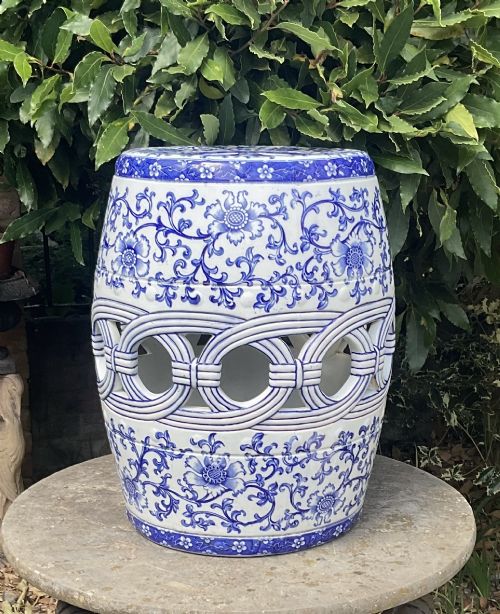
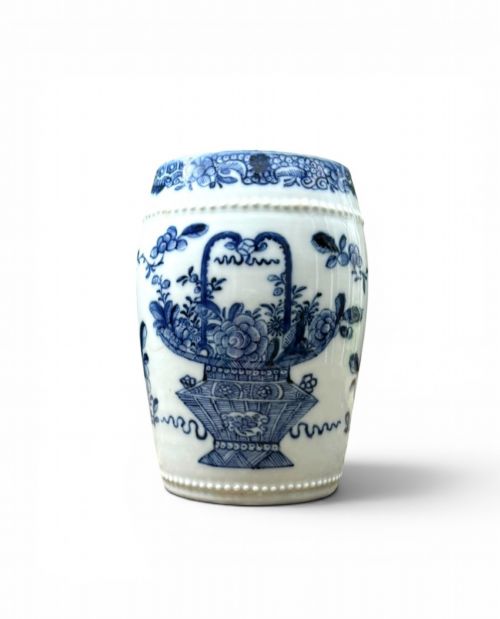
- A heavy ceramic or porcelain barrel-shaped stool designed for use indoors or on covered garden patios. They often feature pierced coin motifs for lifting.
Antique Ceramic Barrels: Frequently Asked Questions
How are ceramic garden seats used?
Ceramic garden seats function primarily as portable stools, side tables, or decorative pedestals in homes and conservatories. Their barrel shape provides a stable seating base while occupying minimal floor space.
Originating largely from nineteenth-century English and Chinese export traditions, these glazed vessels resist moisture well. They bring colour and structured form to both interior living areas and sheltered outdoor spaces.
How do I identify Victorian biscuit barrels?
Victorian biscuit barrels often feature combination materials such as ceramic bodies paired with silver plated rims and hinged lids. Look for maker marks from known potteries on the unglazed base beneath the glaze.
Stylistic cues include transfer-printed floral patterns, flow blue decoration, or applied neoclassical reliefs. The presence of registration marks can help date the exact year of production.
What is saltglaze stoneware?
Saltglaze stoneware is a hardy ceramic type fired at high temperatures with common salt introduced directly into the kiln. This chemical reaction creates a durable, pitted surface resembling the skin of an orange.
This impervious finish made saltglaze barrels ideal for containing liquids, vinegar, or dry goods without leaking. The technique produces a distinctive muted sheen that withstands heavy handling.